

Summary: U.S. Defense Secretary Pete Hegseth declares March 10 the most aggressive day of military strikes against Iran as Operation Epic Fury enters its tenth day, with global oil supply concerns rising.
The United States military is preparing to unleash what officials are calling the most devastating wave of attacks yet against Iran, according to statements made by U.S. Defense Secretary Pete Hegseth on Tuesday, March 10.
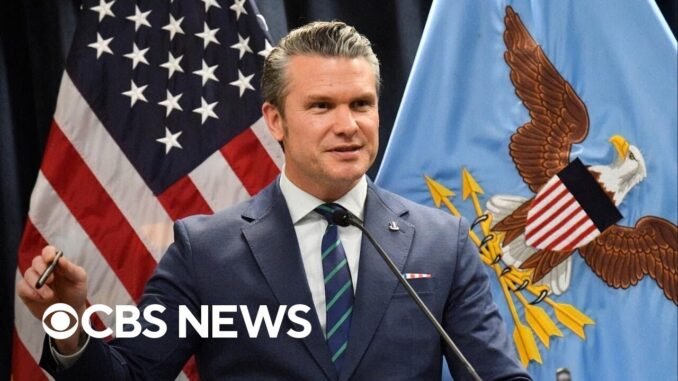
Speaking from the Pentagon alongside General Dan Caine, Chairman of the Joint Chiefs of Staff, Hegseth declared: “Today will be, yet again, our most intense day of strikes inside Iran.”
Operation Epic Fury Enters Tenth Day
The announcement comes as the U.S.-led military campaign, dubbed “Operation Epic Fury,” marks its tenth consecutive day. The operation, which kicked off on February 28 with both American and Israeli forces, has been systematically targeting Iranian military bases, weapons manufacturing facilities, and key government infrastructure.
“Iran stands alone, and they are badly losing on Day 10 of Operation Epic Fury,” Hegseth stated confidently during the briefing.
According to the Defense Secretary, American forces are ramping up their aerial assault, deploying additional fighter jets and bomber aircraft to achieve several critical military objectives. These include:
– Destroying Iran’s missile stockpiles and production capabilities
– Dismantling Iranian naval forces
– Preventing the country from developing nuclear weapons
“We’re crushing the enemy in an overwhelming display of technical skill and military force,” Hegseth declared. “We will not relent until the enemy is totally and decisively defeated.”
No Plans for Nation-Building
Despite the military escalation, Hegseth was quick to assure that the United States has no intention of engaging in prolonged nation-building exercises similar to those witnessed during the Iraq and Afghanistan wars—conflicts that lasted for years and drained significant resources.
This stance mirrors earlier comments from President Donald Trump, who suggested the conflict might conclude faster than many anticipate, given the rapid pace at which Iranian military capabilities are being destroyed.
Trump’s Strong Warning on Oil Supply
The American president issued a stern warning to Iran on Monday night regarding potential threats to global oil supplies. In a post on Truth Social, Trump made it clear that any Iranian attempt to disrupt shipping through the Strait of Hormuz—a critical waterway for global oil transportation—would be met with overwhelming force.
“If Iran does anything that stops the flow of Oil within the Strait of Hormuz, they will be hit by the United States of America TWENTY TIMES HARDER than they have been hit thus far,” Trump wrote.
This warning carries particular significance for Nigeria and other oil-producing nations, as disruption to the Strait of Hormuz could trigger significant fluctuations in global oil prices, affecting economies worldwide.
Conflict Spreads Beyond Iranian Borders
The military campaign has already spilled beyond Iran’s borders. On Tuesday, authorities in Abu Dhabi confirmed that an Iranian drone strike ignited a fire at the Ruwais Industrial Complex oil refinery, though fortunately no casualties were reported.
Change in Iranian Leadership
Adding another layer of complexity to the situation, the conflict has triggered a dramatic political shift in Tehran. Mojtaba Khamenei has been appointed as Iran’s new supreme leader following the death of his father, Ayatollah Ali Khamenei, who died during the initial wave of strikes.
Responding to this development in a television interview, President Trump expressed skepticism about the new Iranian leader’s ability to maintain stability within the country.
“I don’t believe he can live in peace,” Trump remarked. However, he left the door open for potential diplomatic engagement, suggesting that Iranian leadership may be seeking negotiations. “I’m hearing they want to talk badly,” the president added.
Message to Iran’s New Leadership
At the Pentagon briefing, Hegseth directed a clear warning to Iran’s new leadership regarding nuclear ambitions: “He would be wise to heed our president and not pursue nuclear weapons.”
The Defense Secretary also emphasized that President Trump maintains full control over the pace and direction of military operations. “President Trump gets to control the throttle,” Hegseth explained. “He’s the one deciding when we’re achieving particular objectives.”
What This Means for Nigeria
As the situation continues to develop, Nigerian citizens and businesses should monitor potential impacts on global oil markets. Any prolonged disruption to oil supplies through the Strait of Hormuz could affect petroleum prices worldwide, including in Nigeria, potentially influencing fuel costs and the broader economy.
The international community watches closely as this tenth day of Operation Epic Fury unfolds, with many questions remaining about how long the conflict will last and what the ultimate resolution might look like.
Check buzzUp9ja for more details
Be the first to comment