
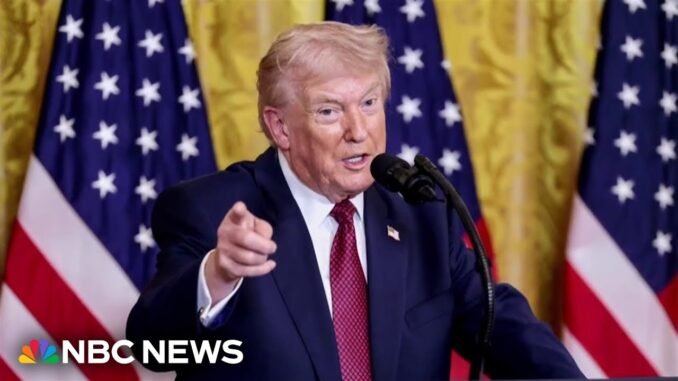

As oil prices surge amid Middle East tensions, the US President argues America benefits from higher energy costs while vowing to stop Iran’s nuclear ambitions.
United States President Donald Trump has stirred fresh debate by downplaying concerns over rising oil prices, insisting that America actually profits when crude oil costs go up.
Speaking on Thursday, March 12, through his Truth Social platform, Trump sought to calm fears about market volatility and increasing fuel costs linked to the ongoing conflict with Iran.
“The United States is the largest Oil Producer in the World, by far, so when oil prices go up, we make a lot of money,” Trump declared in his characteristic bold style.
Nuclear Weapons Concern Takes Centre Stage
But the American leader was quick to emphasize that monetary gains aren’t his primary focus. Instead, Trump stressed his determination to prevent Iran from acquiring nuclear weapons—a goal he described as being of “far greater interest and importance.”
“BUT, of far greater interest and importance to me, as President, is stopping an evil Empire, Iran, from having Nuclear Weapons, and destroying the Middle East and, indeed, the World,” he wrote, adding emphatically: “I won’t ever let that happen!”
Global Oil Market Faces Historic Crisis
Trump’s comments come at a critical time when the International Energy Agency (IEA) has issued a stark warning about potential oil supply disruptions.
According to the IEA, the world could be facing the “largest supply disruption in the history of the global oil market” as Iranian forces intensify attacks on crucial shipping routes in the region.
For Nigeria—Africa’s largest oil producer and a country heavily dependent on petroleum revenues—such global market disruptions carry significant implications. Rising oil prices could boost government revenues but may also increase costs for imported refined petroleum products, creating a complex economic situation for the nation.
What This Means for Nigeria
While higher oil prices might seem beneficial for oil-producing nations like Nigeria and the United States, the reality is more nuanced. Increased global oil prices could:
– Boost foreign exchange earnings for Nigeria’s economy
– Potentially increase petrol prices at the pump for Nigerian consumers
– Create uncertainty in global markets that affects investment
– Impact the cost of doing business across various sectors
As tensions continue to simmer in the Middle East, Nigerians—like citizens worldwide—will be watching closely to see how this standoff affects their daily lives and the broader economy.
What are your thoughts on rising oil prices and their impact on Nigeria? Share your views in the comments below.
For more updates, check buzzUp9ja
Be the first to comment