
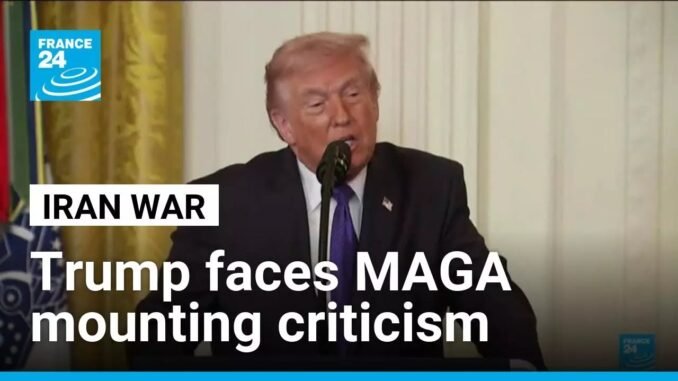

Summary: Donald Trump has attacked prominent conservative media figures Tucker Carlson, Megyn Kelly, and Candace Owens after they criticized his administration’s approach to the Iran conflict.
The political drama in Washington has taken an unexpected turn as former US President Donald Trump publicly criticized several high-profile conservative media personalities who previously championed his political career. The fallout? Their vocal opposition to his administration’s stance on military action against Iran.
The Unexpected Rift in Conservative Circles
On Thursday, April 9, Trump took aim at Tucker Carlson, Megyn Kelly, and Candace Owens—three influential voices in right-wing media who have historically been associated with the MAGA (Make America Great Again) movement. These media figures, known for their conservative commentary and past support of Trump’s policies, have now found themselves in the former president’s crosshairs.
The reason for this dramatic shift? Their outspoken criticism of Trump’s approach to the escalating tensions with Iran and the possibility of military conflict.
Why This Matters to Nigerians
While this may seem like typical American political theatre, the implications extend far beyond US borders. Nigeria, like many African nations, watches American foreign policy closely—particularly when it involves military action in the Middle East.
Oil prices, global security concerns, and international diplomatic relations are all affected by US military decisions. For a nation like Nigeria, heavily dependent on oil revenue and mindful of regional security challenges, understanding these power dynamics is crucial.
The Conservative Media Rebellion
Tucker Carlson, formerly of Fox News and now running his own media platform, has been particularly vocal about avoiding what he calls “unnecessary foreign wars.” Megyn Kelly, the former Fox News and NBC anchor, has also questioned the wisdom of military escalation with Iran. Candace Owens, the conservative commentator with a significant following among young conservatives, has similarly expressed reservations.
These aren’t fringe voices—they’re mainstream conservative commentators with millions of followers. Their willingness to break ranks with Trump on this issue signals a potential fracture within the MAGA coalition that has dominated Republican politics for nearly a decade.
The Nigerian Perspective: Lessons in Political Loyalty
Nigerian politicians and observers can draw interesting parallels from this situation. Political godfatherism and loyalty are concepts well understood in Nigerian politics. When loyalists publicly disagree with their political patrons, it often signals deeper issues within the political machinery.
What we’re witnessing in America mirrors dynamics familiar to Nigerian political watchers: the tension between personal loyalty and principled positions, the fragility of political alliances, and how quickly yesterday’s supporters can become today’s critics.
What’s Really at Stake?
The confrontation between Trump and these media figures raises important questions:
– Is unwavering loyalty expected even when core principles are challenged?
– Can political movements survive internal dissent?
– What happens when populist movements face complex foreign policy decisions?
For many young Nigerians who follow international politics, particularly those active on social media platforms like Twitter (X) and Instagram, this drama offers a masterclass in political strategy, media influence, and the limits of personality-driven politics.
The Broader Implications
This split in the conservative movement could have lasting effects on American politics, which in turn affects global affairs. The United States remains a key player in international diplomacy, trade agreements, and security arrangements that touch Nigeria and the entire African continent.
Understanding these internal American political dynamics helps Nigerian leaders, business people, and citizens navigate the complex landscape of international relations.
The Bottom Line
The clash between Trump and his former media allies demonstrates that even the strongest political movements can fracture over fundamental disagreements. It’s a reminder that political loyalty has its limits, and that principled positions sometimes require breaking ranks—even at great personal and professional cost.
For Nigerians watching this unfold, it’s both entertainment and education. It shows that even in the world’s most powerful democracy, political relationships are complex, fragile, and subject to change based on evolving circumstances.
As this story continues to develop, one thing remains clear: in politics, whether in Washington or Abuja, there are no permanent friends or permanent enemies—only permanent interests.
What are your thoughts on this political drama? Should political allies always stand together, or is there room for principled disagreement? Share your views in the comments below.
Visit buzzUp9ja for more updates
Be the first to comment