
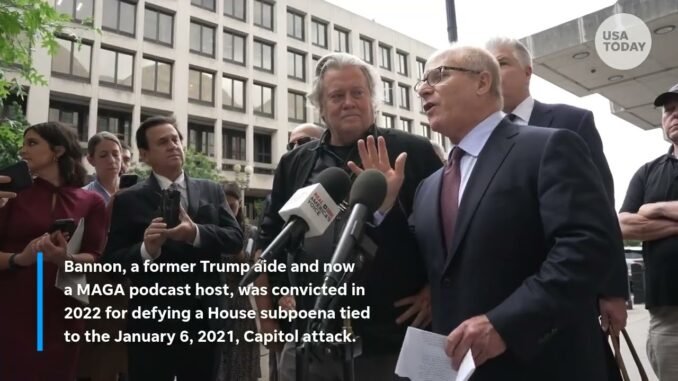

The United States Supreme Court has made a significant ruling that allows President Donald Trump’s Department of Justice to abandon criminal proceedings against Steve Bannon, a close political ally who was previously convicted.
The Backstory: Who is Steve Bannon?
Steve Bannon served as Trump’s chief strategist during his first term in the White House and has remained one of the former president’s most vocal supporters. The conservative political operative became a household name in American politics for his hardline nationalist views and his role in shaping Trump’s 2016 presidential campaign.
For Nigerians following American politics, think of Bannon as someone similar to a powerful political godfather who wields enormous influence behind the scenes—the kind of person who can make or break political careers with just a phone call.
What Were the Charges?
Bannon had been convicted on criminal charges, though the specific details of his case have been the subject of intense legal battles. His conviction was part of the broader political drama that has characterized American politics in recent years, with Trump’s allies frequently finding themselves in legal crosshairs.
The Supreme Court’s Decision
In a decision handed down on Monday, America’s highest court essentially gave the Trump administration the authority to withdraw the criminal case against Bannon. This move represents a major victory for both Trump and his longtime confidant.
The ruling underscores the significant power that the Department of Justice holds in deciding which cases to pursue—and which ones to drop. For many observers, this decision raises questions about the intersection of politics and justice, particularly when it involves close associates of the sitting president.
What This Means for American Politics
This development is yet another chapter in the complicated relationship between Trump and the American justice system. Since returning to the presidency, Trump has made no secret of his intention to reshape how federal law enforcement operates, particularly regarding cases involving his political allies.
For Nigerians watching from afar, this situation might feel familiar. The debate over whether political leaders should have influence over criminal prosecutions is one that resonates across many democracies, including our own. It touches on fundamental questions about the rule of law, separation of powers, and whether justice should ever bend to political considerations.
The Bigger Picture
The Bannon case is part of a larger pattern in which Trump has sought to protect allies who face legal troubles. Critics argue this undermines the independence of the justice system, while supporters contend that many of these prosecutions were politically motivated in the first place.
As Nigeria continues to strengthen its own democratic institutions, the American experience offers important lessons—both positive and negative—about the delicate balance between political authority and judicial independence.
What Happens Next?
With the Supreme Court’s blessing, the Department of Justice is now expected to formally move to dismiss the case against Bannon. This will likely end his legal troubles related to this particular matter, allowing him to continue his political activities without the shadow of a criminal conviction.
However, the controversy surrounding this decision is unlikely to fade quickly. Opposition politicians, legal experts, and civil society groups are expected to continue debating whether this represents an appropriate use of executive power or a troubling precedent for American democracy.
—
This story continues to develop as reactions pour in from across the American political spectrum. The debate over the proper relationship between political power and criminal justice remains as relevant in Washington as it is in Abuja.
Check for more details on buzzUp9ja
Be the first to comment