
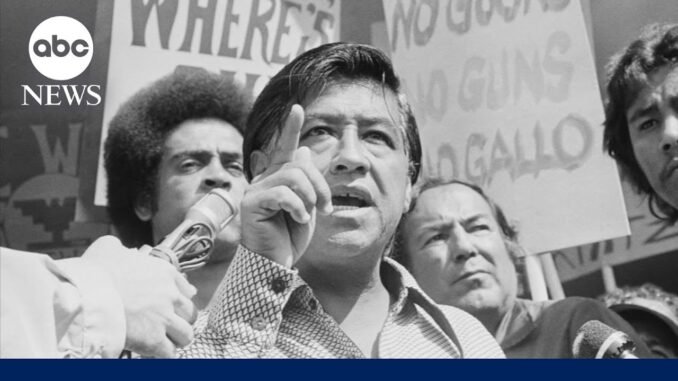

The legacy of one of America’s most celebrated civil rights activists is now under serious scrutiny following disturbing allegations of sexual abuse that have sent shockwaves through the United States and beyond.
Cesar Chavez, the Mexican-American icon who championed the rights of farm workers and co-founded the influential United Farm Workers union (UFW), has been accused of sexual misconduct by multiple women, including his longtime colleague and co-founder of the union, Dolores Huerta.
The Allegations That Shook a Movement
In a powerful statement published online, Huerta revealed harrowing details of her experiences with Chavez during the 1960s, when they were building the farm workers’ movement together.
“The first time I was manipulated and pressured into having sex with him, and I didn’t feel I could say no because he was someone that I admired, my boss and the leader of the movement I had already devoted years of my life to,” Huerta disclosed in her statement.
She went further, describing a second incident: “The second time I was forced, against my will, and in an environment where I felt trapped.”
Huerta first shared these allegations with the New York Times, which published a comprehensive investigation on Wednesday. The investigation didn’t stop with Huerta’s account – two other women came forward with their own disturbing stories, claiming they were only 13 and 15 years old when Chavez first sexually molested them.
A Thorough Investigation Reveals Dark Secrets
The New York Times investigation was extensive and meticulous. Reporters interviewed more than 60 people, including former top aides, relatives, and former UFW members. They also examined union records, confidential emails, photographs, and recordings of UFW board meetings to verify the allegations.
This level of detail and corroboration has made it difficult for anyone to dismiss the claims as mere rumours or politically motivated attacks.
Immediate Consequences Across California
The response has been swift and decisive. Multiple events that were planned to celebrate Cesar Chavez Day – a commemorative holiday observed on March 31st – have been cancelled or renamed across the United States.
The UFW itself announced it was cancelling its participation in the celebrations, though the union stated it had “not received any direct reports” and did “not have any firsthand knowledge” of the allegations.
California Governor Gavin Newsom addressed the controversy, emphasizing that “the farm workers movement and labour movement are much bigger than one man.” He publicly stood with “the courageous women” like Huerta who came forward with their stories. At a separate event, Governor Newsom indicated he was open to renaming Cesar Chavez Day in California.
Republican assemblywoman Alexandra Macedo has already taken legislative action, filing a bill to change the holiday’s name to “Farmworker Day” – a move that would honour the workers themselves rather than an individual leader.
Voices of Support for Survivors
Los Angeles Mayor Karen Bass didn’t mince words in her response. “The sickening reality is that what Dolores, Ana, and Debra endured is not isolated, nor is it of the past,” she said, demanding sustained action to dismantle structures that have enabled the abuse of women.
The League of United Latin American Citizens (LULAC), a prominent civil rights organization, also issued a strong statement: “No individual, regardless of stature or legacy, is above accountability when it comes to protecting and upholding the dignity of others.”
The Foundation Responds
The Cesar Chavez Foundation, which carries forward the late leader’s work, acknowledged the “disturbing allegations” in an official statement. The foundation said it is “deeply shocked and saddened” and is working with leaders in the Farmworker Movement “to be responsive to these allegations” and support those who may have been harmed.
A Complicated Legacy
Cesar Chavez, who died in 1993, has long been celebrated as one of the most influential and recognized Latinos in modern American history. His work organizing farm workers, fighting for fair wages and better working conditions, and his commitment to non-violent activism inspired generations of activists across various causes and movements.
This revelation forces a difficult reckoning with history – how do we balance the undeniable good someone accomplished with the private harm they caused? For many Nigerians familiar with similar situations in our own context, this dilemma is not unfamiliar.
What This Means Going Forward
These allegations serve as a reminder that no one, regardless of their contributions to society or their iconic status, should be immune from accountability. The courage shown by Huerta and the other women in coming forward decades later speaks to the long-lasting trauma of sexual abuse and the difficulty survivors face in speaking truth to power.
As investigations continue and more details potentially emerge, the conversation about Chavez’s legacy will undoubtedly evolve. What remains clear is that the farm workers’ movement he helped build was always bigger than any one person – and it will continue to fight for justice, now including justice for those allegedly harmed by its founder.
The story serves as a sobering lesson about the importance of believing survivors, holding powerful people accountable, and ensuring that movements for justice don’t perpetuate the very injustices they claim to fight against.
Check buzzUp9ja for more updates
Be the first to comment