

As bombs rain down on the Middle East, one country quietly counts its gains—and it’s not the ones doing the fighting.
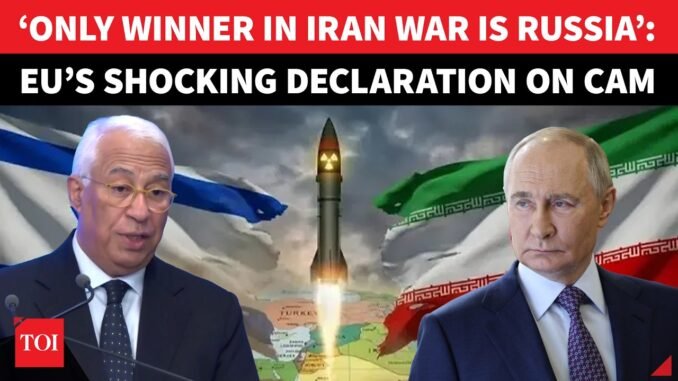
The President of the European Council, António Costa, has delivered a sobering assessment of the escalating conflict between the United States, Israel and Iran: Russia is winning—without firing a single shot.
Speaking to European Union ambassadors in Brussels, Costa painted a picture that should concern anyone watching the 11-day-old crisis unfold. While missiles fly and diplomatic tensions reach boiling point, Moscow sits back and watches its fortunes rise.
“So far, there is only one winner in this war – Russia,” Costa declared, pointing to two critical advantages the Kremlin has gained from the chaos.
How Russia Benefits While Others Bleed
The conflict has sent shockwaves through global energy markets—something Nigerians understand all too well, given our own experiences with fuel price volatility. Iranian forces have launched missile and drone attacks against U.S. and Israeli targets, alongside strikes on energy facilities in Gulf countries. The strategic Strait of Hormuz—a vital channel through which much of the world’s oil and gas flows—has seen disruptions that have pushed fuel prices upward worldwide.
For Russia, currently battling Ukraine and facing international sanctions, this couldn’t have come at a better time.
“It gains new resources to finance its war against Ukraine as energy prices rise,” Costa explained. Higher oil and gas prices mean more revenue flowing into Moscow’s coffers, providing fresh funds for President Vladimir Putin’s military campaigns.
But the benefits don’t stop there. The EU Council president noted that military resources that could have supported Ukraine are now being redirected to the Middle East. Meanwhile, the world’s attention—which had been fixed on Russia’s aggression in Ukraine—has shifted dramatically.
“It also benefits from the diversion of military capabilities that could otherwise have supported Ukraine and from reduced attention on the Ukrainian front as the Middle East conflict takes centre stage,” Costa said.
The Price of Escalation
Costa issued a stark warning to all parties involved in the Middle East crisis: return to the negotiating table before it’s too late.
“Freedom and human rights cannot be achieved through bombs. Only international law can uphold them,” he urged. “We must avoid further escalation, as such a path threatens the Middle East, Europe and the wider world.”
The U.S.-Israeli strikes on Iran have triggered the sharpest jump in global oil prices since Russia’s invasion of Ukraine in 2022—a development that will inevitably affect Nigeria’s already fragile fuel subsidy situation and cost of living.
Behind the Scenes: Trump, Putin and the Peace That Won’t Come
Costa’s remarks came as the Kremlin confirmed that peace talks between Russia and Ukraine remain on the table, though no date or venue has been set for the next round of negotiations. The two countries held several rounds of talks in Turkey last year, with additional U.S.-mediated discussions taking place this year in Abu Dhabi and Geneva.
However, the sides remain deeply divided, particularly over Moscow’s insistence that Ukraine surrender the entire eastern Donetsk region.
On Monday, U.S. President Donald Trump and Russian President Vladimir Putin held their first phone call of the year, discussing both the Iran crisis and the Ukrainian conflict. The Kremlin noted that the possibility of lifting U.S. sanctions on Russian oil hadn’t been discussed in detail, but acknowledged that Washington’s actions aim to stabilise global energy markets.
Europe’s Energy Reckoning
Before the Ukraine war, Europe depended heavily on Russian gas—more than 40 percent of its supply came from Russia. By 2025, that figure has dropped to about 13 percent as European countries scrambled to find alternative energy sources.
Trump has indicated his administration is considering easing some sanctions on oil-producing nations to stabilise global fuel prices, though he hasn’t specified which countries might benefit. The United States currently maintains sanctions on the oil sectors of Russia, Iran and Venezuela.
In a telling move, U.S. Treasury Secretary Scott Bessent recently announced a 30-day waiver allowing limited Russian oil sales to India—ostensibly to help offset disruptions in Middle East supply.
What This Means for Nigeria
For Nigeria, the implications are clear. As global oil prices surge, the government faces renewed pressure on fuel subsidy spending and foreign exchange management. While higher crude prices could boost government revenue in theory, the reality is that our own production challenges and the knock-on effects of global instability may limit any benefits.
Moreover, the diversion of international attention away from developing regions—as world powers focus on the Middle East and Eastern Europe—could mean reduced diplomatic and economic engagement with Africa.
Costa’s message is one Nigeria’s leaders should heed: in a world increasingly defined by great power competition and proxy conflicts, it’s often the countries not directly involved who pay the highest price—or in Russia’s case, reap unexpected rewards.
The question now is whether diplomacy can prevail before the situation spirals further out of control, dragging more of the world into a conflict from which only Moscow seems to be profiting.
Get more update on buzzUp9ja
Be the first to comment