
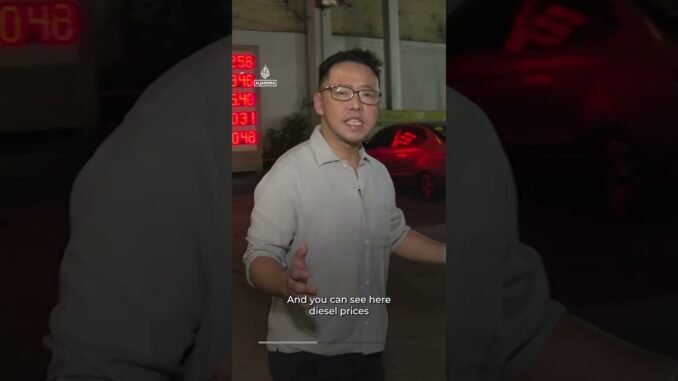

Summary: President Ferdinand Marcos Jr declares state of emergency as ongoing Middle East conflict disrupts Philippines’ energy supply, triggering fuel crisis and price concerns.
The Philippine government has taken decisive action to protect its citizens from the rippling effects of the Middle East conflict, with President Ferdinand Marcos Jr declaring a state of national energy emergency on Tuesday.
The move, announced through an executive order, acknowledges the “imminent danger” the ongoing Middle East war poses to the country’s fuel availability and energy stability. For many Nigerians watching global events unfold, this development serves as a stark reminder of how conflicts in distant regions can directly impact everyday life—from transportation costs to electricity bills.
Why This Matters for Energy-Dependent Nations
The Philippines’ situation mirrors concerns familiar to many African countries, including Nigeria. Like us, the Philippines imports much of its energy needs, making it vulnerable to global supply disruptions and price shocks. When conflicts erupt in major oil-producing regions, the effects are felt worldwide.
“A state of national energy emergency is hereby declared in light of the ongoing conflict in the Middle East, and the resulting imminent danger posed upon the availability and stability of the country’s energy supply,” the government statement read.
The declaration isn’t just symbolic—it comes with real powers. The Department of Energy can now secure fuel supplies through advance payments and crack down on hoarding and profiteering, similar to measures Nigerian authorities have employed during fuel scarcity periods.
Government’s Response Strategy
President Marcos’ administration is implementing a multi-pronged approach to cushion the impact on ordinary Filipinos:
Immediate Relief Measures:
– Introduction of fuel subsidies for transport operators
– Reduction of toll charges on major highways
– Easing of aviation-related costs to prevent ticket price hikes
Supply Security Actions:
– Authorization for advance payments to secure fuel supplies
– Crackdown on hoarding and price manipulation
– Enhanced monitoring of energy markets
The Coal Compromise
In a move that will resonate with energy policy debates worldwide, Energy Secretary Sharon Garin announced the country would temporarily increase its reliance on coal-fired power plants as liquefied natural gas prices skyrocket.
“We talked to the generation companies to check how much they can increase their generation,” Garin explained, describing the shift as a “temporary measure.”
Currently, the Philippines generates about 60 percent of its electricity from coal—a figure that may surprise those familiar with global climate commitments but reflects the practical realities many developing nations face when balancing energy security with environmental concerns.
The government is also exploring increased coal imports from Indonesia, with Garin noting there are currently no supply restrictions. “At least we can decrease the electricity rate hikes because of the conflict in the Middle East,” she added.
Long-Term Vulnerability Exposed
The emergency declaration highlights a fundamental challenge for import-dependent nations: vulnerability to global energy shocks. While the Philippines searches for long-term solutions—including new natural gas discoveries near the Malampaya field, which powers much of Luzon island—the immediate focus remains on weathering the current storm.
For Nigerian observers, the parallels are clear. Despite being Africa’s largest oil producer, Nigeria often faces fuel shortages and price volatility due to refining capacity challenges and global market dynamics. The Philippine experience underscores how even energy-rich nations can find themselves at the mercy of international supply chains and geopolitical conflicts.
Lessons for Energy Security
The Philippine crisis offers several lessons for nations striving for energy independence:
1. Diversification is crucial: Over-reliance on any single energy source or import route creates vulnerability
2. Strategic reserves matter: The ability to secure advance supplies provides a buffer during crises
3. Quick policy action can help: Swift government intervention can mitigate impact on citizens
4. Long-term planning is essential: Emergency measures work only if paired with sustainable energy strategies
As the Middle East conflict continues with no clear end in sight, the Philippines’ declaration may be the first of many such announcements from energy-importing nations worldwide. The situation serves as a powerful reminder that in our interconnected world, conflicts anywhere can have consequences everywhere—especially at the petrol pump and in monthly electricity bills.
For more information, check buzzUp9ja
Be the first to comment