
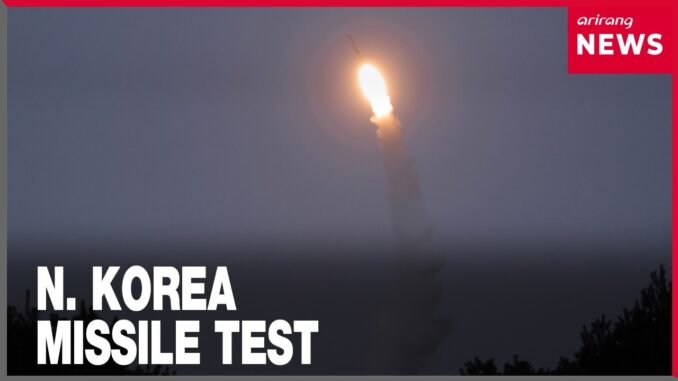

Summary: North Korea reveals its latest weapons tests included advanced ballistic missiles equipped with cluster-bomb warheads, escalating regional security concerns.
North Korea has announced that its recent series of weapons tests featured several new military systems, including ballistic missiles armed with cluster-bomb warheads, marking another significant step in the country’s ongoing efforts to expand and modernize its nuclear arsenal.
The announcement, made on Thursday by Pyongyang’s state media, provides fresh insight into the hermit kingdom’s advancing military capabilities—a development that continues to worry security analysts and neighboring countries in the East Asian region.
What Are Cluster-Bomb Warheads?
For those unfamiliar with military terminology, cluster bombs are weapons that open in mid-air and release numerous smaller explosive submunitions over a wide area. When fitted onto ballistic missiles, these warheads become particularly dangerous, capable of causing widespread destruction across large target zones rather than focusing on a single point of impact.
This technology transforms missiles into area-denial weapons, making them especially effective against military bases, airports, and troop concentrations.
Why Should Nigeria and Africa Care?
While North Korea may seem geographically distant from Nigeria and the African continent, developments in global security have far-reaching implications. The proliferation of advanced weapons technology affects:
– International stability: Tensions on the Korean Peninsula can impact global markets, including oil prices that directly affect Nigeria’s economy
– Arms proliferation: Technology and weapons systems tested in one region can eventually spread to conflict zones worldwide, including parts of Africa
– Diplomatic relations: As a member of the United Nations and African Union, Nigeria participates in international efforts to prevent nuclear proliferation
Context of the Tests
North Korea has dramatically increased its weapons testing activities in recent years, despite facing international sanctions designed to curb its nuclear and missile programs. The country’s leader, Kim Jong Un, has made military modernization a central priority, viewing a strong nuclear deterrent as essential to the regime’s survival.
These latest tests demonstrate Pyongyang’s determination to develop more sophisticated and versatile weapons systems that can evade missile defense systems and strike multiple targets simultaneously.
Regional and Global Response
South Korea, Japan, and the United States—North Korea’s primary adversaries—have expressed serious concerns about these developments. The tests violate multiple United Nations Security Council resolutions, though enforcement remains challenging due to geopolitical complexities.
International sanctions have so far failed to slow North Korea’s weapons development, partly because of support and trade relationships the country maintains with certain nations.
The Bigger Picture
North Korea’s continued weapons development reflects broader trends in global military competition. As major powers invest in hypersonic missiles, artificial intelligence, and other advanced technologies, smaller nations like North Korea seek their own deterrent capabilities, creating a cycle of arms development that concerns peace advocates worldwide.
For Nigeria and other developing nations focused on economic growth and social development, these global military tensions serve as a reminder of the importance of diplomatic engagement and multilateral cooperation in preventing conflicts that could disrupt the international order.
Looking Ahead
Security experts predict North Korea will continue testing new weapons systems throughout the year, potentially including more advanced intercontinental ballistic missiles and nuclear weapons. The international community faces the ongoing challenge of finding diplomatic solutions while maintaining pressure on Pyongyang to denuclearize.
As global citizens, Nigerians should stay informed about these developments, understanding how international security dynamics can affect everything from fuel prices to foreign investment in our economy.
—
Stay updated on global affairs and how they impact Nigeria by following our international news coverage.
check for more news on buzzUp9ja
Be the first to comment