
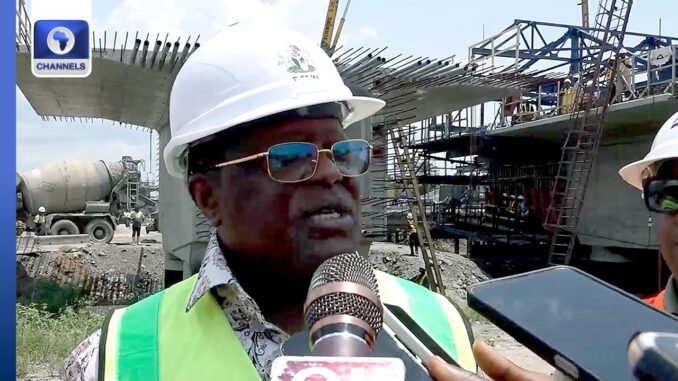

The Minister of Works, Engr. David Umahi, has issued a stern warning to fuel tanker operators and heavy-duty vehicle drivers: parking your vehicles on newly constructed roads is a recipe for disaster that threatens billions of naira in public infrastructure.
Speaking during an inspection tour of the ongoing Aleto Bridge project in Rivers State, the visibly concerned minister didn’t mince words about the reckless behavior he witnessed firsthand.
“No Road Can Survive Static Loads”
“Yesterday, I saw fuel tankers parked on the completed road sections. This is completely unacceptable,” Umahi stated firmly. “No road anywhere in the world is designed to bear static loads. When these heavy vehicles park in one spot for extended periods, they will destroy the road surface—it’s not a matter of if, but when.”
The minister’s warning comes amid growing concerns about the longevity of Nigeria’s road infrastructure, particularly given the massive investments being channeled into construction projects nationwide.
Over ₦230 Billion at Stake
According to a statement released by his media aide, Francis Nwaze, Minister Umahi emphasized that the careless parking of heavy vehicles could jeopardize the entire Aleto Bridge project, which carries a staggering price tag of over ₦230 billion.
The project is being executed in two phases: Phase one costs ₦156 billion, while phase two requires an additional ₦83 billion. With such substantial public funds committed to the infrastructure, the minister stressed that Nigerians must take ownership and protect these critical assets.
Presidential Intervention Keeps Project on Track
Despite initial funding challenges, particularly after NNPC’s support ended in August 2025, the project received a lifeline through President Bola Ahmed Tinubu’s intervention. The President approved alternative funding arrangements that have kept construction moving forward without interruption.
Umahi took time to commend the contractor, RCC, for maintaining both the quality and pace of work on the bridge, which incorporates cutting-edge construction technology. If all goes according to plan, the Aleto Bridge is expected to be completed by August 2026.
Investing in Nigeria’s Future Engineers
In a forward-thinking move, the Works Minister also announced the introduction of a mentorship programme designed to integrate young Nigerian engineers into the project. This initiative aims to transfer knowledge and build local capacity while giving emerging professionals hands-on experience with world-class infrastructure development.
A Call to Collective Responsibility
Minister Umahi’s message was clear: infrastructure development is not just the government’s responsibility alone. Every Nigerian has a role to play in protecting and preserving public assets.
“We are all stakeholders in nation-building,” the minister emphasized. “When we see people misusing our roads and bridges, we must speak up. These are our collective property, built with our collective resources.”
The warning about parking heavy vehicles on new roads is particularly relevant across Nigeria, where fuel tankers and trailers are frequently seen parked on highways and newly constructed road sections, often for days at a time.
As Nigeria continues to invest heavily in infrastructure renewal, the sustainability of these projects will depend not just on quality construction, but also on responsible usage by all Nigerians.
What’s your take on this issue? Have you noticed heavy vehicles damaging roads in your area? The conversation on protecting our infrastructure starts with awareness and collective action.
Stay tuned to buzzUp9ja for more updates
Be the first to comment