
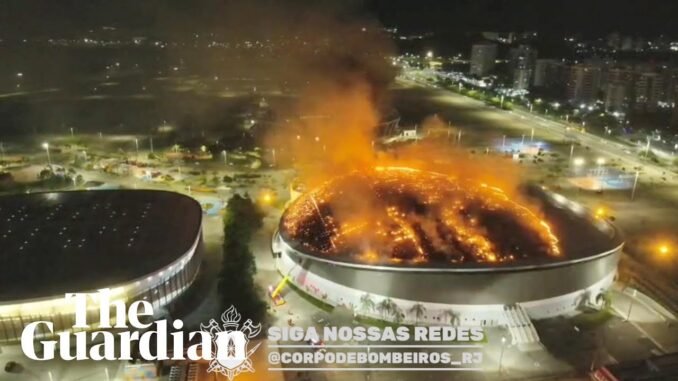

A devastating fire tore through Rio de Janeiro’s Olympic Park velodrome on Wednesday morning, April 8, requiring a massive emergency response from Brazilian authorities. About 80 firefighters and 20 emergency vehicles rushed to battle the flames at the iconic sporting facility.
The velodrome, which hosted cycling events during the 2016 Summer Olympics, became engulfed in thick smoke and flames that could be seen from surrounding neighborhoods. Authorities have not yet confirmed the cause of the fire or the extent of the damage to the multi-million dollar facility.
Why Nigerians Should Pay Attention
While this tragedy unfolded thousands of kilometers away in Brazil, it carries important lessons for Nigeria, particularly as we continue to develop sporting infrastructure across our major cities. The incident raises critical questions about fire safety protocols, emergency preparedness, and the maintenance of public facilities.
For Lagosians especially, who witnessed the tragic Balogun Market fires and numerous other infernos that have destroyed billions of naira in property, this Rio fire serves as a stark reminder: world-class facilities mean nothing without world-class safety measures.
Emergency Response: A Model Worth Studying
The swift deployment of 80 firefighters and 20 vehicles demonstrates the kind of coordinated emergency response that Nigerian authorities must continue to develop. While our own fire service has made tremendous strides, incidents like the 2020 Abule Ado explosion in Lagos revealed gaps in our capacity to respond to major emergencies.
Learning from Brazil’s Olympic Infrastructure
Rio de Janeiro spent billions preparing for the 2016 Olympics, much like Nigeria invested heavily in the 2009 FIFA U-17 World Cup, the 2003 All-Africa Games, and continues to upgrade facilities for continental competitions. The velodrome fire reminds us that infrastructure maintenance and fire prevention must be ongoing priorities, not afterthoughts once the cameras leave and the athletes go home.
As Nigeria eyes hosting major international sporting events, including potential bids for future African Cup of Nations tournaments and other competitions, we must ensure our facilities have robust fire detection systems, adequate insurance coverage, and well-trained emergency response teams.
The Way Forward for Nigerian Infrastructure
This incident should prompt Nigerian sports authorities, state governors, and facility managers to conduct comprehensive fire safety audits of our national stadiums, sports halls, and recreational facilities. From the National Stadium in Abuja to Teslim Balogun Stadium in Lagos, and the newly renovated facilities in Port Harcourt and Uyo, prevention is always cheaper than reconstruction.
The investigation into what caused the Rio velodrome fire will hopefully provide valuable lessons that nations worldwide, including Nigeria, can apply to prevent similar tragedies.
As this story develops, our thoughts remain with the Brazilian people and everyone affected by this incident. May we all learn from this unfortunate event to better protect our own valuable infrastructure.
Stay tuned for more updates on buzzUp9ja
Be the first to comment