
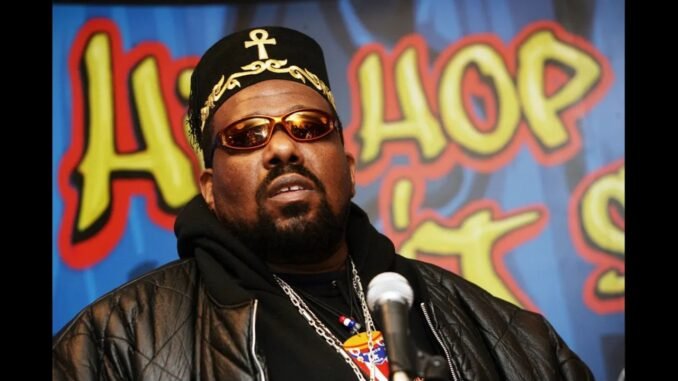

Summary: Hip-hop legend Afrika Bambaataa, founder of the Zulu Nation and creator of “Planet Rock,” has died at 67 from cancer complications. Nigeria mourns a global music icon.**
The global hip-hop community is in mourning following the passing of one of the genre’s founding fathers, DJ Afrika Bambaataa, who died at the age of 67 from complications related to cancer.
According to reports from TMZ, the legendary DJ and producer passed away in Pennsylvania on Thursday, April 9. His death marks the end of an era for hip-hop culture, which he helped birth and shape into the global phenomenon it has become today.
The Godfather of Hip-Hop Culture
For many Naijarians who grew up listening to hip-hop or who now embrace Afrobeats – a genre that owes much to hip-hop’s influence – Bambaataa’s name might not be as familiar as Jay-Z or Tupac. However, without this South Bronx legend, the hip-hop we know and love today might never have existed.
Born Kevin Donovan in the Bronx, New York, Afrika Bambaataa earned his place as one of hip-hop’s “Holy Trinity” alongside Grandmaster Flash and DJ Kool Herc. In the 1970s, when hip-hop was just beginning to take shape in the streets of New York, Bambaataa was there, helping to define what this new culture would become.
The Zulu Nation Legacy
Bambaataa founded the Universal Zulu Nation in 1973, transforming it from a street organization into a worldwide movement that promoted hip-hop culture as a positive force. The Zulu Nation championed the four elements of hip-hop: DJing, MCing, breaking, and graffiti art – spreading these cultural pillars across the globe, including to Nigeria, where hip-hop would later influence a generation of artists.
His philosophy was simple but powerful: use hip-hop as a tool to unite people, move them away from gang violence, and create something positive from the struggles of the streets. This message resonated far beyond America, reaching young people in Lagos, Port Harcourt, and Abuja who were dealing with their own challenges.
“Planet Rock” and Musical Innovation
Bambaataa’s 1982 hit “Planet Rock” remains one of hip-hop’s most influential tracks. The song blended electronic music with hip-hop beats, creating a futuristic sound that was revolutionary for its time. Its influence can still be heard in modern music production, including in Afrobeats and the electronic elements that Nigerian producers incorporate into their work today.
The track reached number 4 on the US R&B charts and became a global sensation, proving that hip-hop could transcend cultural and geographical boundaries – a lesson that Nigerian artists have embraced wholeheartedly in recent years.
Impact on African Hip-Hop
While Bambaataa may not have visited Nigeria frequently, his influence was profound. In the 1980s and 1990s, as hip-hop began to take root in Nigerian cities, young artists looked to pioneers like Bambaataa for inspiration. His message of using music as a positive force influenced early Nigerian hip-hop acts and helped shape the socially conscious lyrics that characterized much of Naija hip-hop’s golden era.
Today’s Afrobeats superstars – from Wizkid to Burna Boy – perform on global stages that hip-hop helped build. The culture of DJing, the art of the remix, and the concept of music as a youth movement all trace back to pioneers like Bambaataa.
A Complicated Legacy
It’s important to note that Bambaataa’s later years were marked by serious allegations that tarnished his reputation within the hip-hop community. Multiple people came forward with accusations of sexual abuse dating back decades, leading to his removal from the Zulu Nation’s leadership in 2016.
These allegations created a complex situation where the hip-hop community had to grapple with separating the man’s contributions to the culture from the serious accusations against his character – a conversation that continues to resonate in discussions about accountability in the entertainment industry.
Tributes Pour In
Despite the controversies, many in the hip-hop community have acknowledged Bambaataa’s undeniable role in creating and spreading the culture globally. Artists, DJs, and hip-hop historians have taken to social media to recognize his pioneering work in the 1970s and 1980s.
His influence on music production techniques, DJ culture, and the philosophy of hip-hop as a positive cultural force remains significant, even as his personal legacy remains complicated.
The End of an Era
With Bambaataa’s passing, hip-hop loses another direct connection to its origins. The genre has traveled far from those early block parties in the Bronx – it’s now the world’s most popular music genre, influencing everything from fashion to politics, and yes, even helping to shape Nigeria’s vibrant Afrobeats scene.
For young Nigerians who love hip-hop, Afrobeats, or any form of modern Black music, understanding figures like Afrika Bambaataa helps us appreciate how we got here. The music we stream on Audiomack and Spotify, the culture we see at concerts in Lagos and Abuja, the global platform Nigerian artists now enjoy – all of this exists partly because pioneers like Bambaataa imagined something bigger than themselves.
As we say goodbye to one of hip-hop’s architects, we’re reminded that culture is built by real people, with all their genius and all their flaws. Afrika Bambaataa helped build something that changed the world – and that influence reached all the way to Nigeria, where young people continue to innovate and push music forward.
Rest in peace to a complicated legend who helped change music forever.
What are your thoughts on Afrika Bambaataa’s legacy and hip-hop’s influence on Nigerian music? Share your views in the comments below.
Stay tuned for more details on buzzUp9ja
Be the first to comment