
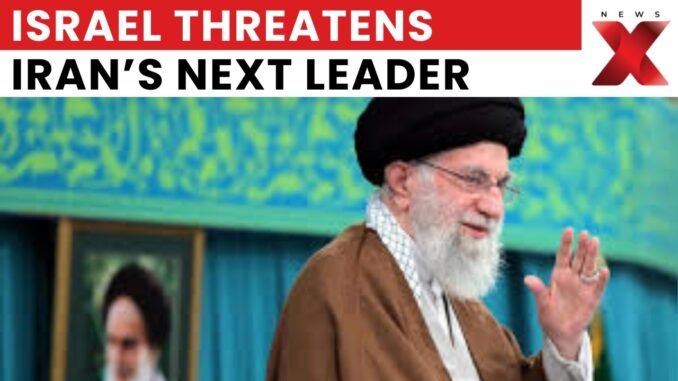

Israeli Defence Minister issues stark warning as Iran prepares to choose successor to Ayatollah Khamenei following devastating strikes on Tehran
In a dramatic escalation of tensions in the Middle East, Israel’s Defence Minister, Israel Katz, has issued a chilling threat to assassinate whoever emerges as Iran’s next Supreme Leader. The warning comes as Iran scrambles to select a successor to Ayatollah Ali Khamenei, who was killed in coordinated US-Israeli military strikes on Tehran.
The threat, delivered via social media platform X on Wednesday, represents one of the most direct and public warnings ever issued by an Israeli official against Iranian leadership. Katz minced no words in his message, stating: “Any leader selected by the Iranian terror regime to continue leading the plan for Israel’s destruction, threatening the United States, the free world, and countries in the region, and suppressing the Iranian people, will be a certain target for assassination, no matter his name or where he hides.”
Mojtaba Khamenei: The Controversial Frontrunner
According to reports from Iranian opposition media outlet Iran International, Mojtaba Khamenei, the 56-year-old second son of the deceased Ayatollah, has emerged as the leading candidate for the position. However, his potential ascension to power is already generating controversy both within and outside Iran.
Mojtaba’s selection reportedly came under significant pressure from Iran’s powerful Revolutionary Guards (IRGC), with the Assembly of Experts – the body responsible for choosing the Supreme Leader – allegedly yielding to military influence in making their choice.
What makes this succession particularly interesting is Mojtaba’s unconventional profile for such a position. Unlike traditional Iranian Supreme Leaders, he is not a high-ranking cleric and has never held any official government position. His credentials instead lie in his military background, having served in the Iranian armed forces during the devastating Iran-Iraq war of the 1980s.
The Power Behind the Throne
Despite his lack of formal titles, insiders suggest Mojtaba has wielded considerable influence within the Iranian regime for years, operating primarily behind the scenes. His strong connections to the IRGC have positioned him as a key power broker within the Islamic Republic’s complex political landscape.
Interestingly, speculation about Mojtaba succeeding his father has circulated for years. However, the late Ayatollah Khamenei himself reportedly had reservations about his son’s candidacy. According to sources, he feared it would create the appearance of hereditary rule – reminiscent of the Shah monarchy that was overthrown during the 1979 Iranian Revolution.
This concern appears well-founded. The Islamic Republic built its legitimacy on opposing the hereditary succession of the US-backed Shah. A father-to-son transfer of the Supreme Leadership position could undermine the revolutionary credentials that the regime has carefully cultivated for over four decades.
What This Means for the Region
The assassination of Ayatollah Khamenei and Israel’s subsequent threat represents a significant shift in Middle Eastern geopolitics. For years, conflicts between Iran and Israel have largely been conducted through proxy forces and covert operations. This new chapter suggests a move toward more direct confrontation between the two regional powers.
For Nigeria and other African nations with diplomatic and economic ties to both countries, this escalation could have far-reaching implications, particularly concerning oil prices and regional stability. As the situation continues to unfold, the international community watches with concern about what comes next in this volatile corner of the world.
The coming days will reveal whether Iran proceeds with Mojtaba’s appointment despite both international threats and domestic concerns, or whether the Assembly of Experts will chart a different course in selecting their next Supreme Leader.
want more details? check buzzUp9ja
Be the first to comment