
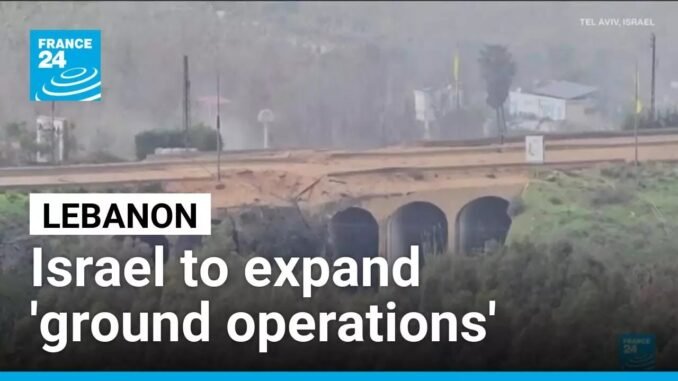

Summary: Israel has destroyed a major bridge near Tyre and announced plans to expand ground operations in southern Lebanon, raising fears of a full-scale invasion and regional escalation.
The Middle East conflict has taken a dangerous new turn as Israeli forces demolished strategic bridges in southern Lebanon and announced preparations for expanded ground operations against Hezbollah. The development has sparked international concern about a potential full-scale invasion that could destabilize the entire region.
Strategic Infrastructure Under Attack
In a significant escalation of military activity, Israeli Defense Forces (IDF) targeted several bridges in southern Lebanon, including a critical crossing near the coastal city of Tyre. Eyewitnesses reported thick plumes of smoke rising from the bridge after multiple strikes rendered it completely unusable.
According to Lebanese state media, the coordinated attacks on transportation infrastructure represent a tactical shift in Israel’s military strategy. The destroyed bridges, particularly those spanning the Litani River, serve as vital lifelines connecting southern Lebanon to the rest of the country.
Lieutenant General Eyal Zamir, speaking on behalf of the Israeli military, confirmed that operations against Hezbollah are entering a more extensive phase. He described the campaign as “ongoing and potentially prolonged,” emphasizing that all actions are being executed according to a carefully structured military plan.
Lebanon Condemns Sovereignty Violation
Lebanese President Joseph Aoun has strongly condemned the attacks, describing them as a grave escalation and a clear violation of his country’s sovereignty. In a statement that resonated across the Arab world, President Aoun warned that targeting critical infrastructure—especially bridges over the strategic Litani River—could signal the beginning of a comprehensive ground invasion.
“These actions risk isolating southern Lebanon from the rest of our nation,” Aoun stated, highlighting concerns that the military campaign could fragment the country and worsen the humanitarian crisis already unfolding.
The Litani River, located approximately 30 kilometers north of the Israeli border, has become a focal point in the conflict. Israeli military strategists view control of this geographic feature as essential to disrupting what they describe as Hezbollah’s logistical networks.
Escalating Violence and Humanitarian Crisis
The conflict, which has intensified dramatically since early March, has created a dire humanitarian situation. Lebanese officials report that over one million people have been displaced in recent weeks, with casualties mounting on both sides.
Israeli forces have conducted extensive airstrikes across southern Lebanon, the Bekaa Valley, and border communities, while simultaneously carrying out limited ground incursions. The military operations have included the demolition of structures Israeli authorities claim are part of Hezbollah’s military infrastructure.
Meanwhile, Hezbollah has responded with sustained rocket attacks targeting northern Israel and border settlements. The militant group has claimed responsibility for numerous strikes on Israeli military positions, demonstrating its continued operational capacity despite the intense bombardment.
Military Objectives and Regional Implications
Israeli officials maintain that the destruction of bridges and transportation networks serves a clear military purpose: disrupting the movement of Hezbollah fighters and weapons throughout southern Lebanon. By severing these connections, Israel aims to isolate militant units and prevent the resupply of ammunition and equipment.
However, critics argue that targeting civilian infrastructure violates international humanitarian law and disproportionately affects ordinary Lebanese citizens who depend on these routes for commerce, medical care, and daily survival.
What This Means for the Region
As both sides continue exchanging fire, regional observers are increasingly concerned about the potential for this conflict to spiral into a broader war. The destruction of major infrastructure and the preparation for expanded ground operations suggest that Israel is committed to a prolonged military campaign.
For Nigeria and other African nations watching developments in the Middle East, this escalation serves as a reminder of how quickly regional tensions can explode into full-scale warfare. The humanitarian consequences—mass displacement, civilian casualties, and infrastructure destruction—echo conflicts that have affected communities across Africa.
The international community has called for restraint from both sides, but with military operations intensifying and rhetoric hardening, the prospects for a diplomatic resolution appear increasingly distant.
As the situation continues to unfold, the world watches anxiously to see whether this escalation will mark the beginning of a wider regional conflict or whether diplomatic efforts can still pull both parties back from the brink.
The conflict between Israel and Hezbollah remains fluid, with both military and diplomatic developments occurring rapidly. The destruction of critical infrastructure and preparation for expanded ground operations suggest the region may be entering a new and more dangerous phase of conflict.
Check buzzUp9ja for more updates
Be the first to comment