
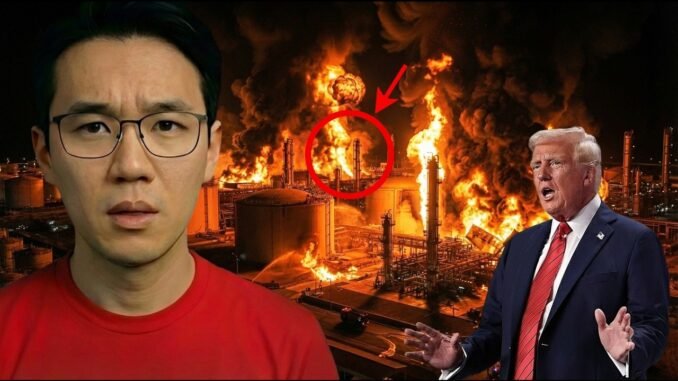

Summary: Israeli airstrike on Iran’s South Pars gas field threatens global energy supplies and escalates Middle East tensions. Oil prices surge as conflict threatens Gulf infrastructure.
The Middle East conflict has taken a dangerous new turn as Israeli forces reportedly struck Iran’s South Pars gas field—the world’s largest natural gas reserve—in an attack that has sent shockwaves through global energy markets and raised serious concerns about the security of vital oil and gas infrastructure.
What Happened at South Pars?
According to Iranian state media, explosions rocked the massive South Pars facility following what Tehran describes as an Israeli airstrike. This is no ordinary gas field—South Pars produces approximately three-quarters of Iran’s entire gas supply and represents a critical piece of both regional and global energy infrastructure.
The field is unique because it’s actually shared between Iran and Qatar, with the Qatari side known as the North Field. This shared nature makes any attack on the facility a matter of international concern, not just a bilateral issue between Israel and Iran.
Qatar Condemns the Strike
Qatar, which shares the massive gas reserve with Iran, didn’t waste time in condemning the attack. Foreign Ministry spokesman Majed Al Ansari described the strike as both “dangerous & irresponsible,” particularly given the current military tensions in the region.
“The Israeli targeting of facilities linked to Iran’s South Pars field, an extension of Qatar’s North Field, is a dangerous & irresponsible step amid the current military escalation in the region,” Al Ansari stated.
This response highlights a key concern: when you attack shared infrastructure, you’re not just hitting your enemy—you’re potentially affecting neutral parties and the broader global energy supply chain.
Iran Promises “Powerful” Retaliation
Iran has responded with strong words, warning that it will retaliate forcefully against what it calls “American-Zionist” aggression. The Iranian military’s statement was clear and threatening:
“As previously warned, if the fuel, energy, gas, and economic infrastructures of our country are attacked by the American-Zionist enemy, in addition to a powerful counterattack against the enemy, we will severely strike the origin of that aggression as well.”
More concerning for the wider region, Iran has declared that it considers “fuel, energy, and gas infrastructures” in countries allied with Israel as “legitimate targets” for retaliation.
Evacuation Warnings Across the Gulf
Taking their threats a step further, Iranian authorities have issued evacuation warnings for major oil and gas installations across the Gulf region, including facilities in Saudi Arabia, the United Arab Emirates, and Qatar. The warning advised citizens, residents, and employees to “immediately leave these areas and move to a safe distance without any delay.”
The statement claimed these facilities “have become direct and legitimate targets and will be targeted in the coming hours.”
For Nigeria and other oil-producing nations, this represents a serious development. Any disruption to Gulf energy infrastructure could dramatically affect global oil prices and supply chains.
What This Means for Global Energy Markets
The response from global energy markets was immediate and significant. Oil prices jumped by approximately 5% to $108 per barrel, reflecting genuine fears about potential disruptions to supplies.
The concern centres particularly on the Strait of Hormuz, the narrow waterway through which roughly one-fifth of the world’s oil exports pass. Any military conflict that threatens shipping through this strategic chokepoint could have devastating effects on global energy supplies.
For Nigeria, an oil-producing nation, this situation presents both risks and opportunities. While higher global oil prices could potentially benefit our economy in the short term, prolonged instability and supply disruptions could harm the global economy and reduce overall demand for oil.
The Nuclear Dimension
Adding another layer of danger to the situation, reports indicate that a projectile struck Iran’s Bushehr Nuclear Power Plant, the country’s only operational nuclear power station. While the International Atomic Energy Agency (IAEA) confirmed the incident occurred, they reported no damage to the facility or injuries to staff.
IAEA Director General Rafael Grossi has called for restraint, warning about “any risk of a nuclear accident” during the conflict. The involvement of nuclear facilities in this escalating conflict raises the stakes considerably and introduces the possibility of catastrophic consequences.
Broader Regional Implications
The Israeli military hasn’t limited its actions to Iran alone. They’ve also conducted strikes on fuel infrastructure in southern Lebanon linked to Hezbollah, the Iran-backed armed group. This suggests a coordinated strategy to target Iranian energy interests across multiple fronts.
Meanwhile, reports suggest that former U.S. President Donald Trump has authorized strikes on Iranian missile infrastructure in an effort to counter threats to regional shipping routes, though these reports remain unconfirmed.
What Happens Next?
Analysts are warning that this conflict could have far-reaching consequences for both global markets and regional stability. The targeting of energy infrastructure represents a significant escalation from previous military engagements, as it threatens not just military targets but the economic foundations of entire nations.
For ordinary Nigerians, the immediate concern will likely be fuel prices. Any sustained disruption to Gulf oil and gas supplies could lead to higher prices at the pump and increased costs for transported goods.
Beyond that, the conflict serves as a reminder of how interconnected global energy systems are, and how quickly regional conflicts can affect economies thousands of kilometres away.
The Bottom Line
The reported destruction of facilities at the South Pars gas field marks a dangerous new chapter in Middle East tensions. With threats flying back and forth, evacuation warnings issued across the Gulf, and nuclear facilities caught in the crossfire, the international community faces a genuine crisis.
For now, all eyes remain on the region as world powers attempt to prevent further escalation. The coming days will be critical in determining whether this conflict can be contained or whether it will expand into a broader confrontation with potentially catastrophic consequences for global energy security and economic stability.
For more information, check buzzUp9ja
Be the first to comment