
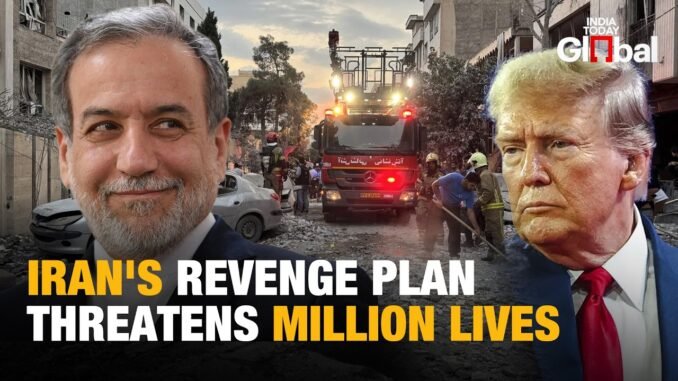

Summary: Tensions escalate as Iran threatens retaliation against regional infrastructure following Trump’s warning to destroy Iranian power plants if the Strait of Hormuz remains closed.
The Middle East stands on the brink of a major confrontation as Iran has issued a stark warning: any attack on its facilities will trigger massive retaliation against critical infrastructure across the region. This comes after former U.S. President Donald Trump gave Iran a 48-hour deadline to fully reopen the Strait of Hormuz or face devastating consequences.
Trump’s Ultimatum and Iran’s Defiant Response
Trump, known for his hardline stance on Iran during his presidency, has threatened to “obliterate” Iran’s major power facilities if the crucial Strait of Hormuz—which handles approximately one-fifth of the world’s crude oil supply—is not reopened immediately and without threats.
Iran’s military leadership has responded with equal force, warning that any strike on Iranian infrastructure would prompt immediate attacks on U.S. assets throughout the Middle East. Their targets, they say, would include energy systems, IT infrastructure, and even desalination plants that provide drinking water to millions in the Gulf region.
The Strait of Hormuz: Why This Waterway Matters
For Nigerians familiar with the importance of oil to national economies, the significance of the Strait of Hormuz cannot be overstated. This narrow waterway between Iran and Oman serves as the world’s most important oil chokepoint. Any disruption here doesn’t just affect the Middle East—it sends shockwaves through global oil markets, impacting prices at Nigerian fuel stations and affecting the entire economy.
Recent Escalations Paint a Dangerous Picture
The war of words follows real military action. Iran recently launched missiles into southern Israel, targeting areas near Dimona and Arad. Over 100 people were injured as some projectiles evaded Israeli air defence systems. Israel retaliated with airstrikes on Tehran, continuing the dangerous cycle of attack and counter-attack.
Beyond Israel, Iran has expanded its operations to include:
– Missile and drone strikes on Saudi Arabia and the United Arab Emirates
– An attempted long-range attack on the joint US-UK military base at Diego Garcia (which failed)
– Continued threats against maritime traffic in the Gulf
Meanwhile, the United States has responded by deploying additional Marines to the region and conducting strikes on Iranian coastal facilities to limit Tehran’s ability to threaten shipping routes.
Global Economic Fallout
The crisis is already hitting wallets worldwide. Oil prices have surged dramatically, with Brent crude climbing above $105 per barrel—levels not seen in years. For Nigeria, a major oil producer, this presents a complex situation: higher prices could boost revenue, but global instability and potential supply disruptions create uncertainty for long-term planning.
International reactions have been swift. The UK, France, Germany, and other nations have condemned what they describe as Iran’s “effective blockade” of the strait. However, Trump has criticized NATO allies for not doing enough to secure the vital shipping route, highlighting divisions even among Western powers.
Iran’s Surprising Resilience
Despite weeks of sustained attacks and significant losses, military analysts report that Iran’s capability to launch strikes remains largely intact. This resilience has surprised many observers who expected Iranian military infrastructure to degrade more quickly under sustained pressure.
The country’s ability to continue operations—from missile launches to drone strikes across multiple countries—demonstrates both the depth of its military resources and its determination to maintain its position as a regional power.
What This Means for Nigeria and Africa
While this conflict may seem geographically distant, its implications reach Nigerian shores:
1. Fuel prices: Global oil price increases typically translate to higher costs at Nigerian pumps, affecting transportation, food prices, and overall inflation.
2. Economic stability: Uncertainty in global oil markets can affect Nigeria’s oil revenue projections and foreign exchange earnings.
3. Regional security lessons: The confrontation highlights the strategic importance of key trade routes—relevant for Africa’s own maritime security concerns along the Gulf of Guinea.
4. International relations: Nigeria’s position as a non-permanent UN Security Council member may require careful diplomatic navigation of this crisis.
The Path Forward Remains Uncertain
With Trump’s 48-hour deadline looming and both sides showing no signs of backing down, the international community watches nervously. The Strait of Hormuz remains partially restricted, global energy markets remain volatile, and the threat of wider regional conflict grows with each passing day.
As both Iran and the United States signal willingness to escalate further, the world hopes that diplomatic channels can prevail before threats become reality. The stakes—for regional stability, global energy security, and international peace—could not be higher.
For Nigerians and Africans watching from across continents, this crisis serves as a reminder of how interconnected our world has become, where conflicts thousands of miles away can impact daily life from Lagos to Kano, from Abuja to Port Harcourt.
Visit buzzUp9ja for more details
Be the first to comment