
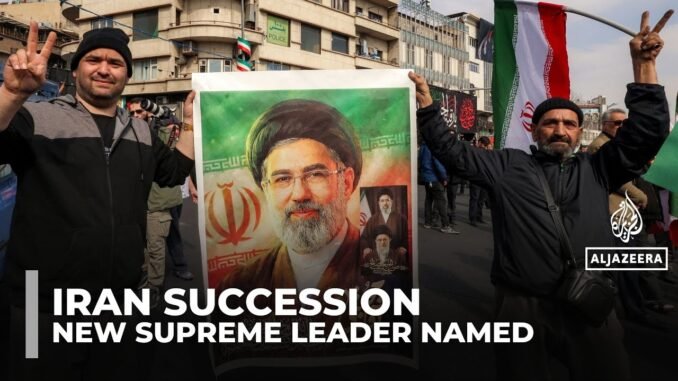

In a major development that has sent shockwaves across the Middle East and the international community, Iran has officially named Mojtaba Khamenei as the country’s new Supreme Leader, following the reported death of his father, Ali Khamenei.
The historic announcement was made on Sunday, March 8, by Iran’s Assembly of Experts—the powerful clerical body constitutionally mandated to select the nation’s supreme leader. According to state media reports, the decision came after what officials described as a “decisive vote” among the assembly members.
A Call for National Unity
In an official statement released through Iranian state media, the Assembly of Experts has called on all citizens to rally behind the new leadership during this critical period. The statement specifically urged Iranians, “especially the elites and intellectuals of the seminaries and universities,” to pledge their allegiance to Mojtaba Khamenei and work together to preserve national unity.
This appeal for solidarity comes at a particularly sensitive time for the Islamic Republic, as the country navigates both internal transition and external pressures.
The Circumstances Surrounding the Leadership Change
The appointment follows the death of Ali Khamenei, who had been Iran’s Supreme Leader since 1989—a position he held for over three decades. According to reports, the elder Khamenei was killed on February 28 during what has been described as a joint military operation by the United States and Israel. The operation allegedly targeted key leadership sites in Tehran amid rising regional tensions in the Middle East.
The circumstances of his death mark a dramatic escalation in the already volatile relationship between Iran and Western powers, particularly the United States and Israel.
International Reactions and Controversies
Even before the official announcement, the possibility of Mojtaba Khamenei assuming leadership had already sparked international commentary. Former US President Donald Trump publicly opposed the prospect, reportedly dismissing Mojtaba as a “lightweight” and arguing that he should not have a role in determining Iran’s future leadership.
Despite such external criticism, the Assembly of Experts has moved forward with the appointment, signalling Iran’s determination to maintain its sovereign decision-making process regardless of foreign opinions.
What This Means for Nigeria and Africa
For Nigerians and the broader African continent, developments in Iran carry significant implications. As a major oil-producing nation, Iran’s stability affects global energy markets and prices—factors that directly impact Nigeria’s own oil-dependent economy. Additionally, geopolitical shifts in the Middle East often have ripple effects on international relations, trade, and security dynamics that touch African nations.
As this situation continues to unfold, the world watches closely to see how Mojtaba Khamenei will navigate Iran’s domestic challenges and international relations in the coming days and months.
—
This is a developing story. More details will be provided as information becomes available on buzzUp9ja
Be the first to comment