
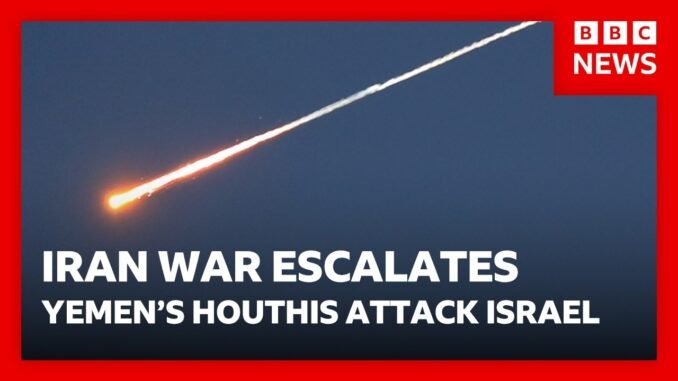

The Middle East conflict has taken a dramatic turn as Yemen’s Houthi rebels launched a massive ballistic missile attack on Israel, marking their first direct military action since the escalating confrontation between the United States, Israel, and Iran reached fever pitch.
What Happened?
According to statements from Houthi military officials, the Iran-backed group fired multiple ballistic missiles toward Israeli territory in what they describe as a show of solidarity with their regional allies. This aggressive move signals that the conflict, which many feared would remain contained, is now spreading across the Middle East like wildfire.
For Nigerians following global affairs, this development should raise serious concerns. The expansion of this conflict could have far-reaching implications for oil prices, international trade routes, and global economic stability—all factors that directly impact our economy here at home.
The Bigger Picture: A Regional War Brewing?
The Houthi strikes represent more than just isolated attacks. They indicate a coordinated response involving Iran’s network of allied groups across the region, often referred to as the “Axis of Resistance.” This includes:
– Hezbollah in Lebanon
– Houthi rebels in Yemen
– Various militia groups in Iraq and Syria
– Hamas in Gaza
These groups have increasingly coordinated their actions against Israel and its Western allies, particularly the United States. The involvement of the Houthis, who have already disrupted global shipping in the Red Sea for months, adds another dangerous dimension to an already volatile situation.
Why Should Nigerians Care?
You might be wondering: “Why should this matter to us here in Nigeria?” The answer is simple—everything is connected in our globalized world.
Economic Impact: The Red Sea shipping disruptions have already increased freight costs worldwide. Further escalation could push oil prices higher, affecting petrol prices at Nigerian pumps and the cost of imported goods.
Regional Stability: As Africa’s most populous nation and a regional power, Nigeria has strategic interests in maintaining global peace and stability. Middle Eastern instability often creates ripple effects across Africa.
Nigerian Nationals: Thousands of Nigerians live and work across the Middle East. Any expansion of the conflict puts our citizens in potential danger.
The International Response
The international community watches nervously as the conflict threatens to spiral beyond control. The United States has reinforced its military presence in the region, while diplomatic efforts to contain the situation appear to be struggling.
Israel has vowed to respond to any attacks on its territory, setting the stage for a potentially devastating cycle of retaliation that could engulf the entire region.
What Happens Next?
As this situation develops, experts warn that the risk of a full-scale regional war is at its highest point in decades. The involvement of multiple actors, each with their own grievances and objectives, makes de-escalation increasingly difficult.
For now, all eyes remain on how Israel and its allies will respond to the Houthi strikes, and whether cooler heads will prevail before the situation deteriorates further.
Stay informed and stay safe. We’ll continue monitoring this developing story and bring you updates as they emerge.
Check buzzUp9ja for more updates
Be the first to comment