
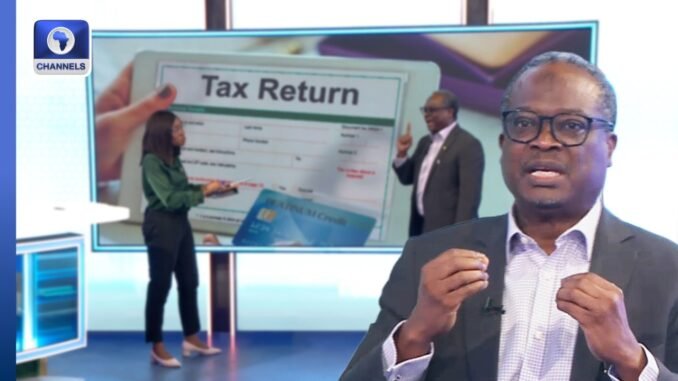

The Lagos State Internal Revenue Service (LIRS) has made it clear: filing your annual tax return is not a suggestion, it’s a constitutional obligation. And if you think you can dodge it, think again – the penalties are heavy enough to make you reconsider.
Abideen Akande, Special Adviser to the Executive Chairman of LIRS, broke down everything Lagosians need to know about tax filing in a recent interview with Guardian Nigeria. His message? Whether you earned N50,000 or N50 million last year, you must file your returns.
Why Must You File Tax Returns?
“Filing of returns allows the tax authority to know how much you have earned in the preceding year and how much tax, if any, you have already paid in advance,” Akande explained. “Nigeria operates a self-assessment tax system. This means that you voluntarily declare your income for a defined period.”
In simple terms, the government trusts you to tell them what you earned. It’s like those honour system shops where you pick items and pay without supervision – except this one has serious consequences if you don’t comply.
Akande put it bluntly: “The interesting thing is that people often talk about constitutional rights, but shy away from constitutional obligations.”
E pain, but na true word be that.
Even If You Owe Nothing, You Must Still File
Here’s where many Lagosians get confused. You might think: “I didn’t make much money last year, so this doesn’t concern me.” Wrong.
“Even if by your own assessment, you believe you do not owe the government any money, you are still expected to file,” Akande clarified. “For example, you may indicate that all the income you earned last year was below N840,000, which is around the annual equivalent of the minimum wage threshold. In that case, you would automatically not be liable to pay tax.”
But here’s the catch – you still need to declare that income. Think of it as telling the government: “Bros, I no get reach, I never reach your tax level yet.”
The government has deliberately set a threshold to protect low-income earners. If you earned less than N840,000 annually (roughly N70,000 monthly), you won’t pay tax. But you must still file to prove it.
How to File Your Tax Returns
Forget the old stories of long queues at government offices. The process is now fully digital.
“You simply go to the e-tax platform at e-tax.lirs.net,” Akande explained. “You input your details, and the system guides you to the filing page. It shows where to enter your income, your expenses, and any taxes that may have been withheld from you.”
The form you’ll fill is called ‘Form A’ – a declaration of income and claim for reliefs.
What Income Must You Declare?
For 2026 filings, you’re declaring income earned between January 1, 2025, and December 31, 2025. This includes:
– Salary from your primary job
– Side hustles (yes, that your weekend catering business counts)
– Rental income from that your shop in Alaba
– Investment income like dividends from stocks
Even if tax was already deducted from certain income sources (like dividends from BUA Cement shares), you still need to declare it. The good news? You won’t be taxed twice on it.
“This helps the tax authority to understand the full size of economic activity in the state, which also contributes to measuring the Gross Domestic Product (GDP) of Lagos State,” Akande noted.
When Is the Deadline?
Mark your calendar: March 31, 2026 is the final deadline. The filing window opened on January 1, so there’s no excuse for last-minute rush.
Unlike employer filings done in January, individual filings are based on both constitutional and statutory provisions – making them doubly important.
The Penalty for Defaulters: This One Go Pain You
Now, let’s talk about what happens if you decide to play smart and ignore this deadline.
Under the new law, penalties are structured to hurt:
– N100,000 for the first month of default
– N50,000 for each subsequent month until you comply
Akande put it in perspective: “N100,000 can buy your internet data for an entire year. So, it makes more sense to comply than to pay such penalties.”
For many Lagosians, N100,000 is several months’ worth of transport money or enough to stock a small shop. Why waste it on avoidable penalties?
What If You Can’t Pay Immediately?
Life happens. Maybe you discovered you owe tax but your account is currently on life support. LIRS has considered this.
“If you cannot pay immediately, you can approach the tax authorities and request a payment plan,” Akande revealed. “For instance, you may say: ‘Please allow me to pay N3 now, N3 next month, and N4 later.'”
However, don’t think you can just play fast one. “If the tax authority is satisfied that you are genuinely facing financial challenges, it may approve the arrangement. But if it believes you are simply trying to evade payment, it may decline your request and proceed to recover the money.”
The message is clear: genuine hardship will be accommodated, but games will not be tolerated.
The Bigger Picture: Why Tax Matters
Some people will read this and grumble: “Government wan collect our money again.” But Akande reminded us of a universal truth: “In any organised society, you must have a tax system. As the saying goes, ‘aside from taxes, the only other certainties are death and change.’ So, tax compliance is inevitable.”
Like it or not, taxes fund the roads we complain about, the schools we want improved, and the security we demand. Without a functioning tax system, Lagos cannot provide the services its 20+ million residents need.
Final Word: Compliance Is Cheaper Than Penalty
Whether you’re a corporate executive in Ikoyi, a trader in Oshodi, or a tech bro in Yaba, this message applies to you. Filing your tax return is not optional – it’s a constitutional duty.
The process is now simpler than ever with the e-tax platform. The deadline is clear: March 31. The penalties for default are steep enough to make you think twice.
So instead of gambling with N100,000 in penalties, why not take a few minutes to visit e-tax.lirs.net and get compliant?
As Akande wisely noted, that N100,000 penalty can buy you internet data for a whole year. Or you could use it for transport, food, or investing in your business.
The choice is yours, but the clock is ticking.
Need more information? Visit the LIRS e-tax platform at e-tax.lirs.net or read the full interview on Guardian Nigeria’s website.
Check buzzUp9ja for more details
Be the first to comment