
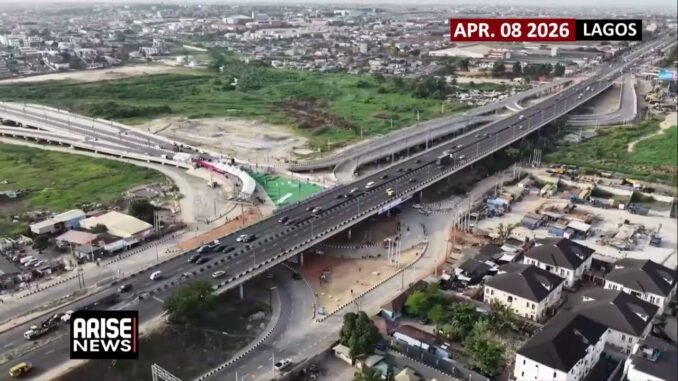

President Bola Ahmed Tinubu has commissioned the newly completed Ojota-Opebi Link Bridge in Lagos, describing the infrastructure as a powerful symbol of progress and a catalyst for economic growth in Nigeria’s bustling commercial capital.
The 5.04-kilometre bridge, which connects two critical areas of Lagos, represents a significant milestone in the administration’s commitment to transforming Nigeria’s infrastructure landscape and improving the daily lives of citizens.
A Bridge Beyond Concrete and Steel
Speaking at the commissioning ceremony, President Tinubu emphasized that true development transcends physical structures—it must tangibly impact the lives of ordinary Nigerians.
“Development is not just about building roads and bridges,” the President declared. “It must be seen, it must be felt, and most importantly, it must improve the quality of life of our people.”
The Ojota-Opebi Link Bridge is expected to dramatically reduce travel time for thousands of Lagos residents who navigate the city’s notorious traffic daily. By providing an alternative route and easing congestion on existing roads, the bridge promises to boost productivity and economic activity across the metropolis.
Strategic Infrastructure for Economic Growth
Lagos, home to over 20 million people, remains Nigeria’s economic powerhouse, contributing significantly to the nation’s GDP. However, inadequate infrastructure has long hampered the city’s full potential.
The new link bridge addresses this challenge by:
– Reducing travel time between Ojota and Opebi from over an hour during peak periods to approximately 15-20 minutes
– Easing traffic congestion on alternative routes like Kudirat Abiola Way and Mobolaji Bank Anthony Way
– Facilitating business operations by improving connectivity between residential and commercial areas
– Enhancing property values in surrounding neighbourhoods
Renewed Hope Infrastructure Agenda
The commissioning of the Ojota-Opebi Link Bridge aligns with President Tinubu’s “Renewed Hope” agenda, which places infrastructure development at the heart of Nigeria’s economic recovery and growth strategy.
Since assuming office, the administration has prioritized completing abandoned projects and initiating new ones across critical sectors including transportation, power, and digital infrastructure.
The President used the occasion to reassure Nigerians that his government remains committed to delivering tangible projects that directly address the challenges faced by citizens in their daily lives.
Lagos State Government’s Role
The bridge project, executed in collaboration with the Lagos State Government, demonstrates the potential of federal-state partnerships in addressing Nigeria’s infrastructure deficit.
Lagos State Governor Babajide Sanwo-Olu, who attended the commissioning, praised the synergy between state and federal authorities in delivering the project, describing it as a model for other states.
“This bridge is proof that when governments work together with a shared vision, we can achieve remarkable results for our people,” Governor Sanwo-Olu stated.
Impact on Daily Life
For Lagos residents, particularly those living and working in the Ikeja, Opebi, Ojota, and surrounding areas, the bridge represents more than infrastructure—it’s a daily relief from the stress of Lagos traffic.
Business owners along the corridor have expressed optimism that improved accessibility will attract more customers and boost economic activity in the area. Commercial vehicle operators also anticipate increased efficiency and reduced fuel consumption.
Looking Ahead
As Nigeria grapples with economic challenges, infrastructure projects like the Ojota-Opebi Link Bridge offer hope that government remains focused on delivering practical solutions to everyday problems.
President Tinubu’s emphasis that development must be “seen and felt” resonates with citizens who have long demanded that government projects translate into tangible improvements in their quality of life.
The successful completion of this bridge raises expectations for other infrastructure projects across the country, with many Nigerians hoping that similar attention will be given to roads, railways, and power infrastructure in other regions.
—
As Lagos continues to grow and evolve, strategic infrastructure investments like the Ojota-Opebi Link Bridge will remain crucial to unlocking the city’s full economic potential and improving the daily experience of millions of residents navigating Africa’s largest metropolis.
Get more details on buzzUp9ja
Be the first to comment