
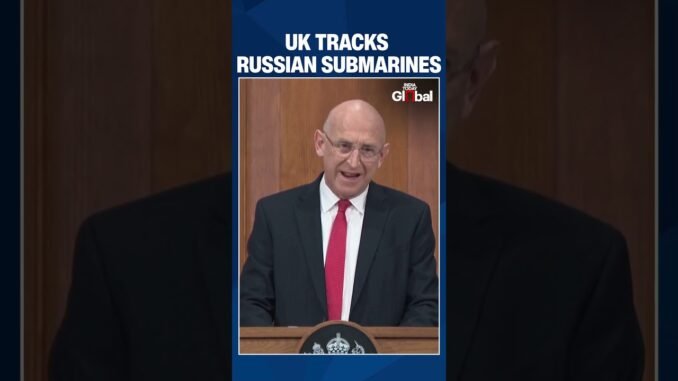

In a significant show of military vigilance, the United Kingdom has disclosed that it deployed approximately 500 troops to monitor three Russian submarines operating dangerously close to British territorial waters. The operation, which lasted an entire month, involved coordinated efforts between the Royal Navy and the Royal Air Force’s sophisticated P-8 surveillance aircraft.
UK Defence Secretary John Healey made this revelation in what appears to be a direct message to Russian President Vladimir Putin: “We see you.” This statement carries weighty implications, signaling that Britain remains fully alert and capable of tracking Russian military movements, even in an era of increasingly tense geopolitical relations.
What This Operation Tells Us
The disclosure of this military operation is unusual in itself. Typically, such surveillance activities remain classified for years. However, the decision to publicly announce this month-long tracking mission sends several clear messages:
To Russia: Britain’s military capabilities remain sharp, and any movements near British waters will be detected and monitored.
To NATO allies: The UK continues to pull its weight in the collective defense of European waters and airspace.
To British citizens: Despite budget pressures and ongoing debates about defense spending, the UK military remains operationally effective.
The Nigerian Perspective: Why This Matters
For Nigerian readers following global affairs, this development offers important lessons about national security and military readiness. Nigeria, with its own extensive coastline along the Gulf of Guinea, faces similar challenges in monitoring maritime activities, particularly concerning piracy and illegal fishing.
The British operation demonstrates the level of resources and coordination required for effective maritime surveillance. It involved:
– Multiple naval vessels from the Royal Navy
– RAF P-8 Poseidon maritime patrol aircraft
– Approximately 500 military personnel
– Sustained operations lasting 30 days
– Real-time intelligence gathering and analysis
The Broader Context: Russia’s Maritime Activities
Russian submarine activity near NATO waters has increased significantly since the invasion of Ukraine in February 2022. These submarines are not merely passing through; they often conduct intelligence-gathering operations, test NATO response times, and demonstrate Russia’s continued military capabilities despite sanctions and battlefield losses in Ukraine.
For coastal nations worldwide, including Nigeria, the principle remains the same: effective sovereignty requires the ability to know what’s happening in your waters and respond appropriately.
Technology Meets Strategy
The P-8 Poseidon aircraft mentioned in this operation represents cutting-edge maritime patrol technology. These aircraft can detect submarines using sophisticated sensors, track multiple targets simultaneously, and coordinate with naval vessels in real-time.
Nigeria’s recent efforts to strengthen its maritime security architecture, including collaborations with the Nigerian Navy and investments in coastal surveillance, echo the same principles demonstrated in this UK operation—knowing what’s happening in your territorial waters is fundamental to national security.
What Happens Next?
This public disclosure likely aims to deter future Russian incursions while reassuring British and allied populations. However, it also raises questions about the state of UK-Russia relations and whether we’re entering a new phase of military posturing reminiscent of Cold War dynamics.
For international observers, including Nigerian defense analysts and policymakers, this incident reinforces the importance of:
1. Maintaining modern surveillance capabilities
2. Training personnel for sustained operations
3. Coordinating between different military branches
4. Making strategic decisions about when to reveal military activities
The Message Is Clear
Defence Secretary Healey’s statement—”we see you”—might be brief, but its implications are profound. In an age where much military activity occurs in shadows and through proxy forces, this direct acknowledgment of surveillance operations represents a calculated move in the chess game of international relations.
As nations worldwide, including Nigeria, work to secure their borders and territorial waters, the British approach offers both a template and a reminder: vigilance, capability, and the willingness to act remain the cornerstones of effective defense.
What are your thoughts on maritime security and military readiness? How do you think Nigeria can strengthen its own coastal surveillance capabilities? Share your views in the comments below.
For more details, check buzzUp9ja
Be the first to comment