
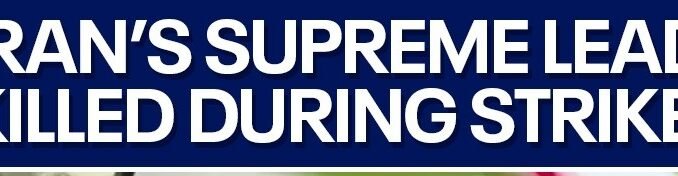

Summary: Iranian Supreme Leader Ali Khamenei has reportedly been killed in a coordinated Israeli-U.S. military strike on Tehran. Details of the massive operation and regional implications revealed.
—
In what could mark a dramatic turning point in Middle Eastern geopolitics, Iranian Supreme Leader Ayatollah Ali Khamenei has reportedly been killed in a massive joint military operation carried out by the United States and Israel on Saturday, February 28.
The Strike That Shook The Middle East
According to Israel’s ambassador to Washington, who briefed U.S. officials, the 86-year-old Khamenei died when Israeli forces struck his compound in Tehran. The operation, described by both Washington and Tel Aviv as a “pre-emptive” strike, targeted what the allies claim was Iran’s continuing pursuit of nuclear weapons.
CNN reports that an Israeli official confirmed to Axios that Khamenei’s body was recovered from the ruins of his destroyed compound, with Israeli intelligence confirming his death several hours after the initial attack.
A Leader Who Shaped Iran for Decades
Khamenei, who has ruled Iran since 1989, wielded ultimate authority in the Islamic Republic for over three decades. As the successor to Ayatollah Ruhollah Khomeini, he continued to shape Iran’s theocratic system long after the 1979 Islamic Revolution that transformed the country.
His death, if confirmed by Iranian authorities, would create a massive power vacuum in Tehran and potentially destabilize the region further.
The Attack and Its Aftermath
The first wave of strikes appeared to concentrate on areas surrounding the Supreme Leader’s offices. However, it remained unclear whether Khamenei was present at the compound when the attack occurred. His death was not officially confirmed until several hours after the operation began.
Regional Retaliation
As expected, Iran did not take the attack lying down. Reports indicate that Iranian forces launched retaliatory missile strikes targeting Israel and various locations across the Middle East, raising fears of a wider regional conflict.
What This Means for Nigeria and Africa
For Nigerians and Africans watching these developments, the implications are significant. Any major conflict in the Middle East typically affects global oil prices, which could impact fuel costs across Nigeria. Additionally, the geopolitical tensions could reshape international alliances and trading relationships that affect the continent.
The situation remains fluid, with world leaders scrambling to assess the full implications of this dramatic development.
This is a developing story. Updates will be provided as more information becomes available.
BuzzUp9ja offers more details, check it out
Be the first to comment