
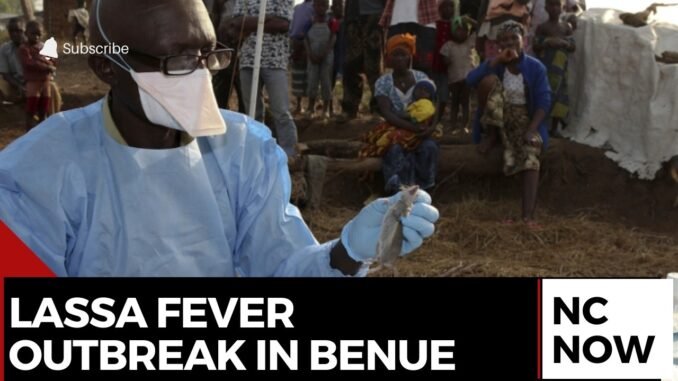

Summary: Benue State records 383 suspected Lassa fever cases with 47 confirmed positives and 14 deaths. Health authorities report significant progress in containing the outbreak through improved surveillance and early intervention.
The Benue State Government has disclosed a concerning rise in suspected Lassa fever cases, even as health authorities express cautious optimism about their containment efforts showing positive results.
Paul Ogwuche, the state Commissioner for Health and Human Services, revealed that suspected cases have climbed to 383, with 47 testing positive for the deadly viral disease. However, in what appears to be a significant victory for the state’s health response team, no new deaths have been recorded in the past 11 days, keeping the total fatality count at 14.
“We have not recorded any mortality in the last 11 days. So far, the cumulative figure of suspected cases has moved from 251 to 383, while 47 cases are confirmed cumulatively,” Ogwuche stated, highlighting the progress made despite the increasing case numbers.
Signs of Progress in the Battle Against Lassa Fever
The good news from the health commissioner suggests that Benue’s aggressive response strategy may be working. Laboratory testing conducted over the past 11 days identified only six new positive cases, indicating that the disease’s spread may be slowing down considerably.
Currently, 20 patients are receiving specialized care in isolation facilities across the state—14 at the Benue State University Teaching Hospital and six at the Federal Medical Centre Makurdi. These isolation centres have become crucial battlegrounds in the fight against the outbreak.
The State Epidemiologist, Msuega Asema, had earlier reported 251 suspected cases, 45 confirmed infections, and 10 deaths in February. While the overall figures have risen since then, the improved control measures implemented in recent weeks appear to be yielding positive outcomes.
Why the Numbers Are Improving
Commissioner Ogwuche credited the declining mortality rate and slower transmission to strengthened public health interventions and collaboration with international and national health partners, including the World Health Organization (WHO), Nigeria Centre for Disease Control (NCDC), and Médecins Sans Frontières (Doctors Without Borders).
“The rates have dropped drastically because we are actively combing for suspected cases… We have engaged in regular meetings with WHO, NCDC, and the Emergency Operations Centre,” the commissioner explained.
The state has deployed surveillance teams across all 23 local government areas, with healthcare workers receiving specialized training in infection prevention and control protocols. This comprehensive approach has helped limit further transmission of the disease.
Public Awareness: A Game Changer
One of the most significant factors in controlling the outbreak has been massive public sensitization and health education campaigns.
“The pillars we put in place, sensitization and health education, have accounted for this development. People now know what to do and what they should avoid,” Ogwuche noted with satisfaction.
The commissioner emphasized that early detection and prompt response have been crucial to improving patient outcomes. “So the earlier a patient presents, the better the outcome. The low mortality shows that people are being tracked in their communities and brought in for early treatment,” he said.
This community-based approach, which involves active case finding and encouraging residents to seek medical attention at the first sign of symptoms, has proven effective in reducing deaths from the disease.
Government Commitment and IDP Camp Concerns
The Benue State Government has demonstrated its commitment to fighting the outbreak by providing dedicated funding to support response efforts. Health officials have also confirmed that no cases have been recorded in the state’s internally displaced persons (IDP) camps, though they remain vigilant.
“Everyone is on their toes, doing the needful… We are on the verge of distributing informational materials (flyers) to the 15 IDP camps in the state,” Ogwuche added, indicating that preventive measures extend to these vulnerable populations.
What Nigerians Need to Know About Lassa Fever
Lassa fever is a serious viral disease that is endemic to West Africa, including Nigeria. The disease is primarily transmitted through contact with food or household items contaminated by infected rodents, particularly the multimammate rat.
Symptoms typically include fever, general weakness, and malaise, which can progress to more severe complications if left untreated. Early detection and treatment significantly improve survival rates, which is why Benue’s emphasis on community awareness and prompt reporting has been so effective.
The Road Ahead
While the current statistics show progress, health authorities in Benue are not letting their guard down. The continued surveillance, public education campaigns, and collaboration with international health partners suggest that the state is taking a long-term approach to not just containing this outbreak, but preventing future ones.
For residents of Benue and neighbouring states, the message is clear: remain vigilant, maintain proper hygiene, store food properly to prevent rodent contamination, report any suspected cases immediately, and seek medical attention early if symptoms develop.
The Benue State experience demonstrates that with proper coordination, adequate funding, community engagement, and timely intervention, even serious disease outbreaks can be effectively managed and controlled.
Visit buzzUp9ja for more stories
Be the first to comment