
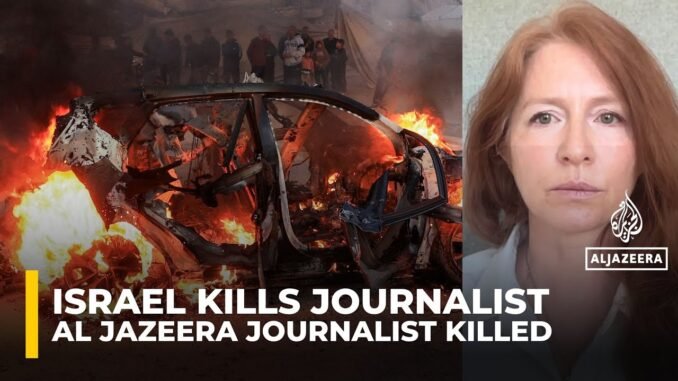

Summary: Israeli military alleges Al Jazeera journalist killed in Gaza strike was secretly a Hamas commander. The claim has sparked international controversy and raised questions about press freedom in conflict zones.
The Israeli Defence Forces (IDF) has made a startling allegation that has sent shockwaves through the international journalism community. According to Israeli military officials on Thursday, April 9, an Al Jazeera journalist who died in a Gaza strike was not just a member of the press, but allegedly operated as a Hamas militant commander under the cover of his media credentials.
The Controversial Claim
The IDF’s assertion paints a picture of a man living two separate lives: a respected journalist by day and an active Hamas operative by night. Israeli military spokespersons claim that the journalist used his position in the media as a shield for militant activities, raising serious questions about the blurred lines between civilian and combatant roles in the ongoing Gaza conflict.
This allegation, if true, would represent a significant breach of journalistic ethics and international norms protecting media workers in conflict zones. However, the claim has been met with immediate skepticism from press freedom organizations and the journalist’s colleagues.
Al Jazeera’s Response
Al Jazeera, the Qatari-based news network known for its extensive Middle East coverage, has vehemently denied the Israeli allegations. The network maintains that their employee was a legitimate journalist carrying out his professional duties when he was killed.
The incident highlights the dangerous conditions faced by journalists covering the Israeli-Palestinian conflict, particularly in Gaza, where media workers have long reported intimidation, restrictions, and life-threatening situations.
A Familiar Pattern?
For Nigerians following international affairs, this controversy may seem familiar. Similar allegations have surfaced multiple times during the ongoing conflict, with Israel claiming that Hamas operatives frequently use civilian infrastructure and identities as cover. Critics, however, argue that such claims are sometimes used to justify strikes on civilian targets, including journalists who report stories unfavorable to Israeli operations.
The situation mirrors concerns closer to home about press freedom and the safety of journalists covering sensitive conflicts, from the Northeast insurgency to communal clashes across Nigeria.
The Broader Context
This incident occurs against the backdrop of mounting international pressure on Israel regarding civilian casualties in Gaza. Journalists have played a crucial role in documenting the humanitarian situation in the besieged territory, often at great personal risk.
According to international press freedom organizations, dozens of journalists have been killed covering the Israeli-Palestinian conflict in recent years, making it one of the world’s deadliest assignments for media professionals.
Questions That Demand Answers
Several critical questions emerge from this controversy:
– What evidence does Israel have to support its claim?
– Was there an independent investigation before the strike?
– How can journalists protect themselves when such allegations can be made posthumously?
– What mechanisms exist to verify the true identity and activities of individuals in conflict zones?
International Reaction
The international community, including press freedom organizations, has called for an independent investigation into the circumstances of the journalist’s death. Human rights groups have expressed concern that labeling journalists as militants could set a dangerous precedent that further endangers media workers worldwide.
For Nigeria, a country that consistently ranks among the most dangerous places for journalists in Africa, the implications of this case resonate deeply. Nigerian journalists covering insurgency, banditry, and communal conflicts understand all too well the risks of being caught between conflicting narratives and armed groups.
The Way Forward
As investigations continue, this incident serves as a sobering reminder of the precarious position of journalists in conflict zones. Whether the Israeli allegations prove true or false, the case underscores the urgent need for:
– Clear international protocols protecting journalists
– Independent verification processes for military claims
– Accountability for attacks on media workers
– Transparent investigations into journalist deaths
The truth about this Al Jazeera journalist’s alleged double life may eventually emerge, but the damage to press credibility and the chilling effect on conflict reporting has already begun. For journalists everywhere—from Gaza to Borno State—the message is clear: the pen may be mightier than the sword, but it offers little protection when bullets fly.
As this story develops, the world watches to see whether evidence will support Israel’s explosive claims or vindicate the fallen journalist’s professional legacy.
Visit buzzUp9ja for more details
Be the first to comment