
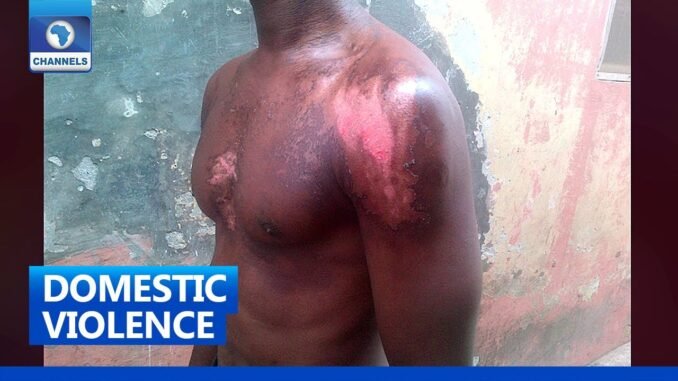

A young Nigerian man has taken to social media to share his painful experience of domestic violence in his family home, revealing that his father continues to physically abuse his mother despite his age and their years of marriage.
The Heartbreaking Incident
According to the man’s account, another violent episode occurred just last week when his father attacked his mother. When he tried to step in and protect her, the situation took an even darker turn – his father turned his aggression toward him instead.
The young man’s courage in speaking out has sparked important conversations across Nigerian social media about the prevalence of domestic violence, the challenges adult children face when witnessing abuse, and the cultural barriers that often keep such situations hidden within families.
A Pattern of Abuse
What makes this situation particularly disturbing is the revelation that this is not an isolated incident. The man disclosed that his father has been physically abusive toward his mother for years, indicating a long-standing pattern of domestic violence that has persisted in their household.
Many Nigerians responding to his story have shared similar experiences, with some revealing that they too have witnessed their fathers abusing their mothers, and felt helpless or were threatened when they attempted to intervene.
The Cultural Context
Domestic violence remains a serious issue in many Nigerian homes, often normalized or hidden behind closed doors due to cultural expectations around family privacy, respect for elders, and the stigma associated with “airing family dirty laundry” publicly.
Traditional beliefs that sometimes excuse male aggression, combined with economic dependence and societal pressure on women to “endure” for the sake of keeping the family together, create an environment where abuse can continue unchecked for decades.
What This Story Reveals
This young man’s experience highlights several critical issues:
– The cycle continues: When children grow up witnessing domestic violence, they carry trauma that affects them into adulthood
– Speaking up is dangerous: Those who try to protect victims often become targets themselves
– Change is difficult: Even when children are grown and capable of intervention, abusers may persist in their behavior
– Silence enables abuse: Fear of stigma keeps many families trapped in violent situations
Support and Reactions
The responses to his story have been mixed but largely supportive, with many Nigerians:
– Encouraging him to seek help from authorities or domestic violence organizations
– Sharing resources and helpline numbers
– Offering prayers and emotional support
– Calling for stronger enforcement of Nigeria’s Violence Against Persons Prohibition (VAPP) Act
– Urging his mother to leave the abusive relationship
Some have also questioned why the mother has stayed in the marriage, though others quickly pointed out the complex factors – financial dependence, children, social pressure, religious beliefs, and fear – that make leaving extremely difficult for many women.
Where to Get Help
If you or someone you know is experiencing domestic violence in Nigeria:
– National Human Rights Commission: 08004378225
– Domestic and Sexual Violence Response Team (Lagos): 08137960048, 08155194123
– Project Alert on Violence Against Women: 09096970189
– Police emergency lines: 112 (in some states), or visit your nearest police station
Organizations like Women at Risk International Foundation (WARIF), Mirabel Centre, and the Advocates for Children and Vulnerable Persons Network (ACVPN) also provide support services.
Breaking the Silence
This young man’s decision to speak publicly about his family’s situation, despite potential backlash, represents a growing movement among younger Nigerians who are refusing to accept domestic violence as normal or acceptable.
His story serves as a reminder that domestic abuse affects entire families, not just the primary victim, and that we all have a role to play in supporting survivors and holding abusers accountable.
Domestic violence is never acceptable. No one deserves to be beaten, regardless of the circumstances. If you’re in immediate danger, please contact emergency services or seek help from trusted friends, family members, or organizations that support domestic violence survivors.
For more information, check buzzUp
Be the first to comment