
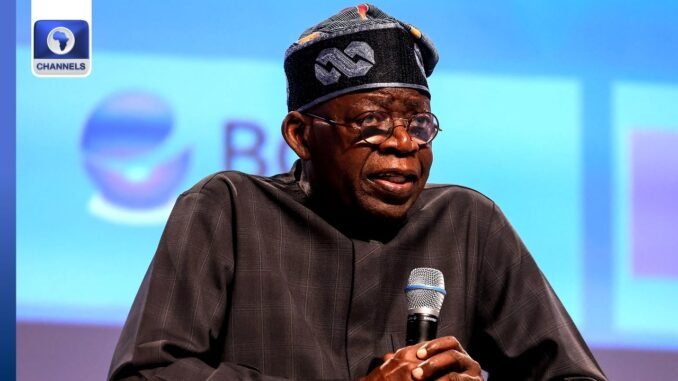

President Bola Ahmed Tinubu has made a shocking revelation, alleging that powerful groups connected to oil subsidy and foreign exchange practices are “wishing him dead” following the bold economic reforms he introduced since assuming office in May 2023.
The President’s startling claim sheds light on the intense resistance his administration has faced from entrenched interests who benefited massively from the old system that many Nigerians believe was riddled with corruption and inefficiency.
The Reforms That Shook Nigeria’s Economic Power Brokers
Since his inauguration on May 29, 2023, President Tinubu wasted no time in tackling two of Nigeria’s most controversial economic issues. In his inaugural speech, he declared “subsidy is gone,” instantly ending the decades-old fuel subsidy regime that had cost Nigeria trillions of naira annually.
Additionally, his administration moved to unify Nigeria’s multiple exchange rate windows, a system that had created opportunities for round-tripping and arbitrage by well-connected individuals and organizations.
These reforms, while causing immediate hardship for ordinary Nigerians through increased fuel prices and naira devaluation, were aimed at removing what many economists described as economic distortions that primarily benefited a select few at the expense of the broader population.
Who Are These “Cabals”?
For years, Nigerians have heard whispers about powerful cartels controlling critical sectors of the economy. The oil subsidy regime, in particular, had become synonymous with corruption, with subsidy payments ballooning to unsustainable levels while many Nigerians questioned where the money actually went.
The foreign exchange market also became a playground for the privileged few who could access dollars at official rates and sell at parallel market rates, pocketing the difference while the naira suffered.
President Tinubu’s decision to confront these entrenched interests head-on has apparently made him enemies in high places — people who, according to him, would rather see him gone than watch their lucrative arrangements dismantled.
The Cost of Bold Leadership
The President’s allegations raise serious questions about the personal risks leaders face when they attempt to reform systems that have enriched powerful interests for decades. It also highlights the enormous challenges facing anyone who tries to restructure Nigeria’s economy in ways that benefit the masses rather than the elite.
While many Nigerians have criticized the immediate impact of these reforms — particularly the fuel price increases that have driven up the cost of everything from transportation to food — others argue that removing these subsidies and unifying the exchange rate were necessary, albeit painful, steps toward economic stability.
What This Means for Nigeria
President Tinubu’s revelation about threats to his life underscores the depth of resistance to change within Nigeria’s economic system. It suggests that the battle for economic reform is not just about policies and regulations, but about confronting powerful vested interests willing to go to extreme lengths to protect their privileges.
For ordinary Nigerians bearing the brunt of these reforms through increased living costs, the President’s words may offer context — though perhaps not comfort — about why change has been so difficult and why the benefits seem slow in coming.
As Nigeria continues to navigate these turbulent economic waters, the question remains: Will these reforms ultimately benefit the average Nigerian, or will new arrangements simply replace the old cabals with new ones?
One thing is certain — the battle for Nigeria’s economic soul is far from over, and according to President Tinubu, some people would literally prefer to see him dead than allow that battle to continue.
—
What do you think about President Tinubu’s allegations? Are these reforms worth the current hardship? Share your thoughts in the comments below.
stay tuned on buzzUp9ja for more news
Be the first to comment