
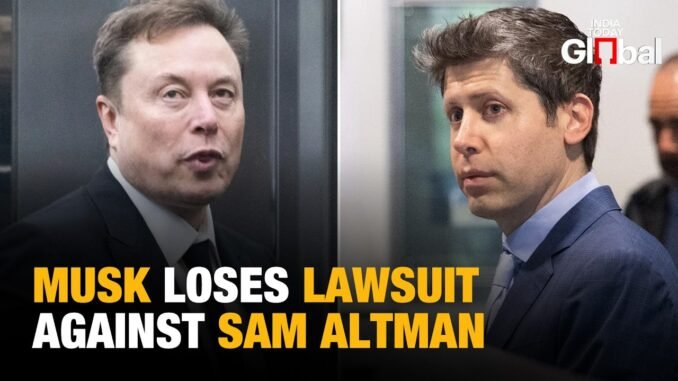

Summary: Billionaire Elon Musk loses landmark lawsuit against OpenAI and Sam Altman. Find out what this means for the future of artificial intelligence and tech partnerships in Nigeria and beyond.
In a significant development that has sent shockwaves through the global tech community, Tesla CEO and billionaire entrepreneur Elon Musk has lost his high-profile lawsuit against OpenAI and its co-founder Sam Altman. A U.S. jury delivered the verdict on Monday, May 18, ruling that the artificial intelligence company bears no liability to Musk regarding claims that it abandoned its original non-profit mission.
The Background: From Partners to Courtroom Rivals
For those following the drama from Lagos to Abuja, this case represents more than just another billionaire dispute—it’s a clash that could shape the future of AI development worldwide, including how Nigerian tech startups approach partnerships and funding.
Elon Musk was one of the original co-founders of OpenAI back in 2015, contributing significant funding to what was then positioned as a non-profit research organization dedicated to developing artificial intelligence for the benefit of all humanity. The mission statement was clear: ensure that AI technology would remain open-source and accessible, rather than being controlled by profit-driven corporations.
However, as many Nigerian entrepreneurs know too well, partnerships can become complicated when money and success enter the picture. Musk departed from OpenAI’s board in 2018, citing potential conflicts of interest with Tesla’s own AI development projects. But the relationship truly soured when OpenAI transformed from a non-profit into a “capped-profit” company and formed a lucrative partnership with Microsoft worth billions of dollars.
What Was Musk Claiming?
In his lawsuit, Musk alleged that OpenAI and Sam Altman had betrayed the company’s founding principles by pivoting toward a profit-driven model. He argued that the organization had essentially abandoned its commitment to developing AI for the public good, instead becoming what he described as a “closed-source de facto subsidiary” of Microsoft.
The billionaire’s legal team contended that this shift represented a breach of the original agreement and mission that attracted his initial investment and participation. For context, think of it like investing in a community water project in your local area, only to watch it transform into a private, profit-making enterprise that charges premium rates—that’s essentially what Musk was claiming happened here.
The Jury’s Decision: A Clear Verdict
Despite Musk’s arguments, the jury sided firmly with OpenAI and Sam Altman. The verdict indicates that the court found no legal obligation was breached and that OpenAI’s evolution from a non-profit to a capped-profit structure did not constitute wrongdoing under the law.
Legal experts suggest that the court likely focused on the formal agreements and contracts in place, rather than the broader philosophical questions about AI ethics and accessibility that Musk raised. This distinction matters greatly in the world of technology law, where good intentions don’t always translate to enforceable legal obligations.
What This Means for the AI Industry
This ruling has massive implications for the artificial intelligence sector globally, including Nigeria’s growing tech ecosystem:
For Tech Partnerships: The verdict suggests that companies have significant flexibility to restructure their business models, even when initial investors joined under different pretenses. Nigerian startups should take note: always ensure your partnership agreements include specific, enforceable clauses about company direction and mission.
For AI Development: OpenAI can now proceed with its current trajectory without legal hindrance from one of tech’s most influential figures. This includes continued development of ChatGPT and other AI tools that Nigerians increasingly rely on for everything from content creation to coding assistance.
For Future Investments: Investors, including those in Nigeria’s venture capital space, might think twice about relying on mission statements alone. The case underscores the importance of ironclad legal agreements that protect all parties’ interests.
The Nigerian Connection
Why should Nigerians care about a courtroom battle between American billionaires? Because the outcome affects us directly. OpenAI’s products, particularly ChatGPT, have become invaluable tools for Nigerian students, entrepreneurs, developers, and creative professionals.
From UNILAG students using AI for research assistance to Lagos-based content creators leveraging ChatGPT for their businesses, and Abuja tech startups building AI-powered solutions, the accessibility and direction of OpenAI’s technology matters to our digital economy.
Had Musk won, it could have forced OpenAI to restructure or open-source its technology more broadly—potentially making it more accessible but possibly less sophisticated. The current verdict maintains the status quo, meaning Nigerians will continue accessing OpenAI’s tools under the existing framework.
Musk’s Response and What’s Next
Known for his active social media presence, Elon Musk has yet to make extensive public comments about the verdict beyond brief posts on X (formerly Twitter), the platform he owns. However, those familiar with the South African-born entrepreneur’s track record know he rarely accepts defeat quietly.
Some analysts speculate that Musk might appeal the decision or pursue alternative legal strategies. Others suggest this loss might fuel his determination to develop competing AI technologies through his own companies, including xAI, which he founded in 2023 specifically to create what he considers more “truthful” artificial intelligence.
Lessons for Nigeria’s Tech Ecosystem
For Nigerian entrepreneurs and tech professionals, this case offers several valuable lessons:
1. Document Everything: Verbal agreements and shared visions aren’t enough. Get everything in writing with clear, enforceable terms.
2. Expect Evolution: Companies change, pivot, and adapt. Build flexibility into your agreements while protecting core interests.
3. Separate Mission from Contract: Beautiful mission statements are inspiring, but they may not hold up in court. Ensure legal agreements reflect your actual expectations.
4. Power Dynamics Matter: Even Elon Musk, with all his resources, couldn’t win this case. Smaller players need even stronger legal protection.
The Bigger Picture
This lawsuit represents a fascinating chapter in the ongoing debate about who controls artificial intelligence and for whose benefit it should be developed. While the legal battle may be over, the philosophical questions remain: Should powerful AI be controlled by for-profit corporations? What responsibility do tech companies have to their original missions and early supporters?
These aren’t just Silicon Valley concerns—they’re questions that Nigerian policymakers, entrepreneurs, and citizens should be asking as our country develops its own AI capabilities and regulations.
As Nigeria continues positioning itself as Africa’s technology leader, with initiatives like the National Centre for Artificial Intelligence and Robotics and growing AI adoption across sectors, understanding these global dynamics becomes crucial. The decisions made in U.S. courtrooms and boardrooms today will shape the AI tools available to Nigerian innovators tomorrow.
Final Thoughts
Elon Musk’s defeat in this lawsuit against OpenAI and Sam Altman marks a significant moment in tech history. It clarifies that companies have considerable freedom to evolve their business models, and that philosophical disputes about mission and purpose don’t easily translate into legal victories.
For Nigerians engaged with technology—whether as users, creators, or entrepreneurs—the message is clear: stay informed about these developments, because they directly impact the tools and opportunities available in our rapidly digitizing economy.
The AI revolution isn’t happening somewhere far away—it’s here, affecting how Nigerian businesses operate, how our students learn, and how our developers innovate. Cases like this one determine the rules of engagement for that revolution.
What do you think about this verdict? Should OpenAI have been held to its original non-profit mission, or do companies have the right to evolve their business models? Share your thoughts in the comments below.
Stay connected for more updates on technology, artificial intelligence, and how global tech developments impact Nigeria’s digital future.
Visit buzzUp9ja for more updates
Be the first to comment