
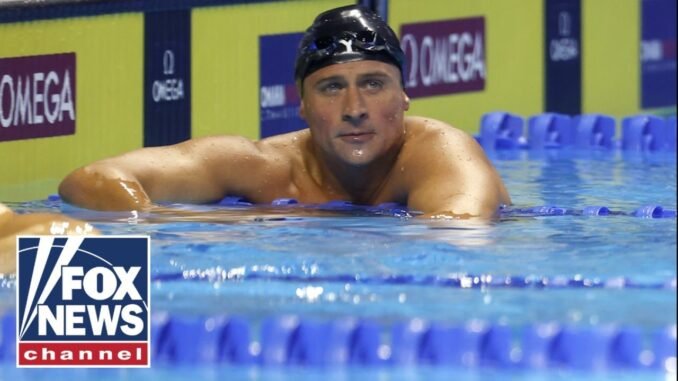

Summary: Twelve-time Olympic medallist Ryan Lochte gets real about hitting rock bottom, battling addiction, and why he took a humble $30,000 coaching job after losing everything.
When you’ve won twelve Olympic medals and stood on podiums representing the United States at the highest level of sport, accepting a $30,000-a-year assistant coaching position might seem like a dramatic fall from grace. But for swimming legend Ryan Lochte, that modest role at Missouri State University represents something far more valuable than money—it’s his lifeline back to purpose.
The 40-year-old American swimming icon recently opened up about the devastating personal struggles that brought him to this humbling moment, including a painful divorce and battles with addiction that nearly destroyed him.
The Words That Cut Deepest
In a raw and emotional interview, Lochte revealed one of the most painful moments of his journey: hearing his former partner call him “worthless.” For someone who had achieved so much in the pool, collecting Olympic gold and breaking records, those words hit harder than any defeat in competition ever could.
“When someone you love tells you you’re worthless, it doesn’t matter how many medals you have,” Lochte shared, his vulnerability striking a chord with many Nigerians who understand that success in one area of life doesn’t shield you from pain in others.
The swimming champion’s admission resonates deeply in a culture where we often celebrate public achievements while private struggles remain hidden. Like many Nigerian celebrities and sports stars who maintain perfect images on social media while battling demons behind closed doors, Lochte’s story reminds us that even the greatest champions are human.
From Olympic Glory to Rock Bottom
Lochte’s journey reads like a cautionary tale about what happens when fame, pressure, and personal demons collide. After years at the pinnacle of competitive swimming, the athlete found himself spiralling into addiction—a battle that would cost him his marriage, his reputation, and nearly his sense of self.
The divorce proceedings laid bare just how far he had fallen. Court documents and personal testimonies painted a picture of a man struggling with substance abuse while trying to maintain the image of an Olympic hero. It’s a scenario many Nigerians can relate to, even if on a different scale—the pressure to maintain appearances while everything crumbles privately.
“I lost everything that mattered,” Lochte admitted. “My family, my self-respect, my purpose. I was Ryan Lochte the swimmer, but I didn’t know who Ryan Lochte the person was supposed to be.”
The Humble Path to Redemption
Which brings us to that $30,000-a-year coaching position—a salary that many young Nigerian professionals would find modest, and certainly a far cry from the endorsement deals and prize money Lochte once commanded. But for the swimming legend, it represents something money can’t buy: a second chance.
“People look at the salary and think I’ve fallen,” Lochte explained. “But I’ve actually found my footing again. This isn’t about the money—it’s about rebuilding my life, staying close to the sport that saved me, and having a reason to wake up every morning.”
It’s a perspective that resonates deeply with the Nigerian spirit of resilience and starting over. How many of our own people have had to rebuild from scratch, taking positions “below their level” to get back on their feet? In Nigeria, we understand that sometimes you have to go back to the beginning to find your way forward.
The Reality of Addiction
Lochte’s openness about his addiction struggles is particularly significant. In both American and Nigerian societies, addiction often carries shame and stigma, especially for public figures. Athletes are supposed to be disciplined, strong, invincible. Admitting weakness feels like admitting defeat.
But Lochte’s transparency is helping change that narrative. “Addiction doesn’t care about your medals,” he said. “It doesn’t care who you are or what you’ve achieved. It just takes and takes until you have nothing left.”
For Nigerians watching from afar, his story offers important lessons. We’ve seen our own sports heroes and celebrities struggle with similar issues—some publicly, most privately. The conversation around mental health and addiction in Nigeria is still evolving, making Lochte’s candid revelations all the more valuable.
Lessons for the Next Generation
Now working with young athletes at Missouri State, Lochte says his past struggles have made him a better coach than his achievements ever could.
“I can teach them technique and speed,” he explained. “But more importantly, I can teach them that who you are matters more than what you win. I can teach them that asking for help isn’t weakness—it’s survival.”
This message feels particularly relevant for young Nigerians pursuing sports, entertainment, or any high-pressure career. In our society, we often glorify success while ignoring the mental health toll it takes. We celebrate the destination while overlooking the difficult journey.
The Support System That Saved Him
Throughout his recovery, Lochte credits a small circle of friends, family members who didn’t give up on him, and professional help for pulling him back from the brink. It’s a reminder that no one overcomes addiction alone—a communal approach to healing that Nigerians, with our strong family and community bonds, instinctively understand.
“The people who stayed when I was at my worst—those are the real MVPs,” Lochte said, using terminology any Nigerian youth would recognize. “Not the fans who cheered when I won, but the ones who held me up when I couldn’t stand.”
Moving Forward with Purpose
Today, Lochte is sober, rebuilding his relationship with his children, and finding meaning in mentoring the next generation of swimmers. The $30,000 salary that made headlines isn’t a symbol of failure—it’s evidence of his commitment to putting purpose over profit, meaning over money.
“I’m not the Ryan Lochte I was at the Olympics,” he acknowledged. “But I’m becoming someone I’m actually proud of. That’s worth more than gold.”
For those following his journey from Nigeria and around the world, Lochte’s story offers hope. It reminds us that redemption is possible, that starting over isn’t shameful, and that sometimes the bravest thing a champion can do is admit they need help.
As Nigerians like to say, “Who never fall, no know say ground hard.” Ryan Lochte has hit the ground hard, but he’s getting back up—one day, one practice session, one young athlete at a time.
What do you think about Ryan Lochte’s journey? Have you or someone you know had to start over after hitting rock bottom? Share your thoughts in the comments below.
For more information, check buzzUp9ja
Be the first to comment