
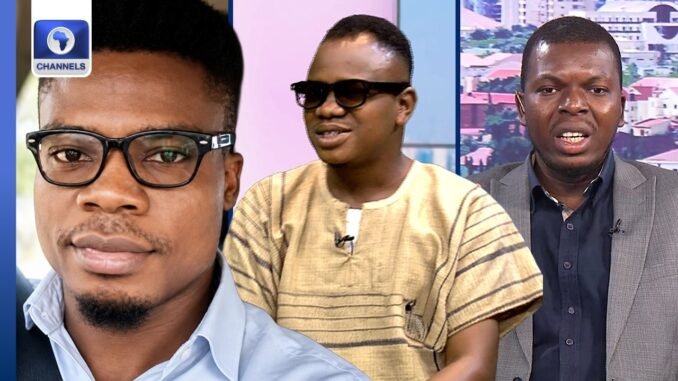

Summary: Rudeboy voices concerns about Justice Crack’s detention and its implications for free speech in Nigeria. Will citizens still speak up about social issues?
Nigerian music star Paul Okoye, better known as Rudeboy of the defunct P-Square duo, has raised serious concerns about the ongoing detention of popular social media critic Justice Crack. The singer is questioning whether everyday Nigerians will still feel safe to speak up about societal issues in light of how the outspoken activist is being treated.
Justice Crack, known for his fearless commentary on social and political matters affecting ordinary Nigerians, has been in detention, sparking widespread debate about freedom of expression in the country. His arrest has sent shockwaves through social media, with many wondering if calling out injustice now comes with dangerous consequences.
“If This Is How We Treat Truth-Tellers…”
Rudeboy’s concerns touch on a critical question facing many Nigerians today: If someone as prominent as Justice Crack can be detained for speaking his mind, what does this mean for the average citizen who wants to report corruption, injustice, or societal problems?
The “Reason With Me” crooner is essentially asking if the popular phrase “If you see something, say something” still holds true in today’s Nigeria, or if people will now choose silence over potential persecution.
The Bigger Picture: Freedom of Expression in Nigeria
This incident has reignited conversations about the state of free speech in Nigeria. Social media has become the modern-day town square where young Nigerians discuss everything from bad governance to economic hardship. Content creators and social critics like Justice Crack have built large followings by boldly addressing issues that affect the common man.
However, when such voices are silenced through detention or intimidation, it creates a chilling effect. People begin to ask themselves: “Is speaking up worth the risk?”
Nigerians React
As expected, Rudeboy’s post has sparked massive reactions across social media platforms. Many Nigerians share his concerns, with some pointing out that this is exactly how authoritarian regimes operate – by making examples of vocal critics to silence dissent.
Others have noted that if Justice Crack, with his significant online following and visibility, can be treated this way, what protection do ordinary citizens have when they witness wrongdoing?
The situation raises uncomfortable questions about the balance between national security concerns and the constitutional right to free expression that every Nigerian is entitled to.
What This Means for Nigeria’s Democracy
Democracy thrives when citizens can freely express their opinions, criticize their leaders, and hold those in power accountable without fear of retribution. When people become afraid to speak up, corruption flourishes, injustice goes unchecked, and society suffers.
Rudeboy’s question isn’t just rhetorical – it’s a wake-up call. If Nigerians stop speaking up about what they see because they fear the consequences, who will hold the powerful accountable? Who will be the voice for the voiceless?
As this situation continues to unfold, many are watching closely to see how it will be resolved and what message it ultimately sends about the state of free speech in Nigeria.
What do you think? Should Nigerians continue to speak up about societal issues despite the risks, or is silence becoming the safer option? Drop your comments below.
For more details, check buzzUp9ja
Be the first to comment