
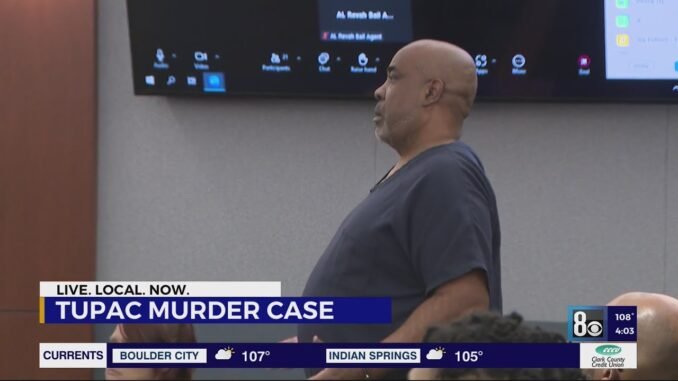

Summary: Nearly three decades after Tupac Shakur’s tragic death, his family has filed a wrongful death lawsuit against former gang leader Keefe D, seeking justice for the legendary rapper’s murder in Las Vegas.
The family of iconic rapper Tupac Shakur has finally taken a major legal step toward closure, filing a wrongful death lawsuit against Duane “Keefe D” Davis, the former gang leader long suspected of involvement in the hip-hop legend’s murder.
The civil suit, filed in Los Angeles, seeks unspecified damages connected to Tupac’s tragic shooting death in September 1996—a case that has remained one of the most talked-about unsolved mysteries in music history for nearly 28 years.
The Night That Shook Hip-Hop
For those who may not know the full story, Tupac Shakur was shot multiple times in a drive-by shooting in Las Vegas on September 7, 1996, after attending a Mike Tyson boxing match. The “California Love” rapper died six days later at the age of 25, leaving behind a legacy that continues to influence artists across the globe, including many Nigerian musicians who grew up listening to his revolutionary lyrics.
The shooting occurred at the intersection of Flamingo Road and Koval Lane, and despite numerous witnesses and decades of investigation, no one was charged—until recently.
Who is Keefe D?
Duane “Keefe D” Davis is a former gang member who has publicly admitted to being in the vehicle from which the fatal shots were fired. In his own memoir and various interviews over the years, Keefe D has placed himself at the scene of the crime, though he has given varying accounts of what exactly happened that night.
In September 2023—27 years after Tupac’s death—Las Vegas police finally arrested Keefe D and charged him with murder. He has pleaded not guilty to the criminal charges and is currently awaiting trial.
What This Lawsuit Means
This wrongful death lawsuit represents a separate legal avenue from the criminal case. While the criminal trial focuses on punishment and justice in the eyes of the law, the civil suit allows Tupac’s family to seek financial compensation for their loss and potentially uncover additional details about what happened that fateful night.
Wrongful death lawsuits have a different burden of proof than criminal cases, requiring only a “preponderance of evidence” rather than proof “beyond reasonable doubt.” This means the family’s legal team may have a better chance of success in civil court, even if the criminal case faces challenges.
A Legacy That Never Dies
For many Nigerians who grew up in the ’90s and early 2000s, Tupac’s music was more than entertainment—it was a voice speaking to struggles, inequality, and the fight for a better life. Songs like “Changes,” “Dear Mama,” and “Keep Ya Head Up” resonated deeply with young people navigating their own challenges in Nigeria.
Even today, his influence can be heard in the socially conscious lyrics of Nigerian hip-hop artists who tackle issues affecting their communities, much like Tupac did in his time.
The Long Road to Justice
The Shakur family’s decision to file this lawsuit nearly three decades after Tupac’s death shows that the pain of losing a loved one to violence never truly fades. It also highlights the importance of never giving up on justice, no matter how much time has passed.
As Nigerians, we understand the frustration of unsolved cases and the desire for accountability. Many families across our nation know what it means to wait years—sometimes decades—for answers about their loved ones.
What Happens Next?
The civil lawsuit will proceed independently of the criminal case against Keefe D. Legal experts say the civil trial could potentially begin before the criminal trial concludes, though both cases will likely take considerable time to work through the court system.
For Tupac’s fans worldwide—including the millions in Nigeria who still blast his music from speakers in Lagos, Abuja, Port Harcourt, and beyond—this lawsuit represents a step toward closure for one of hip-hop’s greatest losses.
As the legal process unfolds, one thing remains certain: Tupac’s legacy lives on, not just in his music, but in the continued fight for justice that his family refuses to abandon.
What are your thoughts on this development? Do you believe justice can truly be served nearly 30 years later? Share your views in the comments below.
For more information, check buzzUp9ja
Be the first to comment