

—
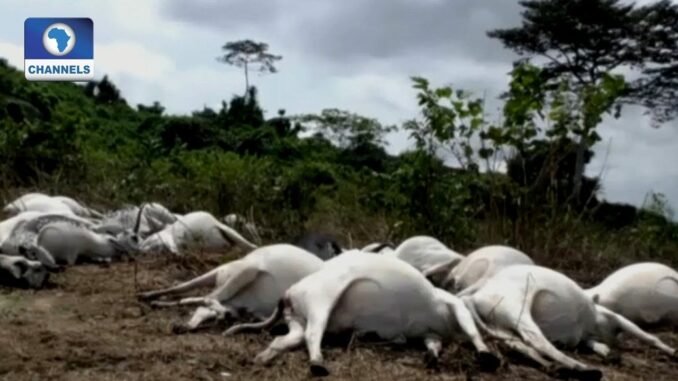
Cattle herders in Chafajaule village, located in the Ribasu District of Fufore Local Government Area in Adamawa State, are reeling from a devastating loss after more than 80 cattle died from what is suspected to be poisonous grass.
The tragic incident, which has left the farming community in shock, highlights growing concerns about livestock safety and the challenges facing herders in Nigeria’s northeastern region.
A Community in Mourning
According to reports from Daily Trust on Monday, April 27, the mass cattle deaths have dealt a severe blow to herders in the area, many of whom depend entirely on their livestock for survival and livelihood.
Cattle rearing remains a primary source of income for many families in Adamawa State, and the loss of over 80 animals represents not just an economic disaster but also threatens the food security of entire households.
Understanding the Threat
While investigations are still ongoing to determine the exact cause of the deaths, local residents suspect that the cattle may have consumed poisonous grass in their grazing areas. Toxic plants can sometimes grow unnoticed in grazing fields, especially during certain seasons or after unusual weather patterns.
Experts warn that several plant species found across northern Nigeria can be harmful or fatal to livestock when consumed, including some varieties that may look similar to regular grazing grass.
Implications for Herders
This incident underscores the vulnerability of Nigeria’s pastoral communities, who face numerous challenges including:
– Limited access to veterinary services in rural areas
– Inadequate knowledge about toxic plants in grazing areas
– Climate change impacts affecting vegetation patterns
– Economic losses with limited safety nets or insurance options
For herders in Adamawa and similar communities, losing dozens of cattle at once can set families back by years, wiping out investments and leaving them without means to support themselves.
Calls for Intervention
Local stakeholders are now calling on the Adamawa State government and relevant agricultural agencies to:
1. Conduct thorough investigations into the cause of the cattle deaths
2. Provide support and compensation to affected herders
3. Organize awareness campaigns about toxic plants
4. Improve access to veterinary services in rural communities
5. Consider establishing grazing reserves with monitored vegetation
Moving Forward
As the community of Chafajaule mourns this significant loss, the incident serves as a wake-up call about the need for better livestock management practices and support systems for Nigeria’s herding communities.
Veterinary experts encourage herders to be vigilant about unusual plants in grazing areas and to seek professional advice when livestock show signs of poisoning, which can include excessive salivation, difficulty breathing, convulsions, or sudden death.
The Adamawa State government and agricultural extension workers must prioritize educating rural farmers and herders about identifying and managing toxic plants to prevent similar tragedies in the future.
—
This is a developing story. Further updates will be provided on buzzUp9ja as more information becomes available about the investigation and support measures for affected families.
Be the first to comment