
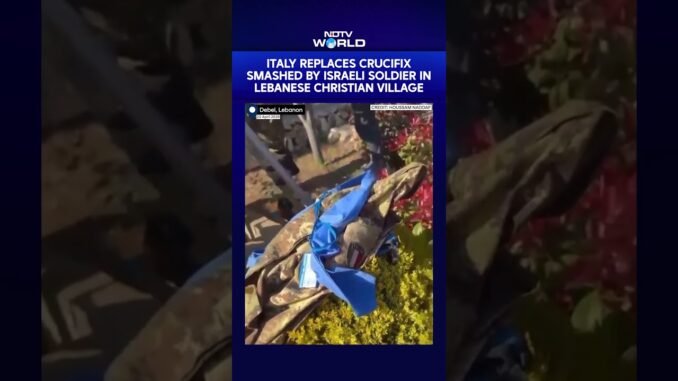

In a powerful gesture of restoration and respect, Italian peacekeepers serving with the United Nations Interim Force in Lebanon (UNIFIL) have replaced a sacred statue of Jesus Christ in the southern Lebanese village of Debel, after an Israeli soldier was caught on video deliberately vandalizing the original religious monument.
The Shocking Act of Vandalism
The incident, which has sparked widespread condemnation across religious and political lines, occurred when an Israeli Defense Forces (IDF) soldier was documented using a tool to damage the cherished statue that held deep spiritual significance for the local Christian community in Debel.
For many Nigerians who understand the importance of religious symbols and the sanctity of worship spaces—whether churches, mosques, or shrines—this act of desecration resonates deeply. Just as we would be outraged if sacred sites in our own communities were disrespected, the Lebanese Christian community and people worldwide have expressed shock and disappointment at this violation.
Italy Steps Up to Heal Wounds
The Italian contingent of UNIFIL, demonstrating remarkable solidarity and respect for religious heritage, moved quickly to right this wrong. Their decision to replace the damaged statue sends a powerful message about the importance of protecting religious symbols and maintaining interfaith respect, even in conflict zones.
This gesture mirrors the kind of community support Nigerians are familiar with—when one group suffers a loss, others step in to help rebuild and restore. It’s the same spirit that drives Nigerians to contribute to church or mosque rebuilding efforts after disasters.
UNIFIL’s Peacekeeping Mission
The United Nations Interim Force in Lebanon has been operating in southern Lebanon since 1978, working to maintain peace and security in the region. Italian troops form a significant part of this multinational force, which includes soldiers from various countries committed to preventing hostilities and protecting civilian populations.
The statue replacement represents more than just fixing damaged property—it symbolizes the peacekeepers’ commitment to protecting the cultural and religious heritage of the communities they serve, a mission that goes beyond military security to encompass human dignity and respect.
Growing Concerns Over Conduct
This incident is not isolated. International observers and human rights organizations have documented numerous concerning behaviors by Israeli forces in Lebanon, raising questions about accountability and the protection of civilian areas and religious sites during military operations.
For Nigerians who follow international affairs and value justice and human rights—principles enshrined in our own constitution—these developments underscore the importance of holding all parties in conflict zones accountable to international humanitarian law.
The Broader Picture
The vandalism and subsequent replacement of the Jesus statue highlights the complex reality of the Middle East conflict, where religious sites and symbols often become casualties of broader political and military tensions.
Lebanon, a country with a rich Christian heritage and diverse religious communities living side by side, has long struggled with the spillover effects of regional conflicts. The presence of international peacekeepers like UNIFIL represents the global community’s investment in maintaining stability in this volatile region.
Lessons for Nigeria
As Nigeria continues to grapple with our own security challenges and the need to protect religious sites and symbols across our diverse nation, this incident from Lebanon offers important lessons. It reminds us that:
– Religious symbols deserve protection and respect regardless of ongoing conflicts
– International solidarity and quick action can help heal communal wounds
– Documentation and accountability remain crucial in preventing future violations
– Peacekeeping forces have a responsibility beyond military security to protect cultural heritage
Moving Forward
The replacement of the statue in Debel stands as a testament to the resilience of faith communities and the important role that international peacekeepers play in protecting not just lives, but also the symbols and sites that give communities their identity and sense of belonging.
As this story continues to unfold, it serves as a reminder that in our increasingly connected world, acts of desecration—or restoration—in one corner of the globe can touch hearts and consciences everywhere, including here in Nigeria where we deeply value our own religious heritage and interfaith harmony.
The Italian peacekeepers’ action proves that even in the darkest times, there are those committed to building bridges, respecting faith, and restoring what has been damaged. It’s a message of hope that resonates across borders, cultures, and continents.
Follow for more news on buzzUp9ja
Be the first to comment