
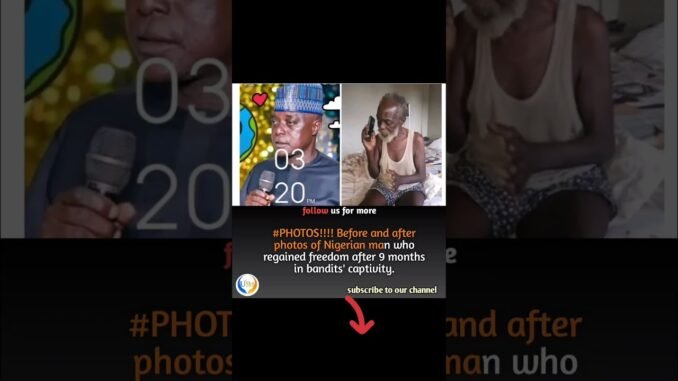

Summary: Shocking before and after photos reveal the devastating physical toll on a Kaduna man who spent nine months in bandits’ captivity. Junior’s story highlights Nigeria’s ongoing security crisis.
—
The face of insecurity in Nigeria has never been more real than in the shocking transformation of a Kaduna man simply identified as Junior, who recently regained his freedom after spending nine grueling months in the captivity of armed bandits.
The before and after photographs of Junior have sent shockwaves across social media, painting a grim picture of the nightmare many kidnap victims endure in the hands of their abductors. The images reveal a man who has been reduced to a mere shadow of his former self—a stark reminder of the human cost of the banditry crisis plaguing Northern Nigeria.
From Healthy to Harrowing: Junior’s Physical Transformation
In the “before” photo, Junior appears as a healthy, well-built young man with a full face and vibrant appearance. However, the “after” image tells a completely different story. Following his release, Junior emerged looking severely malnourished, emaciated, and visibly traumatized. His once-full face had become gaunt, his body frame drastically reduced, bearing the unmistakable marks of prolonged starvation and hardship.
The dramatic weight loss and physical deterioration speak volumes about the inhumane conditions victims face in bandits’ camps—conditions that include inadequate food, poor hygiene, exposure to harsh weather, and the constant psychological trauma of captivity.
Nine Months of Horror
According to reports, Junior was held captive for nine months before his abductors finally released him. While details of his ransom payment remain unclear, his release adds to the growing number of Nigerians who have experienced the horror of kidnapping firsthand.
The length of Junior’s captivity—three-quarters of a year—is particularly disturbing. During this period, his family would have lived in constant anguish, unsure of his welfare or whether they would ever see him alive again. For Junior himself, each day in captivity must have felt like an eternity, filled with uncertainty and fear.
Kaduna’s Ongoing Security Crisis
Junior’s ordeal is unfortunately not an isolated incident. Kaduna State has become one of the epicenters of banditry and kidnapping in Nigeria. Armed groups have terrorized communities across the state, abducting residents for ransom, destroying livelihoods, and displacing thousands from their ancestral homes.
From the Kaduna-Abuja highway to rural farming communities, bandits have operated with alarming frequency, turning everyday activities like traveling or farming into life-threatening ventures. Schools, churches, and entire villages have been targeted, with victims spending weeks or months in forest hideouts while negotiations for their release drag on.
The Broader Implications
Junior’s story is a microcosm of a larger national tragedy. Across Northern Nigeria, particularly in states like Kaduna, Zamfara, Katsina, Niger, and parts of the North-Central region, banditry has evolved from isolated criminal activity into a full-blown security crisis that threatens the fabric of society.
The psychological trauma, physical deterioration, and economic burden that kidnapping places on victims and their families cannot be overstated. Many victims who eventually regain freedom struggle with post-traumatic stress disorder (PTSD), physical health complications, and the challenge of rebuilding their lives.
Public Reaction and Calls for Action
The viral photos of Junior have sparked renewed conversations about Nigeria’s security situation on social media. Many Nigerians have expressed shock and sympathy while calling on government authorities to intensify efforts to tackle the banditry menace.
“This is heartbreaking. No Nigerian should have to go through this,” one Twitter user wrote in response to the images.
Others have questioned the seeming inability of security forces to decisively tackle the bandits despite numerous military operations in affected regions.
The Road to Recovery
While Junior has regained his physical freedom, the journey to full recovery—both physically and mentally—will likely be long and challenging. He will need proper medical attention, nutritional rehabilitation, and psychological counseling to help him process the trauma of his nine-month ordeal.
His story also raises important questions about support systems for kidnap victims in Nigeria. Beyond celebrating their release, there is often little discussion about the comprehensive care these individuals need to reintegrate into society and rebuild their lives.
A Wake-Up Call
Junior’s transformation from a healthy young man to an emaciated survivor serves as a powerful reminder that behind every kidnapping statistic is a human being with a story, a family, and a life that has been violently disrupted.
As Nigeria continues to grapple with insecurity, Junior’s face—both before and after—should haunt our collective conscience and spur more urgent action. The bandits who perpetrate these crimes must be brought to justice, and more importantly, the conditions that allow them to thrive must be addressed.
For now, we can only hope that Junior receives the care and support he needs to heal, and that his harrowing experience becomes one of the last rather than just another in a long line of similar tragedies.
—
As Junior begins his recovery journey, his story remains a sobering reminder of the urgent need for lasting solutions to Nigeria’s security challenges. Every day that passes without decisive action is another day that more Nigerians remain at risk of suffering similar fates.
Check for more developing stories on buzzUp9ja
Be the first to comment