
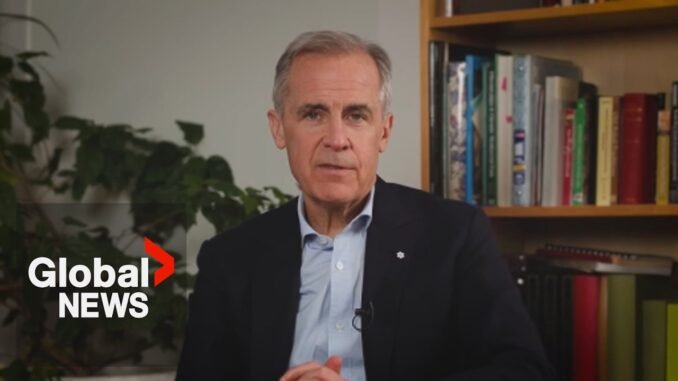

Summary: Canadian PM Mark Carney warns that Canada’s close economic relationship with the United States has become a strategic liability, signaling a major shift in North American relations.
In a striking national address delivered on Sunday, April 19, Canadian Prime Minister Mark Carney made a bold declaration that has sent shockwaves across North America: Canada’s historically close economic relationship with the United States is no longer the strength it once was—it has become a vulnerability.
For Nigerians watching global economic developments, this statement carries significant weight. Just as Nigeria has navigated its own complex relationships with international partners, Canada now finds itself reassessing a bond that has defined its economic policy for generations.
A Historic Shift in Canadian Policy
Prime Minister Carney’s candid admission represents a dramatic departure from decades of Canadian foreign policy. Traditionally, Canada has viewed its proximity to the world’s largest economy as an unquestionable advantage—much like how Nigeria’s oil wealth was once seen as an automatic ticket to prosperity.
The Canadian leader’s comments suggest that overreliance on a single economic partner, no matter how powerful, can create dangerous dependencies. This is a lesson Nigerian policymakers know all too well, having experienced the volatility of depending heavily on oil exports to specific markets.
What This Means for Global Trade
Carney’s statement comes at a time of increasing economic nationalism worldwide. Countries are reassessing their trade relationships and supply chains, seeking to build resilience rather than efficiency alone.
For Nigeria, watching this development offers valuable insights. As Africa’s largest economy works to diversify its trade partnerships and reduce dependence on commodity exports, Canada’s pivot away from US-centric policies provides a roadmap—and a warning.
The Broader Implications
This announcement raises important questions about economic sovereignty in an interconnected world:
– How much integration is too much? When does partnership become dependency?
– What risks come with having a dominant trading partner? Political changes in one country can have devastating effects on another.
– Is economic diversification the answer? Both Canada and Nigeria are now exploring this path.
Lessons for Nigeria
Nigeria can draw several parallels from Canada’s situation. Just as Canada is reconsidering its relationship with its powerful neighbor, Nigeria continues to work on reducing its economic vulnerability by:
– Strengthening regional trade within ECOWAS
– Diversifying export markets beyond traditional partners
– Building domestic industries to reduce import dependence
– Investing in continental partnerships through the African Continental Free Trade Area (AfCFTA)
Looking Ahead
Prime Minister Carney’s frank assessment signals that even the most established international relationships require constant evaluation. As global power dynamics shift and new economic centers emerge, nations must remain adaptable.
For Nigerians, this serves as a reminder that economic independence and diversification aren’t just buzzwords—they’re essential strategies for national resilience in an unpredictable world.
As Canada charts a new course in its international relations, the world will be watching closely. The outcome of this strategic pivot may well provide lessons for emerging economies everywhere, including Nigeria, as they navigate the complex landscape of 21st-century global trade.
What are your thoughts on Canada’s shift away from US economic dependence? Could Nigeria benefit from similar bold reassessments of its own international partnerships? Share your views in the comments below.
For more details, check buzzUp9ja
Be the first to comment