
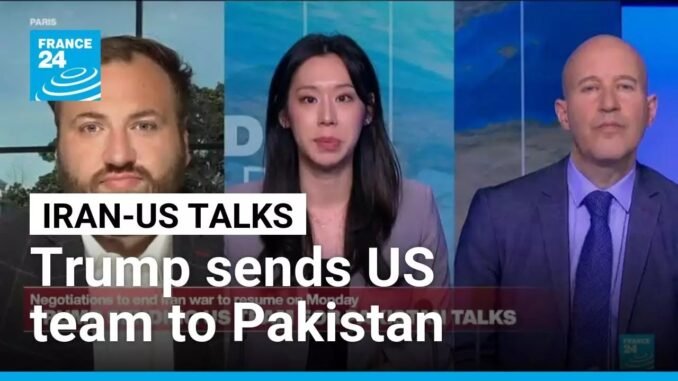

Summary: US President Donald Trump has issued fresh threats to destroy Iran’s infrastructure while announcing plans to send a delegation to Pakistan for negotiations with Tehran.
The tension between the United States and Iran has escalated once more, as former President Donald Trump has renewed his aggressive stance toward the Islamic Republic. In a move that has caught the attention of international observers, Trump announced plans to dispatch a US delegation to Pakistan for fresh negotiations with Iran, while simultaneously threatening to destroy Iranian infrastructure if no agreement is reached.
Fresh Diplomatic Push Through Pakistan
The decision to route negotiations through Pakistan is particularly significant. Pakistan has historically maintained diplomatic relations with both Washington and Tehran, positioning itself as a potential mediator in Middle Eastern conflicts. For Nigerians familiar with regional diplomacy—much like how ECOWAS nations often mediate disputes within West Africa—Pakistan’s role here is similar: serving as a bridge between two nations with deeply strained relations.
This diplomatic channel through Islamabad suggests that direct talks between Washington and Tehran remain extremely difficult, if not impossible, under current circumstances.
The Threat: Infrastructure in the Crosshairs
Trump’s warning about destroying Iran’s infrastructure is not entirely new territory. Throughout his previous term in office, the former president took a hardline approach toward Iran, including the controversial decision to withdraw from the Iran nuclear deal (JCPOA) and the 2020 drone strike that killed Iranian General Qasem Soleimani.
The reference to infrastructure likely encompasses Iran’s nuclear facilities, military installations, oil refineries, and possibly critical civilian infrastructure. Such threats, while meant to pressure Iran to the negotiating table, carry enormous risks of regional destabilization.
What This Means for Global Politics
For Nigeria and other developing nations, US-Iran tensions have far-reaching implications:
Oil Prices: Any military conflict in the Persian Gulf region would likely disrupt global oil supplies, causing prices to spike. Nigeria, as an oil-producing nation, might see short-term revenue gains, but global economic instability could offset these benefits.
Regional Stability: Conflict in the Middle East often has ripple effects across Africa, from security challenges to refugee crises. Nigerian policymakers must monitor these developments closely.
Diplomatic Precedents: The use of infrastructure threats as negotiating tools sets concerning precedents for international relations, particularly for nations navigating complex geopolitical landscapes.
The Path Forward
As the US delegation prepares for talks in Pakistan, several questions remain unanswered:
– Will Iran agree to negotiate under the shadow of threats?
– What specific concessions is the US seeking?
– How will other world powers, particularly China and Russia, respond?
For now, the international community watches and waits, hoping that diplomacy will prevail over the alternative—a potentially catastrophic military confrontation in one of the world’s most volatile regions.
Stay connected with us for more updates on international affairs and their impact on Nigeria and Africa.
Get more information on buzzUp9ja
Be the first to comment