
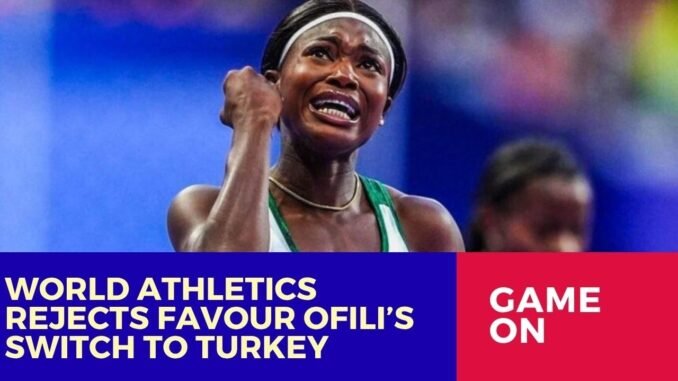

Summary: World Athletics has turned down Nigerian sprinter Favour Ofili’s application to switch allegiance from Nigeria to Turkey ahead of the 2028 Olympics. Here’s what you need to know about the controversial decision.**
In a development that has sent shockwaves through Nigerian sports circles, World Athletics has firmly rejected the application of star sprinter Favour Ofili to change her international allegiance from Nigeria to Turkey.
The 21-year-old athlete, who has been making waves on the global athletics stage, had submitted a request to represent Turkey at the upcoming 2028 Olympic Games in Los Angeles. However, the world athletics governing body has put a definitive stop to those plans.
The Background
Favour Ofili has become one of Nigeria’s brightest athletics prospects in recent years, consistently delivering impressive performances on the international stage. Her decision to seek a switch to Turkey raised eyebrows across Nigerian sports communities and sparked heated debates about athlete loyalty and the treatment of sports stars in the country.
While the specific reasons behind Ofili’s desire to change allegiance have not been fully disclosed, the move comes amid ongoing conversations about athlete welfare, funding, and support systems in Nigerian sports administration.
What This Means
The rejection by World Athletics means Ofili will continue to compete under the green-white-green flag of Nigeria, at least for the foreseeable future. The decision preserves Nigeria’s talent pool as the country prepares for major international competitions, including the 2028 Olympics.
For many Nigerian sports enthusiasts, this news will be welcomed as a victory for keeping homegrown talent representing the nation. However, it also highlights the broader issues that may be pushing athletes to consider such drastic moves.
The Bigger Picture
This incident raises important questions about what needs to be done to ensure that Nigerian athletes feel valued and supported enough to want to represent their country with pride. It’s a wake-up call for sports administrators and government officials to examine the structures in place for nurturing and retaining athletic talent.
As we move forward, all eyes will be on how Favour Ofili responds to this decision and whether the Athletics Federation of Nigeria and relevant authorities will take steps to address whatever concerns may have prompted her initial application.
What are your thoughts on World Athletics’ decision? Should Nigerian athletes have the freedom to switch allegiances, or is national representation a sacred responsibility? Share your views in the comments below.
For more stories, visit buzzUp9ja
Be the first to comment