
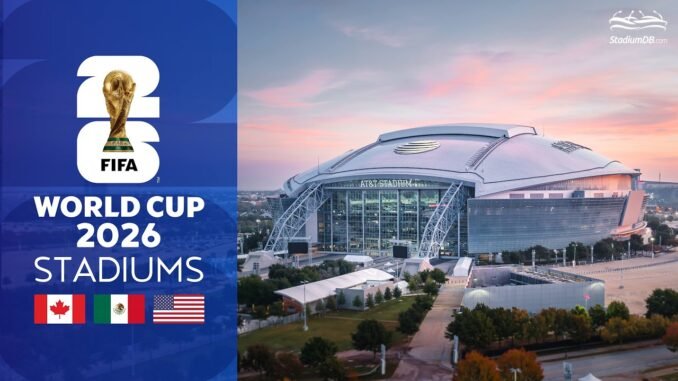

The football world is buzzing with excitement as we approach the 2026 FIFA World Cup, and there’s good reason for the massive anticipation. This tournament will make history as the first World Cup to be hosted by three countries simultaneously—the United States, Canada, and Mexico—and will feature an expanded format with 48 teams battling for glory.
For Nigerian football fans who have followed the Super Eagles through countless World Cup campaigns, this edition promises to be the biggest and most spectacular yet. Whether you’re planning to travel for the matches or cheering from home, here’s everything you need to know about the stadiums that will host this historic tournament.
Why This World Cup Is Different
The 2026 FIFA World Cup represents a significant departure from previous tournaments. With 48 teams competing instead of the traditional 32, we’ll witness 104 matches across 16 world-class stadiums spread across North America. This expansion means more African nations could potentially qualify, increasing Nigeria’s chances and giving fans more football to enjoy.
The United States Stadiums (11 Venues)
The bulk of the matches will take place across American soil, with 11 magnificent stadiums selected:
MetLife Stadium, New York/New Jersey
– Capacity: 82,500
– Home to NFL teams New York Giants and New York Jets
– Expected to host the final match
– Located in the heart of one of the world’s most vibrant cities
AT&T Stadium, Dallas/Arlington, Texas
– Capacity: 80,000
– Features the world’s largest high-definition video screen
– State-of-the-art retractable roof facility
Arrowhead Stadium, Kansas City, Missouri
– Capacity: 76,416
– Known for holding the world record for loudest outdoor stadium
– Electric atmosphere guaranteed
NRG Stadium, Houston, Texas
– Capacity: 72,220
– Retractable roof for climate control
– Modern facilities with top-notch amenities
Mercedes-Benz Stadium, Atlanta, Georgia
– Capacity: 75,000
– Award-winning retractable roof design
– One of the newest and most technologically advanced stadiums
SoFi Stadium, Los Angeles, California
– Capacity: 70,000
– Ultra-modern indoor-outdoor stadium
– Cost over $5 billion to construct
Lincoln Financial Field, Philadelphia, Pennsylvania
– Capacity: 69,596
– Historic sports city atmosphere
– Passionate fan base
Levi’s Stadium, San Francisco Bay Area, California
– Capacity: 68,500
– Silicon Valley’s premier sports venue
– Cutting-edge technology integration
Gillette Stadium, Boston, Massachusetts
– Capacity: 65,878
– Home of the New England Patriots
– Rich sports heritage
Hard Rock Stadium, Miami, Florida
– Capacity: 65,326
– Recently renovated with modern amenities
– Perfect weather and beach city vibe
Lumen Field, Seattle, Washington
– Capacity: 68,740
– Known for incredible fan support
– Stunning Pacific Northwest setting
Canada’s Contribution (2 Stadiums)
BC Place, Vancouver
– Capacity: 54,000
– Iconic retractable roof stadium
– Beautiful British Columbia backdrop
BMO Field, Toronto
– Capacity: 45,500
– Canada’s largest soccer-specific stadium
– Heart of Canadian football culture
Mexico’s Historic Venues (3 Stadiums)
Estadio Azteca, Mexico City
– Capacity: 87,000
– The only stadium to host two World Cup finals (1970, 1986)
– Where Diego Maradona scored the infamous “Hand of God” goal
– Historic venue with unmatched World Cup pedigree
Estadio BBVA, Monterrey
– Capacity: 53,500
– Modern, purpose-built football stadium
– Opened in 2015
Estadio Akron, Guadalajara
– Capacity: 48,071
– Contemporary design with excellent sightlines
– Home to Club Guadalajara (Chivas)
What This Means for Nigerian Fans
The 2026 World Cup’s expanded format significantly improves Africa’s representation, with the continent allocated 9 automatic qualifying spots (up from 5). This increases the Super Eagles’ chances of qualification and potentially facing familiar African rivals on the world stage.
The time zone differences mean Nigerian fans will need to plan their viewing schedules carefully. Matches in the Eastern US will be most convenient, while West Coast games might require late-night or early-morning viewing sessions—but true fans know it’s always worth it!
Travel Considerations
For Nigerians planning to attend matches in person:
– Visa requirements: US, Canadian, and Mexican visa applications should start early
– Budget: Expect significant costs for flights, accommodation, and match tickets
– Weather: June/July weather varies dramatically across North America—from hot Texas summers to mild Canadian conditions
– Transportation: The vast distances between stadiums mean careful planning for multiple matches
Stadium Selection Process
FIFA’s selection considered several factors:
– Stadium capacity and infrastructure
– Transportation accessibility
– Accommodation availability
– Climate and weather patterns
– Local football culture and fan support
– Security and safety standards
All selected venues meet FIFA’s strict requirements and promise world-class experiences for players and fans alike.
Looking Ahead
As we count down to the tournament, these 16 stadiums represent more than just venues—they’re the stages where football history will be written. Whether the Super Eagles qualify or not, Nigerian fans will be watching, supporting African teams, and celebrating the beautiful game.
The 2026 World Cup promises to be an unforgettable spectacle, bringing together diverse cultures, passionate fans, and the world’s best footballers. With state-of-the-art facilities and the unique tri-nation hosting format, this tournament will set new standards for future World Cups.
Which stadium are you most excited about? Share your thoughts in the comments below, and let’s discuss where you think the Super Eagles could potentially play!
Stay tuned for more updates on World Cup qualifiers, ticket information, and everything you need to know about the road to 2026.
Check buzzUp9ja for more updates
Be the first to comment