
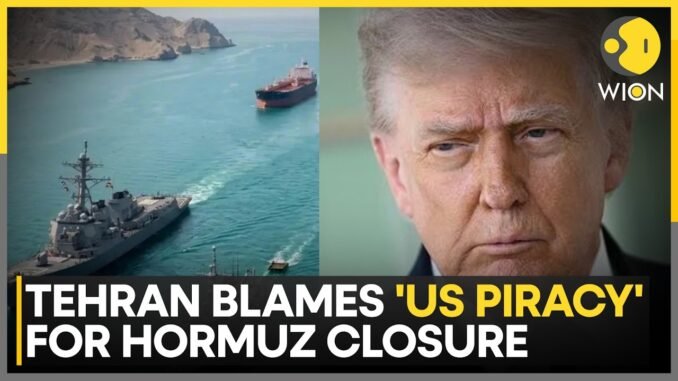

The United States has rolled out a fresh wave of sanctions aimed squarely at Iran’s oil sector, as tensions in the Middle East continue to simmer. This latest move comes as Tehran maintains its closure of the strategic Strait of Hormuz, a critical waterway for global oil transportation.
What’s Happening?
The new American sanctions represent Washington’s latest attempt to squeeze Iran’s economic lifeline – its oil industry. These measures are being implemented against the backdrop of ongoing conflicts in the Middle East, with the Strait of Hormuz becoming a flashpoint in the regional power struggle.
The Strait of Hormuz, a narrow passage connecting the Persian Gulf to the Gulf of Oman, is one of the world’s most important oil chokepoints. Roughly one-fifth of global oil supply passes through this waterway, making its closure a matter of international concern.
Why Should Nigerians Care?
For Nigeria, Africa’s largest oil producer, developments in Iran have significant implications:
Oil Price Impact: Any disruption to global oil supply typically pushes prices upward. While this could mean increased revenue for Nigeria’s oil exports, it also affects fuel costs domestically, potentially leading to higher transportation and commodity prices that affect everyday Nigerians.
OPEC Dynamics: Both Nigeria and Iran are members of OPEC (Organization of the Petroleum Exporting Countries). Sanctions that limit Iran’s ability to export oil could shift production dynamics within the cartel, possibly creating opportunities for Nigeria to fill supply gaps.
Global Energy Security: As nations seek alternative oil suppliers due to Middle Eastern instability, Nigeria could position itself as a more reliable partner for countries looking to diversify their energy sources.
The Bigger Picture
The escalating sanctions are part of a long-running standoff between Washington and Tehran over various issues, including Iran’s nuclear program and its role in regional conflicts. The closure of the Strait of Hormuz is seen as Iran’s leverage in these disputes, though it’s a risky gambit that affects global commerce.
For ordinary Nigerians already grappling with fuel scarcity and fluctuating petrol prices, these international developments serve as a reminder of how interconnected global oil markets are – and how events thousands of miles away can impact what we pay at the pump here at home.
As this situation continues to unfold, energy analysts will be watching closely to see whether these sanctions achieve their intended effect or simply push oil prices higher, with consequences felt from Lagos to Abuja and beyond.
Check for more intriguing news on buzzUp9ja
Be the first to comment