
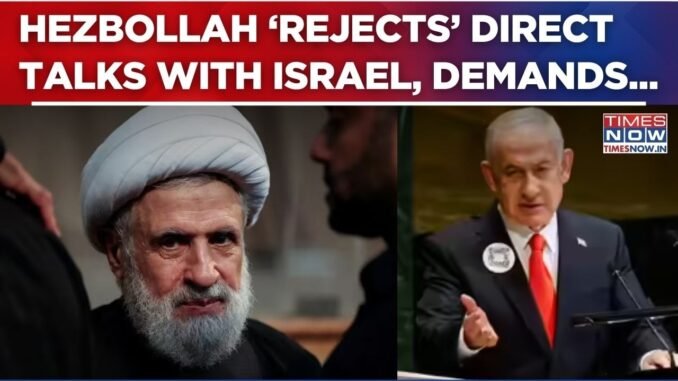

Summary: Hezbollah’s Naim Qassem has issued a strong televised warning to Lebanon’s government, urging them to abandon scheduled peace talks with Israel in Washington. Find out why this matters for Middle East stability.
In a dramatic televised address that has sent ripples across the Middle East, Hezbollah leader Naim Qassem has made his position crystal clear: Lebanon must not sit down for direct negotiations with Israel.
The speech, delivered on Monday, represents a significant escalation in the already tense relationship between the Lebanese militant group and Israel, with potential implications for regional peace efforts.
The Strong Warning from Hezbollah’s Leadership
Naim Qassem, who leads the Iran-backed Hezbollah organization, used his television appearance to issue what many are calling an ultimatum to the Lebanese government. His message was direct and uncompromising – Lebanon should immediately withdraw from any planned meetings with Israeli officials scheduled to take place in Washington.
“We would fight until our last breath,” Qassem declared, making it abundantly clear that Hezbollah views any normalization of relations with Israel as unacceptable.
This kind of rhetoric is not entirely new from Hezbollah, but the timing and intensity of Qassem’s statement have raised eyebrows among international observers and those familiar with Middle Eastern politics.
Why This Matters for Nigeria and Africa
While this conflict may seem distant from Nigerian shores, it has real implications for our continent. Many African nations, including Nigeria, maintain complex diplomatic relationships in the Middle East, particularly concerning oil trade, religious ties, and international peacekeeping efforts.
Nigeria’s significant Muslim population also means that developments in Lebanon and Israel often resonate within our own communities. Understanding these dynamics helps us navigate our own foreign policy decisions and comprehend global events that affect oil prices – something every Nigerian feels at the pump.
The Context Behind the Confrontation
Hezbollah has long positioned itself as a resistance force against Israel, maintaining that the Israeli state is illegitimate. The group, which holds significant political and military power within Lebanon, has fought multiple conflicts with Israel over the decades.
For Lebanon’s government, the situation creates a difficult balancing act. The country faces severe economic challenges and needs international support, yet Hezbollah’s influence means the government cannot simply ignore the group’s demands.
The proposed Washington meeting would have represented a rare moment of direct dialogue between Lebanese and Israeli officials – something Hezbollah clearly views as crossing a red line.
Regional Implications
This development comes at a time when some Arab nations have been moving toward normalization with Israel through the Abraham Accords and other diplomatic initiatives. However, Hezbollah and its backers in Iran have consistently opposed such moves.
The group’s stance reflects broader tensions in the region between those seeking accommodation with Israel and those maintaining absolute opposition to the state’s existence.
What Happens Next?
As of now, it remains unclear whether the Lebanese government will heed Hezbollah’s warning or proceed with the planned Washington meeting. The government’s decision will likely depend on multiple factors, including:
– The strength of international pressure and incentives to engage in dialogue
– Domestic political calculations within Lebanon
– Iran’s position and influence on Hezbollah’s actions
– The potential consequences of defying Hezbollah’s demands
The Bottom Line
Naim Qassem’s televised address serves as a reminder that peace in the Middle East remains elusive, with powerful non-state actors like Hezbollah wielding significant influence over national governments.
For those of us watching from Nigeria, it’s a lesson in how internal political dynamics can complicate international diplomacy, something we understand well given our own complex federal structure and diverse interest groups.
As the situation develops, the international community will be watching closely to see whether dialogue prevails or if Hezbollah’s opposition will derail yet another attempt at Middle Eastern peace talks.
What do you think about Hezbollah’s position? Should Lebanon proceed with talks despite the opposition? Share your thoughts in the comments below.
Get more info on buzzUp9ja
Be the first to comment