

Scottish actor Alan Cumming has issued a detailed public apology following a controversial incident at the British Academy Film Awards (BAFTAs) in February, where a racial slur was broadcast uncensored during the prestigious ceremony.
Cumming, who hosted the February 22 awards show, took to Instagram on Tuesday to express his regret over what he described as a “trauma triggering s*show,” acknowledging the deep pain the incident caused.
What Happened at the BAFTAs?
During the pre-recorded ceremony, Tourette syndrome activist John Davidson shouted the N-word—a deeply offensive racial slur with a painful history. Despite the awards being recorded in advance, the slur made it into the final broadcast without being censored, sparking widespread outrage across social media and traditional media platforms.
The incident became even more controversial when reports emerged that the BBC had allegedly edited out filmmaker Akinola Davies Jr.’s “Free Palestine” statement from his acceptance speech, while leaving the racial slur intact in the broadcast.
Cumming’s Heartfelt Apology
In his Instagram post, the Cabaret* and *X-Men star expressed remorse on multiple fronts.
“I am sorry for all the pain Black people have felt at hearing that word echoed round the world,” Cumming wrote, acknowledging the historical trauma associated with the slur.
He also extended an apology to the Tourette’s community, citing what he called the world’s “lack of understanding and tolerance” about the neurological disorder. Tourette syndrome is a condition characterized by involuntary movements and vocalizations, which can sometimes include inappropriate words—a phenomenon known as coprolalia.
The actor didn’t hold back in his criticism of the organizations involved, writing: “We were all let down by decisions made to both broadcast slurs and censor free speech,” adding that “all trauma must be recognised and honoured.”
BAFTA Takes Responsibility
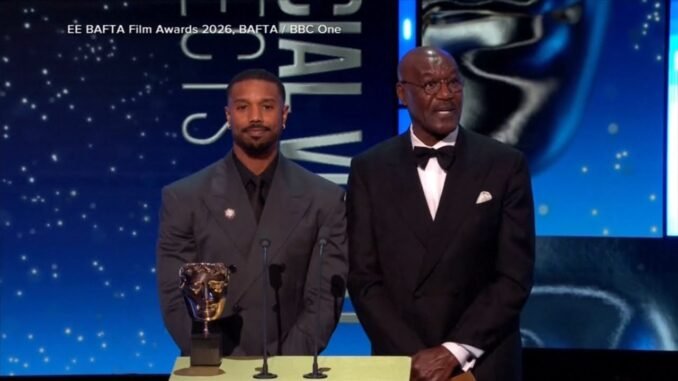
The British Academy of Film and Television Arts eventually issued its own apology, taking “full responsibility” for putting presenters Michael B. Jordan and Delroy Lindo—both Black actors—in what it described as a “very difficult situation.”
In a second statement, the organization promised to learn from the incident amid mounting public criticism and questions about their editorial judgment.
The Larger Conversation
This incident has ignited important conversations about several issues:
Broadcast Standards: Why was a pre-recorded show allowed to air with such offensive language uncensored when editing was clearly possible?
Editorial Decisions: The apparent removal of political speech while keeping offensive slurs has raised questions about media priorities and what is deemed acceptable for broadcast.
Understanding Neurological Conditions: Many Nigerians and people worldwide are learning more about Tourette syndrome and the challenges faced by those living with the condition.
Responsibility in Media: What duty do broadcasters have to protect audiences from harmful content while also being inclusive of people with disabilities?
A Complex Situation
John Davidson, the activist involved, later thanked Cumming for addressing the moment during the live show. “I was heartened by the round of applause that followed this announcement and felt welcomed and understood in an environment that would normally be impossible for me,” Davidson said.
This response highlights the delicate balance between recognizing the genuine challenges faced by people with Tourette syndrome and acknowledging the real harm caused by racial slurs, regardless of intent.
What Nigerians Are Saying
The incident has resonated with Nigerian audiences, many of whom have expressed frustration with the double standards displayed by the BBC and BAFTA. The decision to censor political speech while allowing a racial slur to air has struck a chord in a country with its own complex history of fighting against racial discrimination and colonial legacy.
Social media users across Lagos, Abuja, and Port Harcourt have weighed in, with many praising Cumming for his forthright apology while criticizing the organizations involved for their poor judgment.
As the entertainment industry continues to grapple with issues of representation, sensitivity, and editorial responsibility, this incident serves as a stark reminder that pre-recorded doesn’t mean problem-free—and that the choices made in editing rooms can have far-reaching consequences.
—
What are your thoughts on this incident? Should the BBC and BAFTA have done more to prevent this situation? Share your views in the comments below.
For More Stories, Visit Buzzup9ja
Be the first to comment