
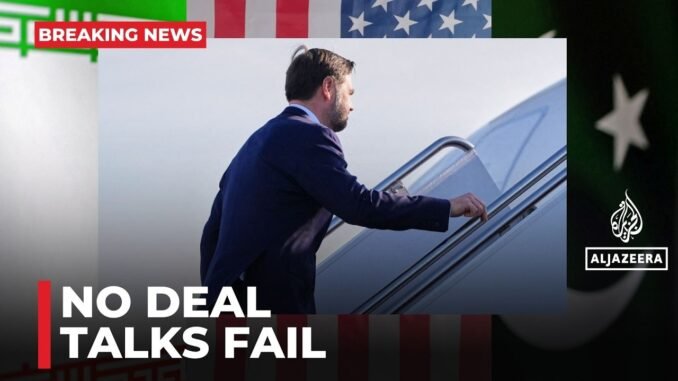

After a marathon 21-hour negotiation session in Islamabad, Pakistan, talks between the United States and Iran have ended without any breakthrough, according to US Vice President JD Vance. The high-stakes diplomatic discussions, which took place in Pakistan’s capital, have collapsed with both sides unable to find common ground.
What Happened in Islamabad?
The intensive round of negotiations brought American and Iranian officials to the table for nearly a full day of discussions. The choice of Islamabad as the venue was strategic, with Pakistan serving as neutral ground for the two nations that have maintained tense relations for decades.
Vice President JD Vance, speaking after the failed talks, placed responsibility squarely on Tehran’s shoulders, stating that Iranian negotiators refused to accept Washington’s proposals. While specific details of what was discussed remain closely guarded, the collapse of these talks signals another setback in efforts to ease tensions between the two countries.
Why This Matters to Nigeria and the World
For Nigerians, the breakdown of US-Iran relations carries significant implications. As one of Africa’s largest oil producers, Nigeria’s petroleum industry is sensitive to Middle Eastern geopolitical tensions. When US-Iran relations deteriorate, global oil markets typically become volatile, which can affect Nigeria’s oil revenues and economic stability.
Additionally, any escalation in the Middle East often has ripple effects on global security, international trade routes, and the price of goods that Nigerian consumers depend on daily.
The Bigger Picture
The failure of these Islamabad talks represents the latest chapter in a complicated relationship between Washington and Tehran that has been marked by distrust, sanctions, and periodic diplomatic efforts. Both nations have historically found it challenging to bridge their differences on key issues including nuclear programs, regional influence, and economic sanctions.
Pakistan’s role as host demonstrates the delicate balancing act many nations must perform in international diplomacy, trying to maintain relationships with major powers on different sides of global divides.
What Comes Next?
With this round of talks ending in disappointment, the international community will be watching closely to see whether both sides return to the negotiating table or if tensions will escalate further. The lack of agreement after such extensive discussions suggests that the gap between American and Iranian positions remains substantial.
For now, the status quo continues, with all eyes on both Washington and Tehran to see what their next moves will be in this high-stakes diplomatic chess game.
—
Stay connected with us on buzzUp9ja for more updates on international developments that impact Nigeria and the African continent.
Be the first to comment