
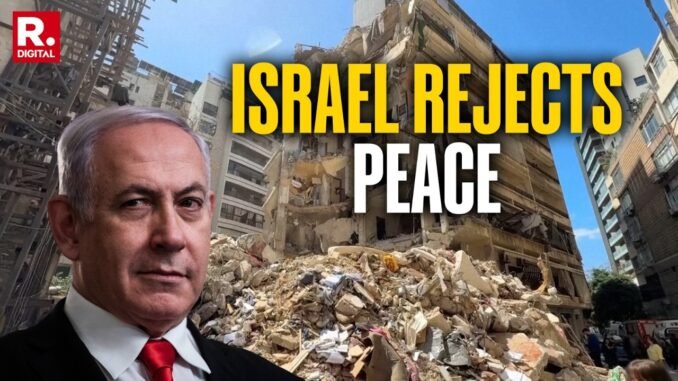

Summary: Israeli PM Benjamin Netanyahu declares Israel will continue military strikes against Hezbollah wherever necessary, raising concerns about regional stability in the Middle East.
Israeli Prime Minister maintains firm stance on military operations as regional tensions remain high
Israeli Prime Minister Benjamin Netanyahu has made it clear that his country will not back down from its military campaign against Hezbollah, declaring on Thursday that Israel will continue to strike the Lebanese militant group “wherever necessary.”
The strong statement from Netanyahu comes at a time when the Middle East region continues to experience heightened tensions, with the conflict between Israel and Hezbollah showing no signs of immediate resolution despite ongoing diplomatic efforts.
Netanyahu’s Unwavering Position
The Israeli leader’s declaration underscores Tel Aviv’s determination to neutralize what it considers security threats from Hezbollah, the Iran-backed group based in Lebanon. Netanyahu’s government has consistently maintained that it reserves the right to defend Israeli citizens and territory from attacks, regardless of international pressure or ceasefire negotiations.
“Israel will continue to strike Hezbollah wherever necessary,” Netanyahu stated, sending a clear message that military operations would persist even as fragile agreements are being discussed behind closed doors.
Understanding the Israel-Hezbollah Conflict
For Nigerians following international affairs, the conflict between Israel and Hezbollah represents one of the most enduring security challenges in the Middle East. Hezbollah, which translates to “Party of God,” operates as both a political party in Lebanon and a militant organization with significant military capabilities.
The group has been a thorn in Israel’s side for decades, with both parties engaging in various conflicts, including the 2006 Lebanon War. The current escalation is part of a broader regional power struggle involving Iran, Israel, and various proxy forces across the Middle East.
Implications for Regional Stability
Netanyahu’s vow to continue strikes raises concerns about the possibility of a wider regional conflict. The Middle East, a region of significant importance to global oil markets and international security, remains on edge as various powers jostle for influence and control.
For Nigeria and other African nations with interests in the region, particularly concerning oil prices and regional stability, the ongoing tensions carry potential economic implications. Any major escalation could affect global energy markets, which in turn impacts countries like Nigeria that are sensitive to international oil price fluctuations.
The Fragile Nature of Peace Efforts
While Netanyahu’s statement emphasizes military action, reports suggest that fragile ceasefire discussions have been taking place. However, the Israeli Prime Minister’s firm stance indicates that any agreement would need to meet Israel’s security requirements before military operations are scaled back.
The situation reflects the complex nature of Middle Eastern politics, where military might, diplomatic negotiations, and regional alliances all play crucial roles in determining outcomes.
International Response
The international community continues to call for de-escalation and dialogue, though efforts to broker lasting peace between Israel and Hezbollah have historically proven challenging. Various world powers maintain different interests in the region, making unified international action difficult to achieve.
For more information, check buzzUp9a
Be the first to comment