
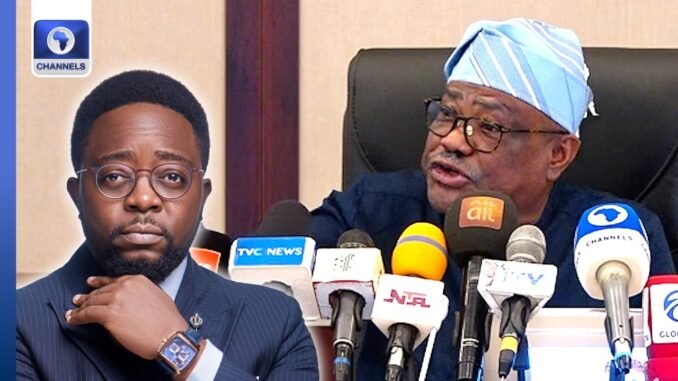

The Independent Broadcast Association of Nigeria (IBAN) has issued a stern ultimatum to the Minister of the Federal Capital Territory (FCT), Nyesom Wike, demanding that he publicly retract inflammatory remarks made against popular Channels Television anchor, Seun Okinbaloye, and tender an unreserved apology.
This development has sent shockwaves through Nigeria’s media landscape, with broadcasters across the country rallying behind their colleague and threatening to boycott all future press briefings organized by the FCT Minister if their demands are not met.
What Sparked the Controversy?
The tension between Wike and Okinbaloye has escalated into a full-blown media confrontation, with IBAN stepping in to defend press freedom and the integrity of broadcast journalism in Nigeria. The association represents the collective interests of broadcast media practitioners nationwide and has made it clear that attacks on any journalist are attacks on the entire profession.
According to industry watchers, Wike’s comments were seen as an attempt to intimidate and undermine the credibility of Okinbaloye, a respected figure in Nigerian journalism known for his incisive interviews and hard-hitting questions on Channels TV’s current affairs programmes.
IBAN Takes a Stand
In what many are describing as a bold move, IBAN has drawn a line in the sand, insisting that government officials must respect journalists and the critical role they play in Nigeria’s democracy. The association’s position reflects growing frustration within the media community over what they perceive as increasing hostility from public office holders toward journalists simply doing their jobs.
“Enough is enough,” seems to be the message from Nigerian broadcasters, who have watched with concern as the relationship between the press and political figures becomes increasingly adversarial.
The Threat of a Media Blackout
The proposed boycott of Wike’s briefings is no small matter. Such a move would significantly limit the FCT Minister’s ability to communicate directly with Nigerians through broadcast media, potentially impacting public awareness of government activities and policies in Abuja.
For a minister as media-savvy and public-facing as Wike, losing access to broadcast coverage could prove problematic, especially as he seeks to showcase his achievements in the nation’s capital.
Press Freedom Under Pressure
This confrontation comes at a time when press freedom advocates have raised concerns about the shrinking space for independent journalism in Nigeria. Journalists increasingly face threats, harassment, and intimidation when asking tough questions or reporting on sensitive issues.
Seun Okinbaloye, in particular, has built a reputation for fearless journalism, regularly holding powerful figures accountable on national television. His style of journalism—asking probing questions and demanding clear answers—is exactly what democratic governance requires.
What This Means for Nigerian Democracy
The standoff between IBAN and Minister Wike has broader implications for Nigeria’s democratic health. A free and vibrant press is essential for accountability, transparency, and good governance. When government officials attack journalists rather than address the substance of their questions, it undermines public trust and weakens democratic institutions.
Many Nigerians on social media have expressed support for the broadcasters’ stance, with hashtags related to the controversy trending across various platforms. Citizens are watching closely to see whether the minister will back down or double down on his position.
The Ball Is in Wike’s Court
As the deadline for the apology approaches, all eyes are on the FCT Minister. Will he swallow his pride and apologize, recognizing the importance of maintaining cordial relations with the media? Or will he stand his ground, risking a media boycott that could limit his public engagement?
The outcome of this confrontation could set an important precedent for how government officials interact with journalists going forward. It may also influence how emboldened or cautious other public figures become in their dealings with the Nigerian press.
For now, Nigerian broadcasters have spoken with one voice: respect our colleagues, respect our profession, or face the consequences. The coming days will reveal whether their solidarity will compel a change in approach from one of Nigeria’s most powerful—and outspoken—government ministers.
This is a developing story, and we will continue to monitor the situation as it unfolds.
Check for more updates on buzzUp9ja
Be the first to comment