
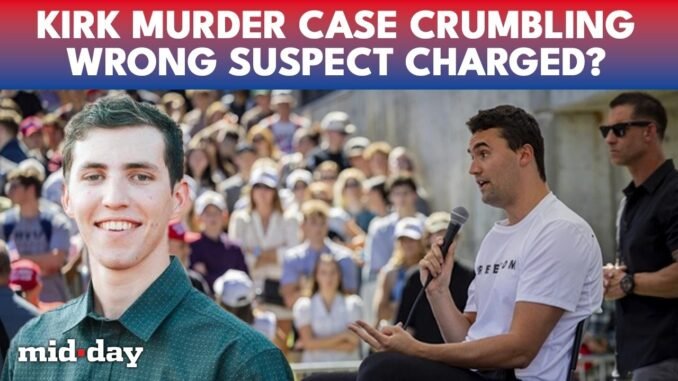

Summary: Defence lawyers claim bullet evidence doesn’t match the weapon in Charlie Kirk murder case against Tyler Robinson, raising questions about the prosecution’s forensic evidence.
New court documents have raised serious questions about the forensic evidence linking suspect Tyler Robinson to the fatal shooting
—
A shocking development has emerged in the ongoing murder case that has gripped international attention. Defence lawyers representing Tyler Robinson, the man accused of killing Charlie Kirk, have filed new legal documents claiming that critical forensic evidence doesn’t add up – specifically, that the bullet used in the fatal shooting does not match the rifle authorities say was used in the crime.
According to court documents obtained by American entertainment news outlet TMZ, Robinson’s legal team is now challenging the prosecution’s case on what many consider to be fundamental grounds. The discrepancy between the bullet and the alleged murder weapon could potentially unravel key aspects of the case against the accused.
What This Means for the Case
For those following this matter, this revelation raises significant questions about the investigation and the evidence that led to Robinson’s arrest. In criminal cases, particularly those involving firearms, ballistic evidence often serves as the cornerstone of prosecution. When a bullet cannot be matched to a specific weapon, it creates reasonable doubt – the very standard that can determine guilt or innocence in a court of law.
The defence’s claim suggests that either the wrong weapon has been identified, or there may be gaps in the investigation that need to be addressed. Such forensic inconsistencies have, in the past, led to cases being dismissed or verdicts being overturned.
Understanding Ballistic Evidence
Ballistic analysis is a specialized field of forensic science where experts examine bullets and cartridge cases to determine which firearm fired them. Every gun leaves unique marks on bullets and casings – like a fingerprint. When these marks don’t match, it suggests the bullet didn’t come from that particular weapon.
This type of evidence has been crucial in countless criminal cases worldwide, and any discrepancy in such analysis typically becomes a major point of contention in court.
What Happens Next?
The defence’s filing means the court will likely need to examine the forensic evidence more closely. This could involve:
– Independent ballistic testing
– Expert witness testimonies from both sides
– Review of the chain of custody for the evidence
– Possible suppression of evidence if procedures were not properly followed
For the prosecution, this development presents a serious challenge. They will need to either explain the discrepancy satisfactorily or potentially revise their theory of how the crime occurred.
The Bigger Picture
This case continues to attract significant attention, and this latest development only adds another layer of complexity to an already intricate legal battle. As the matter unfolds in court, both sides will present their evidence and arguments, with a judge or jury ultimately deciding the truth.
For now, Tyler Robinson remains innocent until proven guilty – a fundamental principle of justice systems worldwide, including here in Nigeria.
—
This is a developing story. More details are expected to emerge as the case proceeds through the court system on buzzUp9ja.
Be the first to comment