
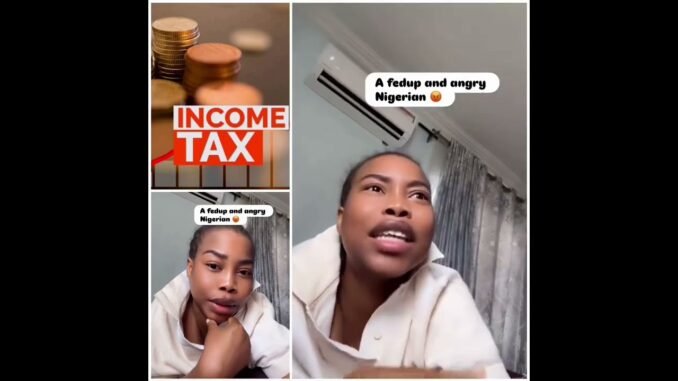

A Nigerian woman has sparked a nationwide conversation after publicly questioning the government’s directive for citizens to file their income taxes. In a video that has rapidly gone viral across social media platforms, the visibly frustrated woman challenged authorities on the consequences of not complying with tax filing requirements.
The Viral Outburst That Got Everyone Talking
The unidentified woman, expressing the frustrations shared by many Nigerians, directly confronted both Federal and state governments about their insistence on income tax compliance. Her bold question—”What is the worst that will happen if we don’t file our income tax to the government?”—has resonated with countless citizens who feel the same way.
The video, which has been shared thousands of times on Twitter, Instagram, and WhatsApp, captures a sentiment that many Nigerians harbor but rarely voice publicly: skepticism about the value of paying taxes in a country where public infrastructure and services remain inadequate.
Why Are Nigerians Frustrated?
The woman’s outburst reflects a deeper issue that has plagued Nigeria for decades—the disconnect between tax payments and visible development. Many citizens question why they should faithfully remit taxes when:
– Roads remain in deplorable conditions
– Power supply is epileptic at best
– Healthcare facilities lack basic equipment
– Public schools are underfunded
– Security challenges persist across the country
Her viral video has opened up conversations in households, offices, and online spaces about tax compliance and government accountability.
What Actually Happens If You Don’t File Your Taxes?
While the woman’s frustration is understandable, there are real consequences for not filing income taxes in Nigeria:
Legal penalties include fines, interest on unpaid taxes, and potential prosecution under the Personal Income Tax Act. Tax defaulters can face difficulties obtaining clearance certificates needed for business transactions, contract bids, and even international travel.
The Federal Inland Revenue Service (FIRS) and State Internal Revenue Services have increasingly strengthened enforcement mechanisms, including account freezes and asset seizures for persistent defaulters.
The Accountability Question
However, the woman’s question highlights a critical issue: government accountability. Many Nigerians argue that before demanding tax compliance, governments at all levels must demonstrate transparency in how tax revenues are utilized.
Citizens want to see:
– Detailed breakdowns of how their tax money is spent
– Tangible development projects in their communities
– Improved public services
– Reduced wasteful spending by government officials
Social Media Reactions
The video has generated mixed reactions online. While some Nigerians applaud her courage in voicing common concerns, others warn about the legal implications of tax evasion.
One Twitter user commented: “She’s saying what we’re all thinking. Show us what you’re doing with our money first!”
Another countered: “As frustrating as it is, we can’t build a nation by refusing to pay taxes. We need to hold them accountable instead.”
The Way Forward
This viral moment serves as a wake-up call for both citizens and government. While tax compliance is crucial for national development, governments must prioritize transparency, reduce corruption, and ensure citizens see the direct benefits of their contributions.
The conversation this woman has started is one Nigeria needs to have—how do we build a social contract where citizens willingly pay taxes because they trust their government to deliver value?
What’s your take on this? Should Nigerians continue paying taxes despite poor service delivery? Share your thoughts in the comments below.
For more information, check buzzUp9ja
Be the first to comment