
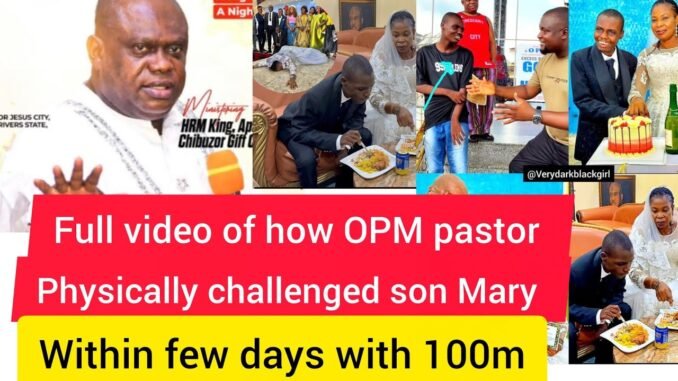

A Catholic priest has publicly addressed Pastor Chibuzor Gift Chinyere, the founder of Omega Power Ministries (OPM), regarding his controversial decision to arrange a marriage for his adopted autistic son who reportedly struggles with uncontrollable sexual urges.
The clergyman firmly stated that marriage should never be used as a management strategy for mental health conditions or biological impulses, sparking an important conversation about the intersection of faith, mental health, and marriage in Nigerian society.
The Controversy Surrounding OPM’s Decision
Pastor Chinyere, widely known for his philanthropic work and numerous adoption initiatives through OPM, had announced plans to marry off his adopted son who lives with autism. According to reports, the decision was influenced by the young man’s struggles with sexual urges that the ministry found challenging to manage.
While the OPM founder’s intention may have stemmed from concern for his adopted son’s wellbeing, the announcement has generated significant debate among religious leaders, mental health advocates, and Nigerians on social media.
Catholic Priest’s Strong Rebuke
The Catholic priest, in his response, emphasized that marriage is a sacred institution that should not be reduced to a behavioral management tool. He argued that using marriage as a solution to address autism-related challenges or sexual impulses fundamentally misunderstands both the nature of marriage and the complexities of mental health conditions.
“Marriage is not a therapeutic intervention,” the priest reportedly stated, calling for proper medical and psychological support instead of rushing into matrimonial arrangements that could prove harmful to all parties involved.
Understanding Autism and Sexual Development
Autism Spectrum Disorder (ASD) affects individuals differently, and like all young adults, autistic individuals experience natural sexual development. However, experts emphasize that these challenges require specialized support, education, and in some cases, medical intervention – not marriage.
Mental health professionals have long advocated for:
– Proper sex education tailored to individuals with special needs
– Behavioral therapy and support
– Medical consultation when necessary
– Creating supportive environments that respect the dignity and rights of persons with disabilities
The Nigerian Context: Faith Meets Mental Health
This incident highlights a broader issue in Nigerian society where mental health challenges are often misunderstood or addressed through spiritual rather than medical lenses. While faith plays a significant role in Nigerian life, experts stress the importance of balancing spiritual guidance with professional mental health care.
Many Nigerians still view marriage as a “solution” to various personal challenges, from loneliness to behavioral issues. This mindset, however well-intentioned, can lead to problematic situations where marriage becomes a burden rather than a blessing for all involved.
Questions of Consent and Protection
Beyond the appropriateness of using marriage as a management tool, serious questions arise about consent in this situation. Can the young man with autism fully understand and consent to marriage? What about the woman who would be married to him – has she been fully informed of the situation and given genuine choice?
These ethical considerations are crucial in protecting vulnerable individuals from exploitation, even when carried out with supposedly good intentions.
What Experts Recommend
Mental health professionals and disability rights advocates suggest that instead of marriage, families and caregivers should:
1. Seek professional help: Consult with psychiatrists, psychologists, and specialists in autism care
2. Provide appropriate education: Offer sex education designed for individuals with special needs
3. Create structured environments: Develop supportive routines and boundaries
4. Consider medication: When appropriate and under medical supervision
5. Respect dignity: Treat individuals with autism as persons deserving of respect and proper care, not problems to be solved through marriage
The Role of Religious Leaders
This incident also raises important questions about the responsibility of religious leaders in addressing mental health issues within their congregations. While spiritual guidance has its place, pastors and religious figures should recognize the limits of their expertise and refer congregants to qualified mental health professionals when necessary.
The Catholic priest’s intervention serves as a reminder that even well-meaning religious solutions can sometimes cause more harm than good when they bypass proper medical and psychological care.
Moving the Conversation Forward
As this story continues to generate discussion across Nigeria, it presents an opportunity for broader conversations about:
– Mental health awareness and destigmatization
– The rights of persons with disabilities
– The proper role of marriage in society
– The intersection of faith and healthcare
– Ethical considerations in caregiving
Pastor Chinyere has earned respect for his numerous charitable works, including providing homes for orphans and vulnerable children. However, this incident demonstrates that good intentions must be coupled with proper understanding and professional guidance, especially when dealing with complex mental health and developmental challenges.
Conclusion
Marriage is indeed a sacred and beautiful institution in Nigerian culture and Christian faith. However, it should never be reduced to a behavioral management strategy for mental health challenges or biological impulses. As this conversation continues, Nigerians are reminded of the importance of seeking appropriate professional help while maintaining the dignity and rights of all individuals, especially those living with disabilities.
What are your thoughts on this issue? How can Nigerian society better balance faith, tradition, and modern understanding of mental health? Share your respectful opinions in the comments below.
This story continues to develop. We encourage respectful dialogue that promotes understanding and proper care for individuals living with autism and other developmental conditions.
For more information, check buzzUp9ja
Be the first to comment