
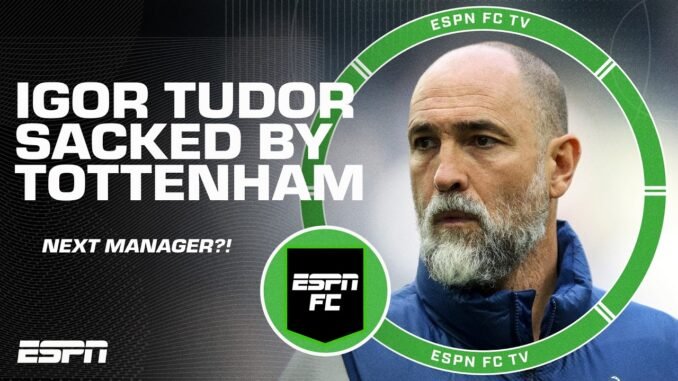

In what has become an all-too-familiar story at Tottenham Hotspur Stadium, the club has once again shown a manager the exit door—this time after a remarkably brief stint. Igor Tudor’s time as interim manager has come to an abrupt end after just 44 days in charge, following a disappointing string of results that left the board with no choice but to act.
A Short-Lived Appointment
Tudor, the Croatian tactician known for his intense approach and no-nonsense style, was brought in on a short-term deal to steady the ship after the previous manager’s dismissal. The appointment raised eyebrows from the start, with many wondering if the former Marseille boss was the right fit for a club desperately seeking stability.
Unfortunately for Tudor and Spurs fans alike, the experiment failed to deliver. The team’s performances on the pitch did not improve, and results continued to disappoint, leaving the club’s hierarchy with little option but to make yet another change.
What Went Wrong?
For those of us who follow football closely—whether from the comfort of our viewing centres in Lagos, Abuja, or Port Harcourt—we know that 44 days is barely enough time to unpack your coaching manuals, let alone implement a new playing philosophy. But in modern football, especially at a club with Tottenham’s ambitions (and impatience), results speak louder than potential.
Tudor’s ultra-defensive tactics reportedly clashed with the attacking players in the squad, and the team struggled to find the back of the net with any consistency. Poor communication and a rigid approach didn’t endear him to the dressing room either, creating an atmosphere that was anything but conducive to winning matches.
Tottenham’s Managerial Merry-Go-Round
This latest sacking adds another name to Tottenham’s growing list of managerial casualties in recent years. The club has become something of a revolving door for coaches, with very few lasting more than a season or two. From José Mourinho to Nuno Espírito Santo, and now Tudor, the pattern is clear: Spurs demand immediate results but often don’t provide the patience or support needed to build something sustainable.
For Nigerian football fans who remember the glory days of watching players like Emmanuel Adebayor light up White Hart Lane, this constant chopping and changing is frustrating to witness. How can a team build an identity when the man in charge changes more frequently than Lagos traffic patterns?
What’s Next for Spurs?
The big question now is: who will be next to take the hot seat at Tottenham? Rumours are already swirling about potential replacements, with names ranging from experienced Premier League managers to up-and-coming coaches from across Europe.
What Tottenham needs is clear—a manager with the tactical acumen to get the best out of their talented squad, the communication skills to unite the dressing room, and perhaps most importantly, the backing from the board to build something lasting rather than just papering over cracks.
The club remains in a precarious position in the league table, and whoever comes in will have their work cut out for them. But as we’ve seen time and again in football, the right appointment can transform everything overnight.
Final Thoughts
Igor Tudor’s 44-day tenure at Tottenham will go down as one of the shortest managerial stints in the club’s modern history—a footnote in what has become a troubling pattern of instability. As Spurs fans across Nigeria and around the world wait to see who will be next through the door, one thing is certain: until the club addresses its deeper structural issues, the managerial merry-go-round will continue to spin.
For now, we watch, we wait, and we hope that Tottenham can finally find the stability that has eluded them for far too long.
COYG or COYS? Whatever your allegiance, this is another chapter in the fascinating, frustrating world of Premier League football management.
For more details, visit buzzUp9ja
Be the first to comment