
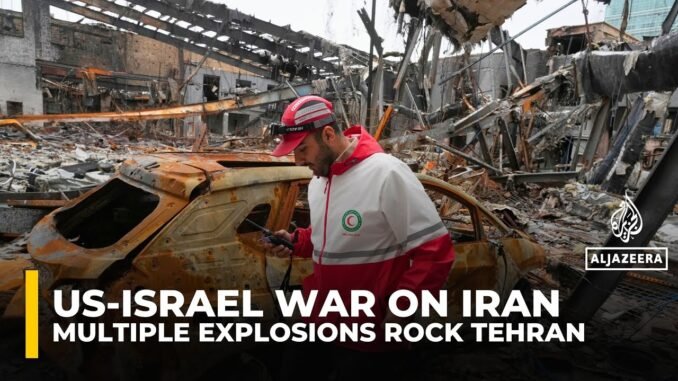

IRGC Issues Warning Against U.S. Educational Institutions
The Islamic Revolutionary Guard Corps (IRGC) of Iran has issued a stark warning that it may target American university campuses operating across the Middle East. This threat comes as a direct response to what Tehran describes as deliberate attacks on Iranian academic institutions by U.S. and Israeli forces.
The announcement has sent shockwaves through the international education community, particularly affecting Nigerian students and academics who study or work at American institutions in countries like the United Arab Emirates, Qatar, Saudi Arabia, and other Gulf states.
What’s Behind the Threat?
According to Iranian officials, recent military strikes allegedly conducted by U.S. and Israeli forces caused significant damage to Iranian universities and research facilities. While the exact nature and extent of this damage remains disputed, the IRGC has characterized these incidents as attacks on civilian educational infrastructure.
This development represents a dangerous escalation in the ongoing tensions between Iran and Western powers, particularly the United States. For many Nigerians pursuing advanced degrees or employment opportunities in the Middle East, this threat raises serious questions about personal safety and the stability of the region.
Implications for Nigerian Students Abroad
Thousands of Nigerian students currently attend American universities with campuses in the Middle East, drawn by quality education, scholarship opportunities, and the proximity to home compared to studying in the United States itself. Popular destinations include:
– American University in Dubai (AUD)
– American University of Sharjah (AUS)
– Georgetown University Qatar
– Northwestern University Qatar
– Various American University of Beirut campuses
These institutions now find themselves potentially caught in geopolitical crossfire that has nothing to do with education and everything to do with international power dynamics.
Regional Security Concerns
The threat comes at a time when the Middle East is already experiencing heightened tensions. For Nigerian professionals working in the region’s education sector, as well as families with loved ones studying abroad, this development adds another layer of uncertainty to an already complex security landscape.
Middle Eastern countries hosting American universities have not yet issued official responses, but security analysts suggest that host nations will likely increase protective measures around these campuses, given both their symbolic value and the large international student populations they serve.
What Should Nigerians Do?
For Nigerians currently in the region or planning to study there, experts recommend:
1. Stay Informed: Keep in close contact with your university’s security office and the Nigerian embassy in your host country
2. Register Your Presence: Ensure you’re registered with the Nigerian mission in your country of residence
3. Have Contingency Plans: Know evacuation procedures and keep important documents readily accessible
4. Monitor Travel Advisories: Check updates from both Nigerian and host country authorities regularly
5. Maintain Communication: Keep family members informed of your whereabouts and safety status
The Bigger Picture
This threat highlights the vulnerability of educational institutions in regions experiencing geopolitical tensions. Universities have traditionally been considered neutral ground—places of learning that transcend political conflicts. However, as this situation demonstrates, academic institutions are increasingly being drawn into international disputes.
For Nigeria, a country that sends thousands of students abroad annually, the safety of citizens pursuing education remains paramount. The Nigerian government, through its diplomatic missions, will likely be monitoring the situation closely and providing guidance to citizens in affected areas.
International Response
While specific responses are still developing, international education organizations and diplomatic communities are expected to condemn any threats against educational institutions. The principle of protecting civilian infrastructure, including universities, is enshrined in international law, though enforcement in complex geopolitical situations often proves challenging.
Looking Ahead
As tensions continue to simmer in the Middle East, the coming weeks will be critical in determining whether this threat represents serious intent or rhetorical posturing. For now, vigilance and caution remain the watchwords for Nigerians and other international students in the region.
The situation serves as a sobering reminder that in our interconnected world, conflicts between nations can have far-reaching consequences for individuals simply pursuing education and better opportunities—a pursuit that knows no borders and respects no political boundaries.
This is a developing story. Nigerian students and professionals in the Middle East are advised to stay updated through official channels and maintain contact with Nigerian diplomatic missions in their respective countries.
Be the first to comment