
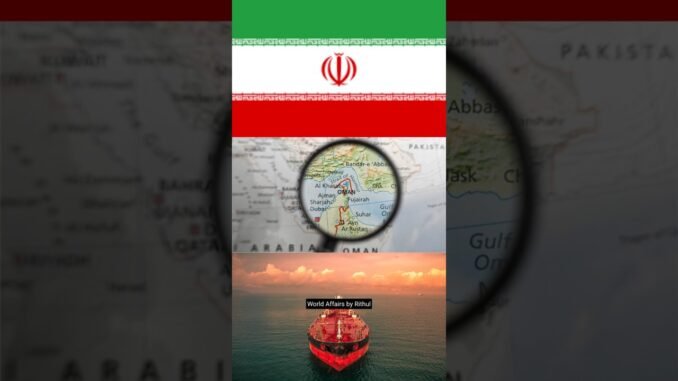

What’s Happening at the Strait of Hormuz?
Iran has sent a clear message to the United Nations Security Council and the International Maritime Organization (IMO): ships that pose no threat will be allowed to pass through the strategic Strait of Hormuz, but there’s a catch—they must coordinate with Iranian authorities first.
The Strait of Hormuz, a narrow waterway between Iran and Oman, serves as one of the world’s most critical oil shipping routes. For context, roughly one-fifth of the world’s petroleum passes through this chokepoint, making it vital not just for Middle Eastern economies but for global energy markets—including Nigeria’s.
Understanding Iran’s New Position
According to Iran’s communication with international bodies, vessels classified as “non-hostile” will receive passage rights through the strait. This designation appears to exclude ships from countries Iran considers adversarial or those supporting its regional opponents.
The coordination requirement means ship operators must notify Iranian naval or maritime authorities before attempting passage, a move that gives Tehran significant control over one of the world’s busiest shipping lanes.
Why Nigerian Businesses Should Pay Attention
While this may seem like a distant Middle Eastern affair, the implications reach Nigerian shores in several ways:
Oil Prices: Any disruption or tension in the Strait of Hormuz typically sends global oil prices climbing. For Nigeria, an oil-producing nation, this creates a complex situation—higher revenues from exports but also increased costs for refined petroleum products we import.
Shipping Costs: Nigerian businesses that import goods from Asia or the Middle East could face higher shipping costs if vessels must take longer alternative routes to avoid the strait.
Global Trade Stability: As Africa’s largest economy increasingly integrates into global supply chains, stability in major shipping routes directly affects the cost of doing business in Nigeria.
The Bigger Picture
This announcement comes amid heightened tensions in the Persian Gulf region. Iran has previously threatened to close the strait entirely during periods of conflict, though such action would have severe economic consequences for Iran itself, as the country also relies on the waterway for its own exports.
Maritime experts note that while Iran has the military capability to disrupt traffic through the strait temporarily, maintaining a prolonged blockade would be extremely difficult given international naval presence in the region, including vessels from the United States, European nations, and other countries protecting commercial shipping.
What Happens Next?
International shipping companies and maritime organizations are now assessing what Iran’s “coordination” requirements will mean in practice. Questions remain about:
– How far in advance must ships notify Iranian authorities?
– What information must be provided?
– How will “hostile” versus “non-hostile” vessels be determined?
– What happens if a ship’s home country has tense relations with Iran?
The United Nations Security Council and IMO will likely seek clarification on these operational details to ensure commercial shipping can continue safely and predictably.
The Bottom Line
For now, Iran appears to be signaling a willingness to keep the strait open for international commerce while asserting its authority over the waterway. This represents a delicate balance between projecting power and avoiding actions that would invite international intervention or further economic isolation.
Nigerian businesses with interests in international trade, particularly those in the oil sector or companies importing goods from Asia and the Gulf, should monitor this situation closely. Any escalation could affect shipping schedules, insurance costs, and ultimately, the price of goods in Nigerian markets.
As the global economy remains interconnected, what happens in the waters between Iran and Oman can ripple across oceans to affect markets in Lagos, Port Harcourt, and beyond.
Stay informed on international developments affecting Nigerian business and economy by following our updates buzzUp9ja
Be the first to comment