
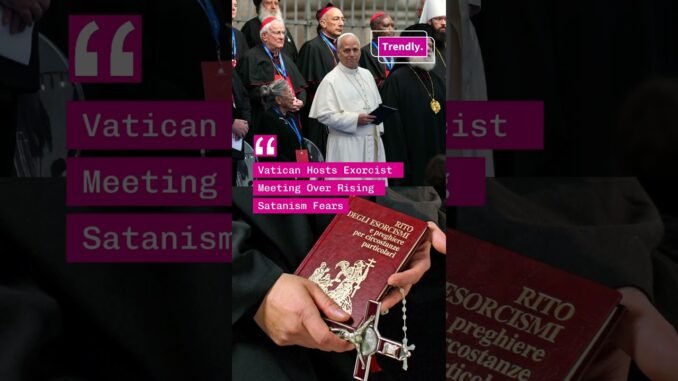

In a development that has sent ripples through the global Catholic community, Pope Leo XIV recently convened an urgent meeting with the world’s leading exorcists at the Vatican, following alarming reports of a worldwide surge in occult practices and Satanism.
The private audience, which took place on March 13th but was only disclosed to the public on Monday, March 23rd, brought together senior members of the International Association of Exorcists (AIE) to brief the Holy Father on what they describe as a disturbing spiritual crisis affecting communities across the globe—including Nigeria, where traditional beliefs and modern spirituality continue to intersect in complex ways.
A Growing Spiritual Crisis
According to EWTN Vatican, the delegation of Catholic priests presented the Pope with a comprehensive report detailing “the growing prevalence of cases related to occultism, esotericism, and Satanism, and the spiritual consequences they believe this has for many people.”
The concerns raised by these experienced spiritual warriors are particularly relevant to Nigerian Catholics, where prosperity gospel movements, traditional juju practices, and imported New Age spirituality have created what many local priests describe as a confusing spiritual marketplace for believers.
Father Francesco Bamonte, vice president of the AIE, emphasized the urgency of the situation in his address to the Pope. “Ignoring these concerns leaves many faithful without an adequate response to grave spiritual suffering, sometimes pushing them toward inappropriate solutions,” he warned.
Call for More Trained Exorcists in Every Diocese
The Association made a specific request that resonates strongly with the Nigerian context: they asked Pope Leo XIV to ensure that “every diocese in the world has one or more adequately trained exorcist priests.”
This appeal comes at a time when many Nigerian dioceses are reportedly overwhelmed with requests for spiritual intervention. From Lagos to Enugu, Abuja to Port Harcourt, Catholic priests have increasingly reported encounters with parishioners seeking help for what they believe are demonic oppressions—situations often complicated by the influence of Nollywood horror films, social media occult groups, and the erosion of traditional spiritual safeguards.
Spiritual Warfare in the 21st Century
During the Vatican meeting, the exorcists presented Pope Leo with the newly published “Guidelines for the Ministry of Exorcism,” along with a sacred image of Saint Michael the Archangel from the historic sanctuary of Monte Sant’Angelo—a powerful symbol of spiritual protection that many Nigerian Catholics invoke in their daily prayers.
The 70-year-old pontiff, who has consistently supported the work of exorcists throughout his papacy, previously described their ministry as both “delicate” and “most necessary.” According to LA Mag, he has encouraged priests “to live it both as a ministry of liberation and of consolation, accompanying the faithful truly possessed by the evil one with prayer and the invocation of Christ’s effective presence.”
What This Means for Nigerian Catholics
For Nigeria’s vibrant Catholic community—one of the fastest-growing in the world—this Vatican summit carries significant implications. The country’s unique spiritual landscape, where indigenous beliefs, Pentecostal influences, and Catholic traditions often collide, creates particular challenges for pastoral care.
Many Nigerian church leaders have long called for better training in spiritual discernment, arguing that the line between mental health issues, cultural practices, and genuine spiritual oppression is often blurred. The Pope’s attention to this matter could signal increased resources and training for African dioceses dealing with these complex realities.
As the Church universal responds to these warnings from its frontline spiritual defenders, Nigerian Catholics can take comfort in knowing that their struggles are recognized at the highest levels of Church leadership, and that help may soon be on the way.
Stay tunes for more updates on buzzUp9ja
Be the first to comment