
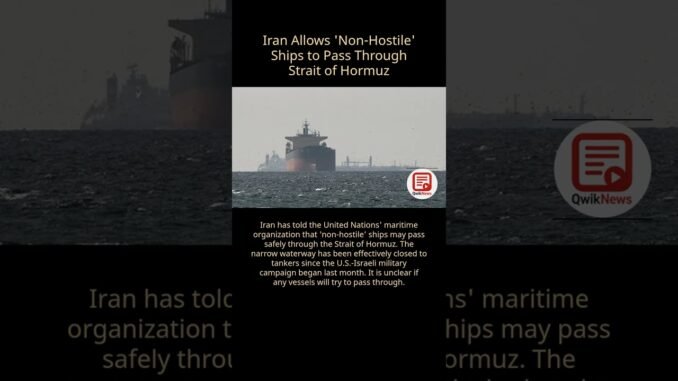

Summary: Iran announces it will allow non-hostile vessels through the Strait of Hormuz under specific conditions. Learn how this decision affects global oil supply and shipping routes.
In a significant development that could impact global energy markets, Iran has officially notified the United Nations Security Council and the International Maritime Organization (IMO) that ships not involved in hostile activities against the country will be permitted to pass through the Strait of Hormuz.
The Announcement
According to a diplomatic note sent to the UN, Iran has made it clear: vessels that do not participate in or support actions against Iran and comply with all safety and security regulations will be granted safe passage through this critical waterway.
However, there’s a catch – ship owners must coordinate with Iranian authorities before making the journey.
Why the Strait of Hormuz Matters to Nigeria and the World
The Strait of Hormuz is not just any shipping route. This narrow passage serves as a vital artery for global energy supplies, with roughly one-fifth of the world’s oil and liquefied natural gas passing through it.
For Nigeria, Africa’s largest oil producer, any disruption in global oil markets directly affects our economy. When international oil prices fluctuate due to tensions in the Middle East, it impacts everything from government revenue to fuel prices at Nigerian filling stations.
The Conditions for Safe Passage
Iran has stated it has taken “necessary and proportionate measures” to prevent enemies from using the strait for hostile operations. The Iranian government made it clear that vessels with connections to the United States, Israel, or any parties involved in actions against Iran will not qualify for safe passage.
This means shipping companies worldwide must now carefully consider their routes, alliances, and cargo before attempting to transit through these waters.
Rising Global Tensions
This announcement comes against the backdrop of ongoing conflict involving the United States, Israel, and Iran – a situation that has already significantly disrupted global energy supplies.
The communication was shared with UN Secretary-General António Guterres and circulated among member states of the maritime body, highlighting the seriousness of the situation as global concerns grow over shipping route security and energy market stability.
What Happens Next?
As the situation develops, shipping companies, oil exporters (including Nigeria), and energy importers worldwide will be watching closely. The security of maritime routes remains a top priority for international trade, and any prolonged restrictions could send ripples through the global economy.
For now, Iran appears to be walking a fine line – maintaining control over its strategic position while keeping international commerce flowing, albeit under strict conditions.
The world waits to see how other nations and international bodies will respond to Iran’s latest move in this high-stakes diplomatic chess game.
Check buzzUp9ja for more details
Be the first to comment